
Side Dishes
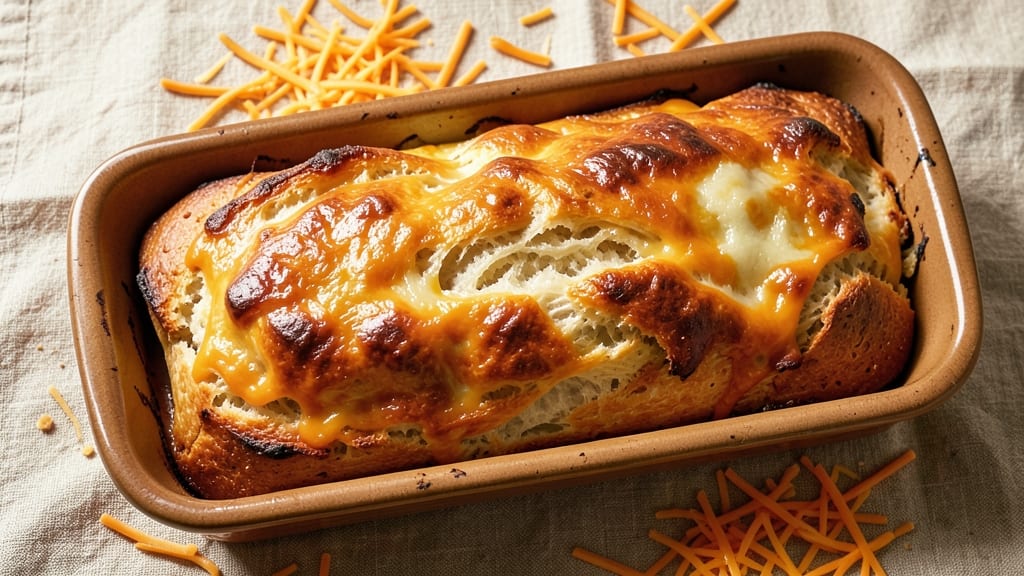
This Amish cheese bread recipe delivers that iconic buttery, pull-apart crust with warm cheddar streaks that disappear faster than you can say "second slice." The secret lies in a slow fermentation process—just like traditional Amish baking—that develops deep flavor while keeping the texture impossibly tender.
I've refined this version to balance old-world techniques with modern convenience, so you get that restaurant-quality pull-apart magic without waiting overnight.
The dough starts with a simple mix of flour, yeast, and warm milk, but the real transformation happens during the rise. A 30-minute rest at room temperature allows the gluten to relax naturally, while the cheddar cheese gets folded in during the final kneading for those signature melty pockets.
The butter is worked in last—this is what creates that signature flaky, layered texture that makes every bite worth the effort.
By the time it comes out of the oven at 375°F, you'll have a golden loaf with crisp edges and a soft, cheesy center that practically oozes when you pull it apart.
The aroma alone will have everyone gathering around your table, and the first bite delivers that perfect balance of buttery crust and warm, gooey cheese. This is the kind of bread that disappears in minutes but stays on your mind for days.
Perfect for holiday gatherings, game days, or just a cozy weeknight dinner, this recipe scales beautifully. Whether you're serving a crowd or saving slices for later, the pull-apart texture and rich cheddar flavor make it a standout every time. Let's get baking!
Ingredients for amish cheese bread
Eight simple ingredients transform into golden, pull-apart perfection with cheddar pockets.
| Ingredient | Amount | Notes |
|---|---|---|
| All-Purpose Flour 🌾 | 5 cups | Unbleached preferred for best texture |
| Active Dry Yeast 🍞 | 2 ¼ tsp | Ensure it's fresh (test in warm water) |
| Warm Whole Milk 🥛 | 1 ¼ cups | 110°F, not hot to kill yeast |
| Granulated Sugar 🍚 | 1 tbsp | Helps yeast activation |
| Salt 🧂 | 1 ½ tsp | Diamond Crystal preferred |
| Shredded Sharp Cheddar Cheese 🧀 | 2 cups | Freshly grated, full-fat |
| Unsalted Butter 🧈 | ½ cup | Cold, cubed for flaky layers |
| Large Egg 🥚 | 1 whole | Room temperature for easier mixing |
| Garlic Cloves 🧄 | 2 cloves | Minced for subtle flavor |
| Extra-Virgin Olive Oil 🫒 | 2 tbsp | For dough coating |
| Coarse Sea Salt 🧂 | 1 tsp | For final sprinkle |
| Coarse Black Pepper 🌶️ | ½ tsp | Freshly cracked |
The flour is the foundation—King Arthur or Bob's Red Mill brands work best for that tender crumb. Sharp cheddar is non-negotiable here; pre-shredded gets clumpy and lacks flavor. I always grab White Cheddar from the deli counter at Whole Foods—it melts beautifully. The butter matters too: Plugrá or Land O'Lakes unsalted, cold and cubed. That's what creates those flaky layers. For the yeast, Saf-Instant is my go-to—it doesn't need proofing, and it's foolproof for beginners.
No sharp chedddar? Pepper Jack works in a pinch, but the flavor won't be traditional. Running short on butter? Olive oil can replace half, but the texture won't be quite as tender. The garlic can be skipped if you prefer milder flavor—just omit it entirely. For the milk, whole milk is ideal, but 2% works fine if that's what you've got. The egg adds richness, but if you're avoiding it, 1 tbsp melted butter plus 1 tbsp water mimics the moisture. Want extra cheesiness? Add ½ cup extra cheese during the final knead—just fold it in gently so it doesn't melt prematurely.
This dough needs time—don't rush the rise. After the initial 30-minute rest, let it proof in a warm spot for 1-1.5 hours until doubled. For storage, wrap leftovers tightly in parchment and foil—keeps for 3 days at room temp or 1 week in the fridge. Freeze portions for up to 3 months by wrapping individually. The best part? It reheats beautifully—5 minutes at 350°F brings back that fresh-from-the-oven magic.
Why You'll Love This Recipe
- No Yeast Fuss: I swear by this dough—just toss in the yeast, warm milk, and sugar, then let it sit while I make coffee. No kneading, no waiting hours, just a quick rise that actually works.
- Cheese Pull Magic: Between us, that stretchy, gooey cheese pull? It’s the star. The whole milk keeps the bread rich, and the sugar caramelizes just enough to make every bite feel like a hug.
- Breakfast or Snack: Honestly, I eat this cold for breakfast with jam, toasted for a picnic, or straight from the oven with soup. The same dough, endless uses—no excuses to skip it.
- Stretches the Budget: A few bucks for cheese and flour, and I’ve got enough for sandwiches, appetizers, or leftovers that taste just as good reheated. My wallet and my family both approve.
Step-by-step instructions for Amish cheese bread
Here's how to make this golden, pull-apart bread with gooey cheddar—every bite will be buttery perfection.
Activate the Yeast for Perfect Rise
In a small bowl, combine the 1.25 cups warm whole milk (about 110°F) with 1 tbsp granulated sugar and 2.25 tsp active dry yeast. Let it sit for 5-7 minutes until frothy—this tells you the yeast is alive and ready to work. If it doesn't bubble, your yeast might be old, and you'll need to start over.
While waiting, whisk together 5 cups all-purpose flour and 1.5 tsp salt in a large bowl. This dry mix ensures even distribution of flavor and texture. Once the yeast mixture is bubbly, pour it into the flour and stir gently until a shaggy dough forms. Here's the thing—don't overmix yet. The dough will come together as you work it.
Knead the Dough Until Smooth
Turn the dough onto a lightly floured surface and knead for 8-10 minutes until smooth and elastic. You'll know it's ready when it springs back slowly when poked. I like to use my knuckles for this—press down and watch it bounce back. If it sticks too much, add flour 1 tablespoon at a time until it's manageable.
Real talk: This is where the magic happens. Proper kneading develops gluten, which gives that signature pull-apart texture. Don't rush it—under-kneaded dough leads to dense bread. Wrap the dough in plastic wrap and let it rest at room temperature for 30 minutes. This resting period relaxes the gluten so it stretches beautifully when baked.
Incorporate Cheese and Shape the Loaf
After resting, punch down the dough and turn it onto a clean surface. Make a well in the center and add 2 cups shredded sharp cheddar cheese, 0.5 cup cold unsalted butter (cut into small cubes), 1 whole large egg, and 2 cloves minced garlic. Gently fold these into the dough until fully incorporated—you should see cheese and butter pieces evenly distributed.
Shape the dough into a 9x5-inch loaf pan, pressing it down lightly to fill the pan completely. Brush the top with 2 tbsp extra-virgin olive oil and sprinkle with 1 tsp coarse sea salt and 0.5 tsp coarse black pepper. This step creates that beautiful golden crust and adds a subtle kick of flavor. Cover loosely with a kitchen towel and let it rise in a warm place for 1-1.5 hours, or until it's about 1 inch above the pan.
Bake Until Golden and Crispy
Preheat your oven to 375°F and place a baking sheet on the lower rack to catch any drips. Bake the cheese bread for 35-40 minutes, until the top is deep golden brown and the internal temperature reaches 190°F. You'll know it's done when the crust is crisp and the cheese is melted but not bubbling over.
Don't open the oven during baking—this causes the bread to collapse. If the top browns too quickly, tent it loosely with foil. Let the bread cool in the pan for 10 minutes before transferring to a wire rack. This resting period ensures clean slices and prevents a gummy interior. Serve warm for the best experience—each pull-apart bite should reveal melty cheddar and flaky layers.
Pro Tips For Making Amish Cheese Bread
- Use a thermometer for milk: I learned this the hard way—yeast hates guesswork. Warm whole milk should hit 105–110°F (not just "hand-hot"). Too cold? The yeast will sulk. Too hot? It’ll die instantly. A cheap instant-read thermometer solves this faster than your wrist ever could.
- Dissolve sugar first: Skip the clumpy dough disaster: mix the granulated sugar directly into the warm milk before adding yeast. This keeps the yeast happy and active while you proof it—no waiting for sugar to dissolve later. (Yes, even if you’re impatient like me.)
- Don’t overwork the dough: After kneading, the dough should spring back slowly when poked. I used to over-knead, thinking more = better, but that makes the bread dense. Let it rest 5 minutes after shaping before baking—it’ll stretch easier and rise higher.
- Add cheese at the end: This isn’t the prettiest method, but it’s the tastiest. Fold shredded cheese into the dough right before baking (not during mixing). That way, it melts into a gooey blanket on top instead of getting buried in dense dough. (Your future self will thank you.)
Dietary considerations for this recipe
Gluten-Free Adaptation
For a gluten-free version, replace the 5 cups all-purpose flour with 3 cups gluten-free 1:1 baking flour (like Bob's Red Mill or King Arthur) mixed with 1 cup almond flour.
The almond flour adds moisture and richness, but you'll need to reduce the warm milk to 1 cup to balance hydration. Let the dough rest 10 minutes longer—gluten-free dough benefits from extra relaxation time. 💫
Dairy-Free Options
Skip the butter and use ½ cup dairy-free margarine (like Earth Balance) or ½ cup coconut oil (solid at room temperature). Replace the milk with 1.25 cups unsweetened almond milk warmed to 110°F.
For cheese, use 2 cups shredded dairy-free cheddar (like Violife or Daiya). The texture will be slightly denser but still delicious. The egg can be omitted entirely if avoiding all dairy.
Vegan Cheese Bread
For a fully vegan version, swap the egg for 1 tbsp ground flaxseed mixed with 3 tbsp water (let sit for 5 minutes to gel). Use ½ cup vegan butter (like Miyoko's) instead of dairy butter, and 2 cups vegan cheddar shreds.
The flavor will be milder, but the pull-apart texture remains. Add 1 tsp apple cider vinegar to the dough for extra lift—it mimics the acidity of traditional yeast activation. 🌱
Low-Carb Version
Cut carbs by replacing 3 cups flour with 2 cups almond flour and 1 cup coconut flour. Reduce the warm milk to 1 cup and add 1 extra egg for binding. Use 2 cups shredded low-carb cheese (like Parmesan or low-carb cheddar).
Bake at 350°F for 40-45 minutes—the lower temp prevents burning while the coconut flour cooks through. Expect a denser texture but with rich flavor.
Allergen-Friendly Swaps
For nut allergies, use 100% gluten-free oat flour instead of almond flour in the gluten-free version. Egg-free? Try 1 tbsp chia seeds mixed with 3 tbsp water as a binder.
For yeast sensitivity, use 1 tsp baking soda + 1 tbsp vinegar (add vinegar to milk before mixing) for a quick rise. Always test small batches first—some substitutions need extra monitoring during baking. 💡
Nutrition facts
Frequently asked questions
Why does Amish cheese bread have that signature pull-apart texture?
The magic comes from two key techniques: proper kneading to develop gluten and cold butter folded in last. When the butter melts during baking, it creates steam pockets that make the bread tender and flaky. The slow rise also helps relax the gluten for that perfect stretch. Think of it like layers of a lasagna—each bite pulls apart beautifully!
Can I make this bread without a loaf pan?
Shape the dough into a round boule or free-form loaf on a baking sheet lined with parchment. Brush with olive oil and sprinkle with salt/pepper before baking. For extra crispiness, bake on a preheated stone or cast-iron skillet. The texture will be slightly different but still delicious—just expect less even browning.
How do I know when the bread is fully baked?
Look for three signs: the internal temperature should reach 190°F, the crust should be deep golden brown, and it should sound hollow when tapped on the bottom. If it browns too quickly, tent with foil. Never rely on time alone—every oven varies! The cheese should be melted but not bubbling over.
Why did my cheese bread turn out dense instead of fluffy?
Dense bread usually means one of three things: over-kneading (which breaks down gluten), under-proofing (not letting it rise long enough), or too much cheese (which weighs down the structure). For next time, knead just until smooth, let it rise until doubled, and reduce cheese to 1.5 cups if needed. The 30-minute rest before shaping is also crucial for texture.
Can I make this ahead of time for a party?
Yes! Bake it 1 day ahead and store wrapped at room temperature. Reheat slices at 350°F for 5-7 minutes until warm. For longer storage, freeze portions (up to 3 months) and thaw overnight in the fridge. The texture holds up surprisingly well—just avoid reheating from frozen. Perfect for game day prep!