
Appetizers
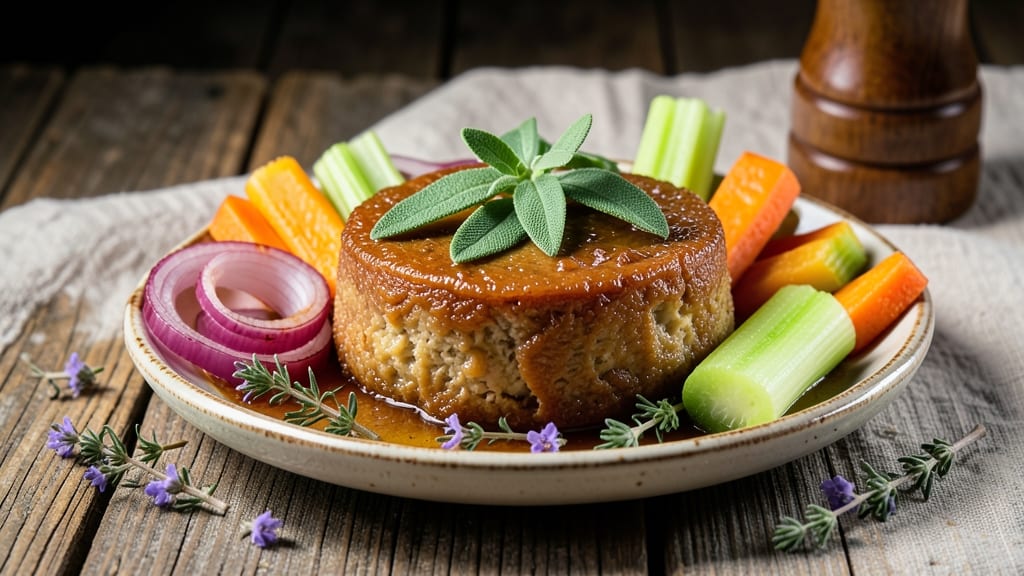
This Amish head cheese recipe transforms humble pork into a rich, herb-infused loaf with a golden, crispy crust—perfect for holiday gatherings or potlucks. The traditional method simmers pork with aromatic spices until tender, then shapes it into a loaf that chills to set beautifully.
What makes this dish special is its simplicity: minimal ingredients, one-pot prep, and a technique that’s been passed down through generations.
The process begins with slow-cooking pork head or jowl in flavorful broth until the meat falls apart easily. Herbs like thyme and sage infuse the mixture, while gelatin (from the pork or added) gives it that signature firm yet tender texture.
Once chilled, the loaf develops a crispy top when reheated, making it irresistible as an appetizer or main course.
What you’ll end up with is a savory, protein-packed loaf that’s rich in flavor and tradition. Each slice offers a perfect balance of tender meat, aromatic herbs, and that satisfying crispy edge. It pairs wonderfully with crusty bread, crackers, or even as a standalone dish for special occasions.
Ready to try this classic? The instructions walk you through every step—from simmering the pork to slicing the final loaf—so you can achieve restaurant-quality results at home. Let’s get started!
Ingredients for amish head cheese
Six aromatic herbs and one humble pork cut transform into a golden, crisp-topped loaf.
| Ingredient | Amount | Notes |
|---|---|---|
| Pork Head or Jowl 🐖 | 2 lb | Bone-in preferred for gelatin |
| Yellow Onion 🧅 | 1 whole | Medium size, diced |
| Celery Stalks 🥬 | 3 whole | Fresh, chopped |
| Carrots 🥕 | 2 whole | Medium size, sliced |
| Fresh Thyme 🌿 | 1 tbsp | Leaves only, chopped |
| Fresh Sage 🌿 | 1 tbsp | Leaves only, chopped |
| Bay Leaves 🌿 | 2 whole | Dried, crushed |
| Black Peppercorns 🌶️ | 1 tsp | Freshly cracked |
| Salt 🧂 | 1 ½ tsp | Diamond Crystal preferred |
| Unflavored Gelatin 🧂 | 1 package | 7.5g or 1/4 oz |
| Water 💧 | 4 cups | For broth |
| All-Purpose Flour 🌾 | 2 tbsp | For dusting |
The pork head or jowl is the foundation—look for cuts with visible fat marbling at Whole Foods or specialty butchers. If using jowl, trim excess fat for a cleaner texture. For gelatin, Great Lakes Gelatin is my go-to brand—it dissolves smoothly without graininess. Fresh herbs elevate the flavor, so local farmers markets often carry the brightest thyme and sage. The bay leaves should be vibrant green, not brittle or dried out.
No pork head? Pork jowl or even pork shoulder works, though texture will differ slightly. Substitute dried thyme at one-third the amount, but fresh is ideal. For gelatin, agar-agar can replace it in a 1:1 ratio if you're avoiding animal products. The flour is just for dusting—King Arthur All-Purpose is my preference, but any quality brand works. If you're short on time, pre-chop the onions, celery, and carrots (the mirepoix) and store them in a sealed container for up to 5 days.
The gelatin package should be stored in a cool, dry place—it lasts indefinitely. Once the loaf is set, it keeps in the fridge for 5-7 days or freezes beautifully for 3 months. For serving, reheat slices in a skillet for that signature crispy top. Leftovers make excellent sandwiches or can be sliced thin for appetizers—just be sure to reheat thoroughly before serving.
Why You'll Love This Recipe
- One-Pot Magic: I swear by this—just toss the pork head, onions, celery, and carrots into a pot with thyme and water, then let it simmer. No fancy steps, no second pans, and honestly? That slow-cooked richness does all the work for you.
- Rich, Rustic Depth: The pork jowl melts into a creamy, almost velvety texture while the thyme and carrots add that earthy sweetness. It’s not just flavor—it’s layers of satisfaction in every bite, like a hug from your grandma’s kitchen.
- Leftovers That Shine: This stuff actually gets better the next day. I’ll make a big batch on Sunday, slice it thin for sandwiches all week, or cube it into soups. (Yes, even on a Tuesday night when you’re too tired to think.)
- Budget-Friendly Feast: Pork head is cheap, and you’re turning scraps into something luxurious. Plus, the veggies stretch it further—every bite feels special, but your wallet stays happy. My secret weapon for feeding a crowd without breaking the bank.
Step-by-step instructions for Amish head cheese
Transforming humble pork into a rich, herb-infused loaf with a golden crust requires precision and patience.
Prepare the Pork Head for Rendering
Begin by thoroughly cleaning the 2 lb pork head or jowl under cold running water, removing any remaining hair or debris. Place it in a large stockpot with 4 cups water and bring to a boil over high heat. Once boiling, reduce to a simmer and cook for 2 hours, skimming off any foam that rises to the surface. This initial rendering process extracts gelatin-rich fat and collagen from the bones.
After 2 hours, remove the pork head and let it cool slightly. Using a sharp knife, carefully separate the meat from the bones, discarding the bones and any connective tissue. Once cool enough to handle, shred the meat into ¼-inch pieces using two forks or your hands. The meat should yield easily—if it's still warm, let it rest for 10 minutes before shredding to prevent tearing.
Build the Herb-Infused Broth
In the same stockpot, add the 1 whole yellow onion, 3 whole celery stalks, 2 whole carrots, 2 whole bay leaves, 1 tsp black peppercorns, 1.5 tsp salt, 1 tbsp fresh thyme, and 1 tbsp fresh sage. Return to a simmer over medium heat for 30 minutes, allowing the vegetables to soften and infuse the liquid with deep flavor. Strain the broth through a fine-mesh sieve into a clean pot, pressing gently on the solids to extract maximum liquid.
You should have approximately 3 cups of rich, aromatic broth. If the broth appears cloudy, skim off any remaining impurities. Reduce the heat to low and maintain at a gentle simmer—this broth will later be used to hydrate the gelatin and bind the head cheese.
Hydrate and Bloom the Gelatin
Place the 1 package unflavored gelatin in a small bowl and sprinkle the 2 tbsp all-purpose flour evenly over the top. This prevents the gelatin from clumping when rehydrated. Slowly pour ½ cup of the hot broth over the gelatin, whisking gently to dissolve. Let it sit for 5 minutes, then whisk again to ensure no lumps remain. The mixture should be smooth and slightly translucent.
While the gelatin hydrates, combine the shredded pork meat with the remaining 2½ cups broth in a large mixing bowl. Stir gently to distribute the liquid evenly. The meat should be well-coated but not soggy—if it appears too dry, add 1-2 tablespoons of the reserved broth to loosen it.
Assemble and Set the Head Cheese
Pour the gelatin mixture into the pork-meat broth, stirring continuously until fully incorporated. The texture should resemble a thick, velvety paste. Transfer the mixture to a 9x5-inch loaf pan lined with parchment paper, pressing down firmly to eliminate air pockets. Smooth the top with a spatula, creating an even surface for crisping.
Cover the pan with plastic wrap and refrigerate for 4 hours, or until the head cheese has set completely. The edges should pull away cleanly from the pan, and the center should hold its shape when gently pressed. This chilling step is critical—rushing it will result in a gummy, unappetizing texture.
Achieve the Crispy Top
Preheat your oven to 375°F. Remove the head cheese from the refrigerator and score the top in a crosshatch pattern with a sharp knife, cutting ¼-inch deep. This creates channels for the fat to render and crisp. Place the loaf pan on a baking sheet and bake for 20-25 minutes, until the top develops a deep golden brown crust.
For extra crispness, broil for 1-2 minutes at the end, watching closely to prevent burning. Let the head cheese rest for 10 minutes before slicing—this allows the juices to redistribute, ensuring each piece is moist and flavorful. Serve chilled or at room temperature with crusty bread or pickled vegetables.
Pro Tips For Making Amish Head Cheese
- SCORE THE JOWL: Use a sharp knife to cut the pork jowl into 1-inch cubes—no bigger, or they’ll stay tough. I learned this the hard way when I rushed and ended up with chewy chunks that ruined the texture.
- BROWN THE ONIONS FIRST: Cook the onions until they’re deep golden, not just soft. That caramelized flavor is what makes this dish sing—skip it, and you’ll just have bland filling. (Yes, even if you’re impatient like me.)
- DON’T SKIP THE REST: After simmering the head cheese, let it cool completely before slicing. I used to cut it warm, and it fell apart like wet cardboard. Give it a solid 5-10 minutes under foil—your future self will thank you.
- USE A LOT OF THYME: Toss in a full tablespoon of fresh thyme (not just a sprinkle) while simmering. My grandmother swore by this, and she was right: it keeps the pork from tasting too heavy. (And yes, it disappears into the dish.)
Serving suggestions for this amish head cheese
Bread Pairings
This rich, herb-infused loaf shines with crusty sourdough or rye bread, whose dense texture holds up to the tender meat. I love using Artisan Baker's sourdough—its tangy crust cuts through the richness beautifully. For a lighter option, brioche rolls from a local bakery add a buttery contrast. 🥖
If you're serving it as an appetizer, arrange slices on a platter with water crackers or pita chips for easy grabbing. The crispy top pairs especially well with gluten-free seed crackers if you're accommodating dietary needs.
For a rustic touch, serve with homemade cornbread—its slight sweetness balances the savory flavors.
Pickled Vegetables
Bright, tangy pickles elevate the dish by cleansing your palate between bites. I always keep a jar of dill pickles or pickled red onions on hand for this purpose. The acidity from Rea's pickles (my favorite) cuts through the richness, making each bite more refreshing. 🥒
For a homemade touch, try quick-pickled radishes or carrots with apple cider vinegar, 1 tbsp sugar, and ½ tsp salt. Let them sit for at least 2 hours before serving. The crunch and tang create a perfect contrast to the creamy texture of the head cheese.
Cheese Platter
Turn your serving into a full spread by adding aged cheddar, blue cheese, and goat cheese. The sharpness of Cabot Clothbound Cheddar complements the pork's richness, while creamy Brie adds a luxurious touch. Arrange everything on a wooden board for an inviting presentation. 🧀
Add cured meats like prosciutto or salami for a heartier option. The salty, smoky flavors play well with the head cheese's herbal notes. Don't forget fig jam or honey—a drizzle adds a sweet contrast that balances the savory elements perfectly.
Wine and Beer
A bold red wine like Cabernet Sauvignon or Syrah pairs beautifully with the rich pork flavors. I recommend a Napa Valley Cabernet with its dark fruit notes and smooth tannins. For a lighter option, try a Pinot Noir—its bright acidity complements the herbs. 🍷
If you prefer beer, a Belgian-style ale or amber lager—like Leffe Blond—works wonderfully. The malty sweetness balances the savory depth of the head cheese. For a non-alcoholic option, sparkling ginger beer adds a refreshing zing.
Nutrition facts
Frequently asked questions
What makes Amish head cheese different from regular head cheese?
Traditional Amish head cheese uses pork head or jowl for extra gelatinous richness, creating a firmer texture than commercial versions. The recipe emphasizes fresh herbs like thyme and sage, plus a crispy top achieved through scoring and baking—key differences from store-bought loaves that often contain fillers.
Can I substitute pork jowl for pork head?
Yes! Pork jowl works well and is often easier to find. Just trim excess fat to avoid greasiness. The texture will be slightly less gelatinous, so add ½ tsp extra gelatin if you prefer a firmer set. Bone-in cuts yield better flavor and natural collagen.
Why does my head cheese turn out gummy instead of firm?
Gummy texture usually means insufficient chilling time or too much liquid. Ensure you refrigerate for the full 4 hours and use the correct gelatin-to-broth ratio. If using extra gelatin, bloom it properly in cold water first. For a firmer result, reduce broth by ¼ cup next time.
How long can I store homemade head cheese?
Store in an airtight container in the fridge for 5-7 days or freeze for up to 3 months. For best texture, thaw overnight in the fridge before reheating. The crispy top works best when reheated from frozen—just add 5 extra minutes in the oven.
Can I make this vegetarian?
Not traditionally, but you can create a similar texture using mushrooms, tofu, or jackfruit combined with agar-agar (vegan gelatin). The flavor will differ significantly, though. For authenticity, pork is essential to the classic Amish version.