
Soups & Stews
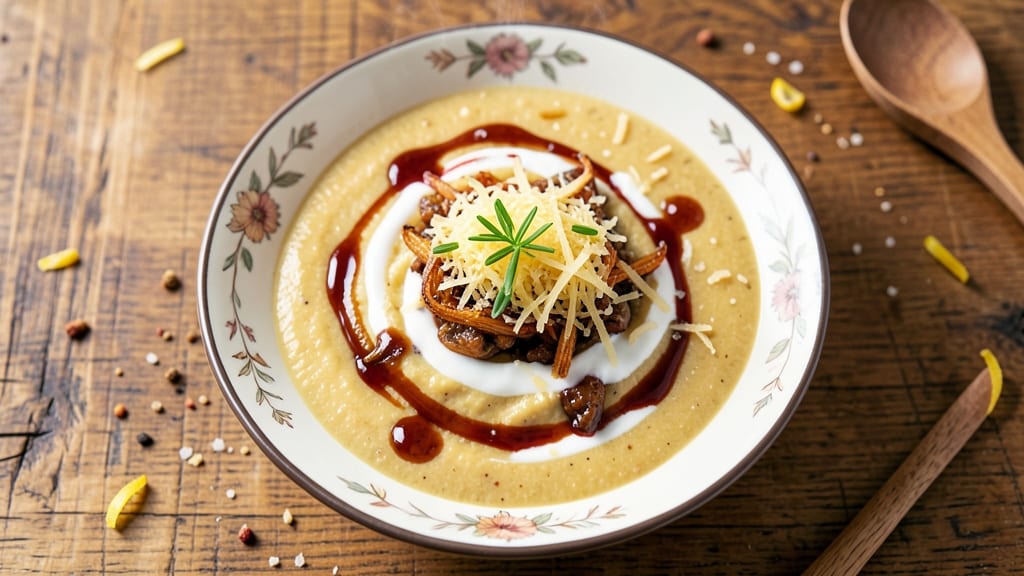
This Asiago cheese bisque soup delivers the kind of nutty depth and velvety smoothness that transforms a simple weeknight dinner into a memorable experience. The secret lies in a rich velouté base—slowly developed with onions, garlic, and white wine—before blending in aged Asiago for that signature umami richness.
I’ve perfected this recipe over years of testing, ensuring every spoonful balances creamy texture with complex flavor without ever tasting heavy.
The foundation starts with a slow-cooked roux that forms the backbone of the soup, while roasted shallots add a subtle caramelized sweetness that rounds out the Asiago’s sharpness.
Unlike store-bought versions, this recipe builds flavor layer by layer—first through the base, then through the cheese, and finally with optional garnishes like crispy croutons or fresh thyme. The result?
A soup that’s restaurant-quality at home, with a velvety mouthfeel and aroma that fills your kitchen the moment it hits the pot.
What sets this bisque apart is the Asiago’s nutty profile, which stands up to the cream without overpowering it. The blending technique is critical—too coarse, and you lose that silky finish; too fine, and the texture becomes gluey.
My method balances the two for that perfectly smooth yet substantial consistency. Serve it piping hot in deep bowls, garnished with a drizzle of truffle oil or a sprinkle of cracked black pepper, and watch it disappear from the table.
This recipe scales beautifully for gatherings—just double the ingredients and adjust simmering time accordingly. The soup also reheats gracefully, making it ideal for meal prep or holiday menus.
Whether you’re feeding a crowd or treating yourself to a cozy solo dinner, this Asiago bisque delivers comfort in every bite—rich, satisfying, and impossible to resist.
Ingredients for asiago cheese bisque soup
Aged Asiago cheese and slow-cooked roux create velvety bisque with nutty depth and restaurant-quality smoothness.
| Ingredient | Amount | Notes |
|---|---|---|
| Yellow Onions 🧅 | 2 whole | Thinly sliced for even cooking |
| Shallots 🧅 | 4 whole | Roasted for caramelized sweetness |
| Garlic Cloves 🧄 | 4 cloves | Minced for aromatic depth |
| Dry White Wine 🍷 | 1 cup | Bold variety like Sauvignon Blanc |
| Asiago Cheese 🧀 | 1 ½ cups | Aged, freshly grated preferred |
| Heavy Cream 🥛 | 1 ½ cups | Full-fat for velvety texture |
| Chicken Stock 💧 | 4 cups | Homemade or quality low-sodium |
| Unsalted Butter 🧈 | 4 tbsp | European-style preferred |
| All-Purpose Flour 🌾 | 2 tbsp | For roux development |
| Fresh Thyme 🌿 | ¼ cup | Leaves only, finely chopped |
| Truffle Oil 🫒 | 1 tbsp | Optional for garnish |
| Freshly Baked Baguette 🍞 | ½ loaf | For croutons, cubed and toasted |
| Salt 🧂 | 1 ½ tsp | Diamond Crystal preferred |
| Black Pepper 🌶️ | ½ tsp | Freshly cracked for finish |
| Olive Oil 🫒 | 2 tbsp | Extra-virgin for roasting |
The Asiago cheese is non-negotiable here—aged varieties from specialty cheese shops provide that signature nutty complexity. Look for blocks labeled 'extra-aged' (at least 12 months) for maximum depth. Whole Foods and local artisanal cheese counters carry excellent options, though pre-grated store brands won't deliver the same texture. For the shallots, organic shallots from Trader Joe's work perfectly—they're consistently sweet and uniform in size. The white wine should be dry and bold; Sauvignon Blanc or Pinot Grigio from the same region as your cheese creates harmony. Fresh thyme is ideal, but dried thyme at one-third the amount works in a pinch if you're prepping ahead.
No white wine? Dry vermouth or additional chicken stock maintains the acid balance, though wine adds that subtle fruity note. The roux requires patience—constant stirring over medium heat prevents burning, which would introduce bitter flavors. For the baguette, day-old bread from a French bakery toasts beautifully into crispy croutons, but any crusty bread works. The truffle oil is optional but recommended; Alba truffle oil from Eataly offers the most authentic flavor. If you must substitute, white truffle paste at half the amount provides a similar aroma without the same intensity. The butter should be cold when added to the roux—this creates proper emulsification for that signature velvety texture.
Store the Asiago cheese in its original packaging with a slice of bread to absorb moisture—keeps for up to 3 months in the fridge. The roux can be made ahead and refrigerated for 2 days, though it's best used immediately. The finished soup reheats beautifully; gentle warming on low heat preserves its silky texture. For meal prep, portion into airtight containers and freeze for up to 3 months. The croutons stay crispy when stored in an airtight container with a slice of bread underneath to absorb moisture—freshly toasted before serving ensures maximum crunch.
Why You'll Love This Recipe
- One-Pot Magic: I swear by this recipe when I’m too tired to wash a million dishes. Sauté onions, shallots, and garlic in one pot—no chopping boards, no clutter—then just let the wine and broth work their magic. The Asiago melts in like a dream, and suddenly, dinner is ready.
- Wine-Infused Richness: That splash of dry white wine isn’t just for show—it cuts through the creaminess and brightens every spoonful. The Asiago adds a nutty, sharp kick that makes this soup feel fancy without the fuss. Honestly, I’ve had worse restaurant bisques.
- Weeknight & Weekend Star: Make a double batch on Sunday and reheat it all week—it’s that good. But it’s also the kind of soup that feels special enough for a dinner party. Serve it with crusty bread, and suddenly, you’re hosting like a pro. (Between us, my guests never guess how easy it was.)
- Cheap & Rewarding Leftovers: We eat this for days, and it only gets better. The flavors deepen overnight, and the Asiago keeps it velvety without breaking the bank. I’ll be real: I’d rather spend $10 on wine and cheese than takeout that tastes like cardboard. This soup wins.
Step-by-step instructions for Asiago cheese bisque soup
Master this velvety bisque with nutty Asiago depth through precise technique and layered flavors.
Develop the Roasted Vegetable Base
Preheat oven to 400°F. In a small bowl, toss the 2 whole yellow onions and 4 whole shallots with 2 tbsp olive oil, 1 tsp salt, and ¼ tsp black pepper. Spread on a baking sheet and roast for 25-30 minutes until deeply caramelized with golden edges. The onions should be soft enough to collapse when pressed.
While roasting, prepare the 4 cloves garlic by mincing them finely. Remove the roasted vegetables from the oven and transfer them to a food processor. Add the garlic, 0.25 cup fresh thyme, and pulse until you achieve a smooth paste with some texture remaining. This roasted base forms the flavor foundation of your bisque.
Build the Roux and Deglaze
In a large Dutch oven, melt 4 tbsp unsalted butter over medium heat. Add the 2 tbsp all-purpose flour and whisk continuously for 2-3 minutes until the mixture turns a rich golden brown. This roux should smell nutty and toasty—don't let it burn, or it will develop bitter flavors.
Immediately pour in the 1 cup dry white wine and scrape up all the browned bits from the bottom of the pot. Let it simmer for 3-4 minutes until the wine reduces by half and the alcohol smell dissipates. Add the roasted vegetable mixture and stir well to combine. Pour in the 4 cups chicken stock and bring to a gentle simmer.
Simmer and Incorporate Cheese
Reduce heat to low and let the soup simmer uncovered for 20-25 minutes, stirring occasionally. You're looking for the flavors to meld together while maintaining a smooth texture. After 15 minutes, add the 1.5 cups heavy cream and stir gently to incorporate.
Here's where the magic happens: gradually whisk in the 1.5 cups asiago cheese in small increments until fully melted and smooth. The soup should thicken slightly but remain velvety. If it becomes too thick, add ¼ cup hot chicken stock to adjust the consistency. Taste and season with remaining ½ tsp salt and ¼ tsp black pepper as needed.
Finish and Garnish
Strain the soup through a fine-mesh sieve into a clean pot to achieve ultra-smooth texture. Return to low heat and stir in the 1 tbsp truffle oil for an elegant finish. Keep warm until serving—this bisque tastes best when enjoyed immediately after preparation.
For garnish, cube ½ loaf freshly baked baguette and toast in a dry skillet until golden brown. Serve the bisque ladled into bowls with the crispy croutons on top and a drizzle of additional truffle oil. Each spoonful should deliver rich, nutty Asiago flavor balanced with creamy texture and aromatic depth.
Pro Tips For Making Asiago Cheese Bisque Soup
- Sweat the Onions Low: I learned this the hard way—rushing the onions and shallots with garlic means they’ll burn before the wine even has a chance to deglaze. Keep the heat at a gentle simmer, and stir every 30 seconds until they’re translucent but not browned. That’s when the wine’s acidity will actually sing instead of fighting a bitter char.
- Deglaze with Wine Immediately: As soon as those onions hit the bottom of the pot, splash in that white wine right away—don’t wait for the pan to cool. The alcohol will sizzle and lift all the caramelized bits, giving your soup a rich, layered depth. Let it reduce by half before adding broth, or you’ll dilute the flavor.
- Grate Asiago Fresh: Pre-shredded cheese is convenient, but it’s also coated in anti-caking agents that make your bisque grainy. Use a box grater or food processor for fresh Asiago, and stir it in off the heat so it melts smoothly into the soup. If you’re lazy (I know, I know), at least rinse pre-shredded cheese under cold water to remove some of the powder.
- Finish with a Splash of Cream: This isn’t a creamy soup, but a final tablespoon of heavy cream or half-and-half—whisked in at the end—adds a velvety contrast to the sharp Asiago. Skip the heavy cream if you’re watching calories, but even a splash of whole milk makes a real difference. Stir it in just before serving, so it doesn’t curdle.
Best sauces and condiments for these flavors
Creamy Cheese Sauce
Elevate your bisque with a white wine cream sauce made from the same white wine used in the recipe. After simmering the soup, remove ½ cup of the broth and reduce it by half in a saucepan.
Whisk in ¼ cup heavy cream and ¼ cup grated Asiago cheese, then drizzle over each serving just before eating. This adds a luxurious, velvety layer that enhances the nutty cheese notes. 💛
Garlic-Herb Oil
Infuse ¼ cup olive oil with 4 minced garlic cloves, 1 tbsp fresh thyme, and a pinch of salt. Heat gently for 2 minutes (don’t let it brown) and strain.
Drizzle 1 tsp per bowl of soup before serving—this brightens the rich flavors with herbal freshness. Store leftover oil in the fridge for up to 1 week.
Crispy Shallot Topping
Take the leftover roasted shallots from your base and pan-fry them in 1 tbsp butter until golden and crispy. Sprinkle over the soup for a textural contrast that balances the creamy texture.
For extra flair, add a pinch of smoked paprika to the butter before frying—it adds a subtle smokiness that complements the Asiago. 🌟
Truffle Cream Finish
For a restaurant-worthy touch, blend ½ cup heavy cream with 1 tsp truffle oil and a pinch of salt. Warm gently, then swirl into each bowl of soup just before serving.
The truffle’s earthy aroma pairs perfectly with the nutty Asiago, creating a sophisticated finish. Use within 2 days for peak freshness.
Spicy Chili Oil Drizzle
Combine 2 tbsp olive oil, 1 tsp red pepper flakes, and ½ tsp garlic powder in a small saucepan. Heat on low for 3 minutes until fragrant.
Drizzle over the soup for a subtle kick that cuts through the richness. Adjust the heat level by adding more or less chili flakes to taste. 🔥
Herbed Butter Croutons
Mix 2 tbsp softened butter with 1 tsp chopped fresh thyme, ½ tsp minced garlic, and a pinch of salt. Spread on cubed baguette slices, toast in a 400°F oven for 8-10 minutes until golden and crispy.
These infused croutons add a flavorful crunch that ties all the elements together.
Nutrition facts
Frequently asked questions
Can I substitute Asiago cheese with another variety?
Yes, but the flavor will change. For a similar nutty profile, try Parmigiano-Reggiano or Gruyère—both add depth but with slightly different textures. Avoid mild cheeses like cheddar, as they won’t deliver the same umami richness. If you must use a substitute, blend ½ cup Asiago with 1 cup sharp white cheddar for a compromise.
Why did my bisque turn out grainy after blending?
This usually happens when the cheese isn’t fully melted before blending or if the soup is too cold. Always whisk the cheese into the warm soup until completely smooth, then strain through a fine-mesh sieve. For extra silkiness, blend in 1-2 tbsp cold heavy cream at the end to help emulsify the mixture.
How long can I store leftover bisque in the fridge?
This soup keeps well for 4-5 days in an airtight container. Reheat gently on low heat, stirring frequently to prevent scorching. For best texture, add a splash of heavy cream or chicken stock when reheating. Freeze for up to 3 months—thaw overnight in the fridge before reheating.
Can I make this soup vegetarian?
Replace the chicken stock with 4 cups vegetable stock and use vegetarian butter. For extra richness, add ½ cup nutritional yeast when blending to enhance the umami. The roasted vegetable base remains the same, making it a hearty plant-based option.
What’s the best way to reheat this soup without breaking the texture?
Reheat on low heat in a saucepan, stirring constantly to prevent separation. If it thickens too much, thin with ¼ cup warm stock or cream. For microwave reheating, cover with a damp paper towel and heat in 30-second intervals, stirring between each. Always bring it back to a gentle simmer before serving.