
Side Dishes
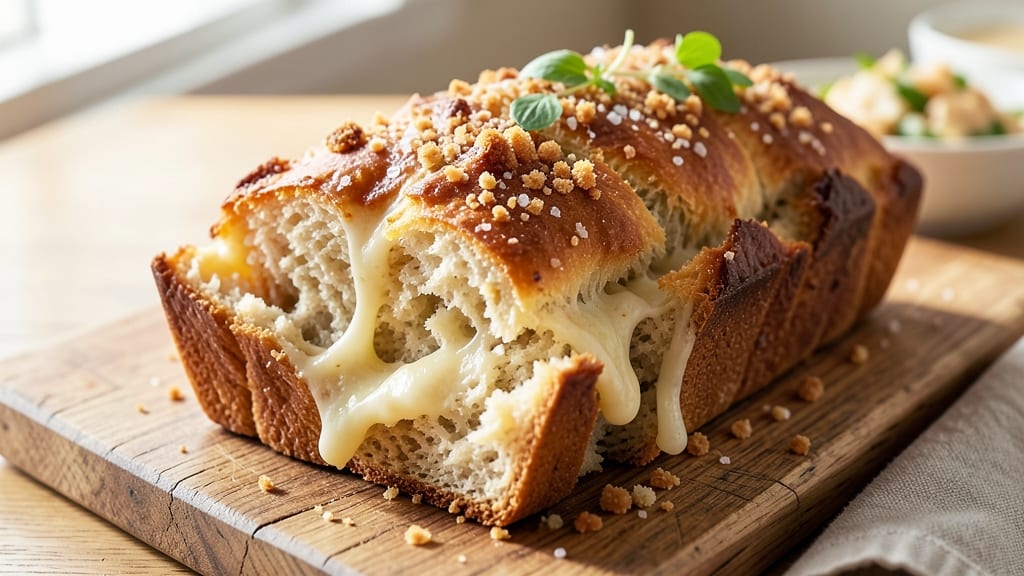
This Asiago cheese bread delivers the same pull-apart perfection you love from Panera—crispy golden crust and rivers of melted cheese that make every bite irresistible. 🌟 The secret lies in blending asiago's sharp, nutty flavor directly into the dough, creating a texture that's both tender and sturdy enough to hold gooey cheese pockets without falling apart.
What sets this recipe apart is the two-stage baking process: first, a gentle rise to develop flavor, then a high-heat finish to achieve that signature crispy crust. Unlike many copycat versions, this method ensures the cheese stays gooey while the bread develops that perfect caramelized exterior.
No special equipment needed—just a standard loaf pan and 30 minutes of active time.
By the time it emerges from the oven, you'll have a loaf with shatteringly crisp edges and a soft, chewy interior threaded with melty asiago rivers.
The aroma alone will have everyone gathering around the table, and each pull-apart bite delivers that perfect balance of savory, salty, and slightly sweet notes.
Perfect for sandwiches, appetizers, or as a side dish, this recipe scales easily for gatherings. The dough can be prepped ahead, making it ideal for busy weeknights or holiday meals. Let's get started on creating your own restaurant-quality asiago cheese bread at home.
Ingredients for asiago cheese bread panera
Golden crust and melty rivers—this is your ultimate asiago cheese bread shopping list!
| Ingredient | Amount | Notes |
|---|---|---|
| All-Purpose Flour 🌾 | 4 cups | Sifted for light texture |
| Asiago Cheese 🧀 | 1 ½ cups | Shredded, freshly grated |
| Granulated Sugar 🍚 | ¼ cup | For subtle sweetness |
| Active Dry Yeast 🍞 | 2 ¼ tsp | Instant yeast works too |
| Warm Water 💧 | 1 ¼ cups | 110°F for yeast activation |
| Unsalted Butter 🧈 | ½ cup | Softened, full-fat preferred |
| Large Egg 🥚 | 1 whole | Room temperature |
| Milk 🥛 | ¼ cup | Warm for best dough texture |
| Salt 🧂 | 1 tsp | Kosher or sea salt |
| Garlic Powder 🧄 | ½ tsp | For subtle depth |
| Dried Parsley 🌿 | 1 tsp | Optional, for freshness |
| Extra Asiago Cheese 🧀 | 1 cup | For topping, shredded |
The asiago makes this bread. Grab the good stuff from the deli counter—pre-shredded gets clumpy and won't melt right. Whole Foods or specialty markets have the best quality, but the regular grocery store block works too if you shred it yourself. Look for vibrant, sharp asiago—none of that dusty, old cheese. For the flour, King Arthur or Gold Medal are my go-tos—they give that perfect light texture. The yeast? Fresh is best, but instant yeast works in a pinch. Just make sure it's not expired—old yeast won't activate properly, and you'll end up with flat bread.
No asiago? Parmesan in a pinch, but it won't have that same nutty punch. Short on butter? Coconut oil works, though it gives a slightly different flavor. The milk can be any kind—whole, 2%, even almond milk if you're avoiding dairy. For the garlic powder, Penzeys or McCormick have great quality. No dried parsley? Skip it—it's just for garnish, not flavor. The dough gets sticky, so wet hands or a silicone spatula are your friends when shaping it. And trust me, the extra cup of asiago on top is worth the effort—those gooey rivers are the whole reason we're making this!
This dough keeps for 24 hours in the fridge—perfect for prepping ahead. Shape it into a loaf, cover with plastic, and let it rise overnight. The cheese topping? Add it right before baking so it melts perfectly. Baked bread keeps for 3 days at room temperature, but honestly, it's best eaten fresh. Freeze slices for up to 3 months—just toast straight from frozen. Pro tip: Wrap the baked loaf in foil while it's still warm to keep it soft longer. And if you make extra? Toss it in garlic butter—it's even better the next day!
Why You'll Love This Recipe
- I’ll be real: I make a double batch on Sundays. That Asiago keeps it from getting stale, and it reheats like a dream. Budget win? Absolutely. Time win? Even better—no more last-minute grocery runs.
- No-Knead Magic: Honestly, this dough comes together in five minutes—just flour, yeast, sugar, and water. No stand mixer, no fuss, no waiting around. That’s right, the same magic Panera uses, but without the $6 price tag.
- Craving-Worthy Crunch: Between us, the moment that crispy, golden crust gives way to the creamy, nutty Asiago? It’s dangerously satisfying. The sugar just melts into the cheese, making every bite taste like a little vacation.
- Breakfast or Snack: Here’s what sold me—this bread works anytime. Warm it up with jam for breakfast, toast it for a quick lunch, or serve it cold with soup. My kids grab it for after-school snacks, and I’m not even mad about it.
Step-by-step instructions for asiago cheese bread
Here's how to make that perfect golden crust with gooey cheese rivers—every pull will be worth it!
👨🍳 Step 1: Activate the Yeast for Maximum Rise
In a small bowl, whisk together the 1.25 cups warm water (it should feel like bathwater, around 110°F), 0.25 cup granulated sugar, and 2.25 tsp active dry yeast. Let it sit for 5-10 minutes until it becomes frothy and bubbly—that's your sign the yeast is alive and ready to party. If it doesn't bubble, your yeast might be dead, and you'll need to start over.
While you wait, sift the 4 cups all-purpose flour into a large mixing bowl. This aerates the flour and helps create that light, airy texture we're after. I like to give it a quick whisk to break up any clumps before moving on. The flour should be ready when your yeast mixture starts looking like champagne!
👨🍳 Step 2: Mix the Dough and Knead Until Silky
Add the yeast mixture, 0.5 cup softened unsalted butter, 1 whole large egg, 0.25 cup warm milk, 1 tsp salt, 0.5 tsp garlic powder, and 1 tsp dried parsley to the flour. Using a wooden spoon or dough whisk, mix until it starts coming together—you'll see wet flour clumping up. Then grab a dough scraper and get ready to knead!
Turn the dough onto a lightly floured surface and knead for 8-10 minutes until smooth and elastic. You're looking for a dough that springs back when poked and feels like soft, supple leather. If it's sticky, add a little more flour 1 tablespoon at a time; if it's too dry, sprinkle a few drops of water. The key is consistency—this ensures even rising and a perfect texture.
🥘 Step 3: First Rise and Cheese Folding
Lightly grease a large bowl with a bit of olive oil (not in our ingredients, but trust me—it helps!) and place the dough inside. Cover it with a clean kitchen towel or plastic wrap and let it rise in a warm spot for 1-1.5 hours, or until it's puffed up to about double its size. You'll know it's ready when you poke it gently and the indentation stays put.
Once risen, punch down the dough to release air, then fold in the 1.5 cups shredded asiago cheese by hand. Be gentle—you don't want to deflate the dough completely, just distribute that cheese evenly. This step is what gives us those glorious cheese rivers later. Cover the bowl again and let it rise for another 30-45 minutes—this second rise helps the cheese melt beautifully during baking.
🔥 Step 4: Shape and Second Rise for Perfect Texture
Grease a 9x5-inch loaf pan generously with butter (using the remaining 0.5 cup unsalted butter—save a little for greasing!). Transfer the dough to the pan and shape it gently to fit, leaving about ½ inch of space at the top for rising. Sprinkle the top with the 1 cup extra asiago cheese, pressing it lightly into the dough so it melts into those rivers during baking.
Cover the pan loosely with plastic wrap and let it rise again for 45-60 minutes, or until it's just about overflowing the pan. The dough should feel firm to the touch and look slightly domed. Preheat your oven to 375°F while it rises—this ensures it goes straight into a hot oven for that perfect golden crust.
🔥 Step 5: Bake to Golden Perfection
Bake the bread for 30-35 minutes until the top is deep golden brown and the internal temperature reaches 190°F. You'll see those gorgeous cheese rivers oozing out—this is the moment we've been waiting for! If the top browns too quickly, tent it loosely with foil to prevent over-browning while the inside finishes cooking.
Let the bread cool in the pan for 10 minutes before transferring it to a wire rack. This resting period helps the cheese set slightly, making it easier to slice without falling apart. Slice while still warm for the best texture—each bite should be tender, cheesy, and just slightly crispy on the edges. Serve with butter or your favorite jam for the ultimate experience!
Pro Tips For Making Asiago Cheese Bread Panera
- Test Your Yeast First: Skip the guesswork—drop that yeast in warm water with a pinch of sugar and wait 5 minutes for bubbles. If nothing happens, your bread’s doomed before it starts. Trust me, I’ve wasted dough over dead yeast.
- Grate the Asiago Fine: Big cheese chunks? No thanks. Pulse your Asiago in a food processor until it’s like coarse sand—this ensures even melting and no surprise chewy bits. (Yes, even if the recipe says "shredded.")
- Don’t Overmix the Dough: Stir just until the flour’s incorporated, then stop. Overworking it makes tough bread, and this recipe relies on that tender, pull-apart texture. I used to knead like I was mad—now I count to 20 and walk away.
- Bake Until Golden, Not Just Brown: The bread’s done when it’s deep golden, not just "browned." Check the internal temp—it should hit 190°F. Rushing it out leaves you with a sad, dense loaf. (I learned this after a very underwhelming first try.)
Troubleshooting this recipe
Dense Dough Issues
If your dough feels too thick or heavy after kneading, it’s likely due to overmixing or insufficient yeast activation. First, check your yeast—it should be fresh and bubbly when mixed with warm water. If not, replace it.
For a denser dough, try reducing the flour by 1-2 tablespoons or adding 1 extra tablespoon of warm water while kneading. Also, ensure your butter is softened but not melted—room temperature butter blends best. 💡
Cheese Not Melting
If the asiago stays clumpy or doesn’t melt into rivers, it’s likely not fresh enough or the oven temperature isn’t high enough. Always use freshly grated asiago—pre-shredded cheese contains anti-caking agents that prevent proper melting.
Preheat your oven to 375°F and bake until the internal temperature reaches 190°F. For extra gooeyness, sprinkle the top with 1 tablespoon of milk before baking to help the cheese melt smoothly.
Bread Collapsing
Collapsed bread usually means the dough wasn’t given enough time to rise or the oven wasn’t hot enough. Let the dough rise until it’s doubled in size and springs back when poked. If your oven runs hot or cold, use an oven thermometer to confirm it’s at 375°F.
Another trick: place a baking sheet on the lower rack during baking to create steam, which helps the bread rise properly. 🌡️
Pale or Soggy Crust
A pale crust often means the bread didn’t bake long enough or the oven wasn’t hot enough. Bake until the top is deep golden brown and the internal temperature reaches 190°F. For extra crispiness, broil the bread for 1-2 minutes at the end of baking.
If your oven browns too quickly, tent the bread with foil to prevent over-browning while the inside finishes cooking.
Dough Sticking to Pan
If the dough sticks to the pan, it’s likely not greased enough. Generously butter the pan with the remaining 0.5 cup of unsalted butter and sprinkle it with flour or cornmeal for extra release.
For a rustic look, skip the pan entirely and shape the dough into a free-form loaf on a baking sheet lined with parchment paper. Just be sure to bake it for 5-10 minutes longer to crisp the edges.
Overbrowned Top
An overbrowned top happens when the bread bakes too quickly. If this occurs, tent the loaf loosely with foil after 15 minutes of baking to slow down the browning while the inside finishes cooking.
You can also reduce the oven temperature by 25°F for the last 10 minutes of baking to achieve a more even color. For a perfectly golden crust, brush the top with a little milk before baking—it adds shine and helps with browning. 🔥
Nutrition facts
Frequently asked questions
Can I substitute asiago cheese with another type?
While asiago is ideal for its nutty flavor, you can use Parmesan or Pecorino Romano in a pinch. For a milder taste, try sharp cheddar, but it won't have the same depth. Avoid pre-shredded cheese—it contains anti-caking agents that prevent proper melting and create clumps. Freshly grated always wins!
How do I make this bread extra crispy?
For a crispier crust, bake the bread for 1-2 extra minutes until golden brown, then broil for 1 minute at the end. Brush the top with milk or egg wash before baking to enhance browning. Another trick: place a baking sheet on the lower rack during baking to create steam, which helps crisp the exterior while keeping the inside tender.
Can I make this recipe without a loaf pan?
Shape the dough into a free-form loaf on a parchment-lined baking sheet. Bake for 5-10 minutes longer to ensure the edges crisp up. For a rustic look, dimple the top with your fingers before baking. Just be sure to let it cool completely before slicing—free-form bread is best enjoyed fresh to maintain its texture.
Why did my bread turn out dense?
Dense bread usually means the yeast didn’t activate properly or the dough wasn’t kneaded enough. Double-check your yeast—it should bubble within 5-10 minutes in warm water. If not, replace it. Also, ensure you kneaded for 8-10 minutes until the dough is smooth and elastic. Overmixing or under-kneading can both lead to a dense texture.
How long can I keep this bread fresh?
This asiago cheese bread stays fresh for 3 days at room temperature, wrapped in foil or stored in an airtight container. For longer storage, slice and freeze the bread for up to 3 months. To reheat, wrap slices in foil and warm in the oven at 350°F for 5-10 minutes until gooey and crispy again.