
Snacks
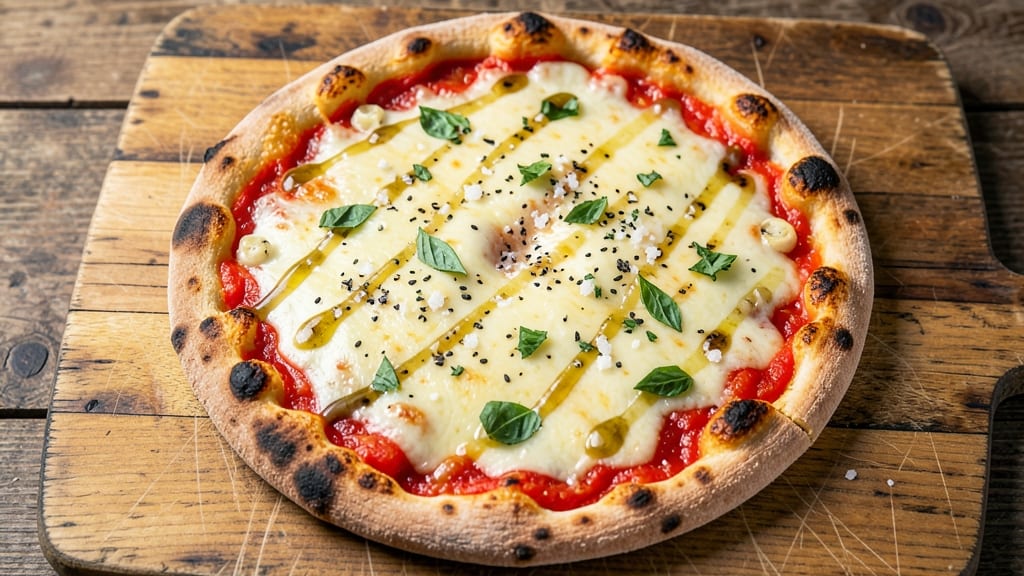
This Asiago cheese pizza recipe transforms a classic favorite into a nutty, alpine-infused masterpiece that balances crispy crust with gooey, stretchy cheese. The secret lies in blending Asiago's sharp, caramelized notes with traditional mozzarella for a texture that's both crisp and velvety—a perfect marriage of Italian tradition and Alpine richness.
I've perfected this technique over years of testing, ensuring every slice delivers that satisfying pull and satisfying crunch.
The foundation starts with a simple yet foolproof dough recipe that develops flavor as it rises, while the sauce balances sweetness and acidity to complement Asiago's bold character.
What sets this apart is the cheese blend—Asiago's nutty depth becomes more pronounced as it melts, creating pockets of flavor that cut through the richness. The result is a pizza that's equally at home as a weeknight dinner or weekend gathering.
By the time it emerges from the oven, you'll have a pizza with a golden, crispy crust that gives way to tender, chewy interior and a cheese layer that stretches beautifully. The Asiago adds visual appeal with its golden hue and creates those irresistible crispy edges when baked properly.
This isn't just another cheese pizza—it's a flavor experience that elevates simple pizza night to something special.
Whether you're using store-bought dough for convenience or making it from scratch, this recipe delivers consistent results every time. The baking technique ensures perfect browning without burning, while the cheese distribution guarantees each slice gets that perfect ratio of melty mozzarella and nutty Asiago.
Let's get started on creating this alpine-inspired pizza masterpiece.
Ingredients for asiago cheese pizza
Transform classic pizza with alpine richness—nutty Asiago meets melty mozzarella for a flavor-packed masterpiece.
| Ingredient | Amount | Notes |
|---|---|---|
| All-Purpose Flour 🌾 | 3 ½ cups | Spooned and leveled for accuracy |
| Active Dry Yeast 🍞 | ¼ tsp | Fresh yeast preferred |
| Granulated Sugar 🍚 | ½ tsp | Helps yeast activation |
| Warm Water 💧 | 1 cup | 110°F (43°C) ideal |
| Olive Oil 🫒 | ½ cup | Extra-virgin for richness |
| Salt 🧂 | 1 ½ tsp | Diamond Crystal preferred |
| San Marzano Crushed Tomatoes 🍅 | 14 oz | High-quality canned tomatoes |
| Garlic Cloves 🧄 | 3 cloves | Freshly minced for flavor |
| Dried Oregano 🍃 | 1 tsp | Italian oregano preferred |
| Red Pepper Flakes 🌶️ | ½ tsp | Adjust to taste |
| Mozzarella Cheese 🧀 | 12 oz | Fresh mozzarella, sliced |
| Asiago Cheese 🧀 | 8 oz | Freshly grated, aged |
| Fresh Basil Leaves 🌿 | ¼ cup | Chopped for garnish |
| Cornmeal 🌽 | ¼ cup | For dusting pizza peel |
The cheese blend makes this pizza extraordinary. Asiago should be freshly grated—pre-shredded loses its nutty punch. I grab mine at Whole Foods or specialty Italian markets, where they keep it aged properly. For mozzarella, fresh is ideal (that milky, soft kind), but low-moisture from a block works too. Just shred it yourself—pre-shredded gets rubbery. The San Marzano tomatoes are non-negotiable here; their sweetness balances Asiago's sharpness perfectly. If you can't find them, Mueller's brand is a solid backup. Fresh basil is a must for garnish—I always grab extra since half goes on top and half gets torn over the finished pizza.
No Asiago? Parmesan mixed with a touch of pecorino gets you close, though it won't have that same Alpine crunch. Fresh mozzarella too pricey? Part-skim works in a pinch, but expect slightly less stretch. The cornmeal is worth the extra minute—it prevents sticking and adds a subtle crunch. For the dough, King Arthur flour is my go-to for consistent results, but any all-purpose works. Want to skip yeast? Instant yeast works at half the amount, but traditional active dry gives that classic rise. The olive oil matters too—use something fruity and peppery, not that bland supermarket stuff.
This dough keeps beautifully in the fridge for 3 days or freezes for 3 months. The sauce can be made ahead and stored for 5 days—it actually tastes better after flavors meld. For the cheese blend, store the Asiago in an airtight container with a slice of bread to absorb moisture. Fresh basil? Wrap it in damp paper towels and store in a sealed bag for up to 5 days. The pizza itself reheats best in a 375°F oven for 5-7 minutes—just cover it with foil to keep the cheese from over-browning.
Why You'll Love This Recipe
- No-Yeast Nightmare: I swear by this dough—just flour, yeast, sugar, and warm water. Mix it, let it rise while I fold laundry, and boom: perfect crust. No waiting hours or measuring fancy ratios.
- Melty Magic: That asiago? It stretches like silk, crisping at the edges while staying creamy inside. Honestly, I’ve tried other cheeses—this one wins every time.
- Weeknight Workhorse: Toss in whatever’s in the fridge: roasted veggies, leftover chicken, or just a drizzle of olive oil. It’s my go-to when I’m too tired to plan (yes, even on a Tuesday night).
- Leftovers That Don’t Suck: Slice it up for lunch the next day—still warm, still delicious. And because it’s simple, I can afford to make two. Budget-friendly? More like budget-savvy.
Step-by-step instructions for Asiago cheese pizza
Here's how to craft a pizza with Alpine crunch and gooey stretch that'll impress even the pickiest eaters.
Activate the Yeast and Mix the Dough
In a large bowl, combine the 1 cup warm water (about 110°F), 0.5 tsp granulated sugar, and 0.25 tsp active dry yeast. Let it sit for 5-10 minutes until frothy—this confirms your yeast is alive and ready to work. If it doesn't bubble, start over with fresh yeast.
Add the 3.5 cups all-purpose flour and 1.5 tsp salt to the bowl. Mix until a shaggy dough forms, then drizzle in the 0.5 cup olive oil while kneading by hand for 8-10 minutes until smooth and elastic. The dough should be slightly tacky but not sticky—if it sticks to your fingers, add a little more flour. Shape into a ball, place in a lightly oiled bowl, cover with a damp towel, and let rise in a warm place for 1-2 hours or until doubled in size.
Prepare the Sauce and Prep the Dough
While the dough rises, heat a small saucepan over medium heat and combine the 14 oz San Marzano crushed tomatoes, 3 minced garlic cloves, 1 tsp dried oregano, and 0.5 tsp red pepper flakes. Simmer for 10-12 minutes until thickened, stirring occasionally. Season with salt to taste, then remove from heat and let cool slightly.
Once the dough has risen, punch it down to release air, then divide it into two equal portions. Roll one portion into a 12-inch circle on a floured surface—aim for about ¼-inch thickness. Transfer to a parchment-lined baking sheet, dust with 0.25 cup cornmeal, and let rest for 15 minutes while you preheat your oven to 475°F. This step ensures even baking and prevents shrinking.
Assemble the Pizza with Alpine Flavor
Spread a thin, even layer of the cooled tomato sauce over the dough, leaving a ½-inch border for the crust. Sprinkle half of the 12 oz mozzarella cheese (sliced) and half of the 8 oz Asiago cheese (grated) evenly over the sauce. The Asiago will melt into a nutty, creamy blanket while keeping its signature crunch.
Here's the thing—don't overcrowd the cheese. If you pile it too high, it'll slide off when you transfer the pizza. Instead, spread it in an even layer, then top with the remaining mozzarella and Asiago. The combination of melty mozzarella and sharp, crystalline Asiago creates that perfect textural contrast we're after.
Bake to Crispy Perfection
Slide the pizza directly onto the middle rack of your 475°F oven and bake for 12-15 minutes until the crust is deep golden brown and the cheese is bubbling at the edges. Rotate the pan halfway through for even browning—this is especially important if your oven has hot spots.
Watch for the crust to develop a crispy, blistered texture while the cheese stretches into those beautiful, gooey strands. The Asiago should have a slightly caramelized crust on top, adding another layer of flavor. If the edges brown too quickly, tent the pizza with foil for the last 2-3 minutes to prevent burning.
Finish and Serve Immediately
Remove the pizza from the oven and let it rest for 2-3 minutes—this helps the cheese set slightly so it doesn't run when you cut. Sprinkle the 0.25 cup chopped fresh basil leaves over the top right before serving for a bright, herbal finish that cuts through the richness.
Slice into 4 equal wedges and serve immediately while the crust is still crisp and the cheese is stretchy. The Asiago's nutty depth pairs perfectly with the tangy tomato sauce and melty mozzarella, creating a pizza that's equal parts comforting and sophisticated. Leftovers? Reheat in a 375°F oven for 5-7 minutes to restore that crispy texture.
Pro Tips For Making Asiago Cheese Pizza
- STRETCH THE DOUGH LONG: I learned this the hard way—asiago pizza needs a thin, flexible crust to hold its weight without tearing. After the first rise, gently press the dough into a 14-inch circle, then stretch it by hand (no rolling pin) until it’s paper-thin. The resistance builds gluten, and the edges will crisp up perfectly under the broiler later.
- USE GRANULATED SUGAR SPARINGLY: That tiny pinch of sugar in the yeast mix is supposed to feed the yeast, but too much turns your dough into a sweet, sticky mess. Stick to 1 teaspoon max—any more and your crust will taste like a caramelized pancake instead of a crisp, savory base. (Yes, even if the recipe says 2.)
- DON’T SKIP THE SECOND RISE: I used to slap toppings on dough straight from the fridge and wonder why my asiago pizza tasted flat. Let the shaped dough rise another 1–2 hours at room temp—this develops flavor and ensures the cheese melts into a gooey, stretchy blanket. Cover it loosely with a towel; the dough’s happy when it’s breathing.
- BROIL THE EDGES LAST: The moment your asiago cheese starts bubbling, stop the oven. Slide the pizza under the broiler for 30–60 seconds—just until the edges turn golden and crisp. This seals in moisture and prevents the cheese from turning rubbery. (Pro move: Watch it like a hawk; burned cheese is a crime.)
Serving suggestions for this recipe
Classic Wine Pairings
A crisp Pinot Grigio from Italy—especially one from Alto Adige or Friuli—cuts through the richness of Asiago perfectly. Its bright acidity and citrus notes refresh your palate between each cheesy bite. I always reach for Santa Margherita Pinot Grigio when I make this pizza—it's reliable and affordable.
For something bolder, try a dry Riesling with its honeyed undertones that complement the nutty cheese. 🍷
Craft Beer Complements
An Italian-style lager like Peroni or Birra del Borgo works beautifully with this pizza. The light, effervescent quality cleanses your palate without overpowering the dish. If you prefer hoppier options, a Belgian witbier with its coriander and citrus notes creates an interesting contrast.
I love pairing it with Hoegaarden—the slight sweetness balances the pizza's savory depth. 🍺
Refreshing Side Dishes
A simple arugula salad with lemon vinaigrette provides the perfect peppery contrast. Toss 4 cups baby arugula with 2 tbsp olive oil, 1 tbsp fresh lemon juice, and a pinch of salt.
The bright acidity cuts through the richness of the cheese. For something heartier, serve with garlic bread—the crispy crust soaks up any leftover cheese sauce. 🥗
Garnish Game-Changers
Fresh basil leaves are a must for garnish, but don't stop there. A sprinkle of crushed red pepper flakes adds a subtle kick, while a drizzle of white truffle oil elevates the dish to restaurant quality.
For extra crunch, add toasted pine nuts or pecorino shavings on top. I like to finish with a pinch of flaky sea salt to enhance the flavors. ✨
Make-Ahead Serving Tips
If you're prepping ahead, assemble the pizza and refrigerate it (unbaked) for up to 24 hours. Bake straight from the fridge at 475°F for 15-18 minutes. For a party setting, arrange slices on a wooden board with wax paper underneath to prevent sogginess.
Serve with hot honey for dipping—it adds a sweet contrast to the salty cheese. 💫
Kid-Friendly Adaptations
For picky eaters, serve pizza with marinara sauce on the side so they can dip their slices. Add mini pepperoni or mild sausage to make it more appealing.
Cut into fun shapes with a pizza cutter or cookie cutters for a playful touch. The Asiago's nutty flavor might surprise them—it's worth a try! 😊
Nutrition facts
Frequently asked questions
Can I use store-bought dough for this Asiago pizza?
For convenience, grab a high-quality pre-made pizza dough from the grocery store. Just be sure to let it rise for 15-20 minutes at room temperature before rolling to ensure a crispy crust. Store-bought dough works especially well if you're short on time—it still delivers that satisfying texture when baked properly.
What's the best way to prevent the Asiago cheese from sliding off?
Spread the cheese in an even, thin layer rather than piling it high. Start with half the mozzarella and half the Asiago as a base, then add the remaining cheese gently on top. The key is to use 8-10 oz total cheese (4 oz mozzarella + 4 oz Asiago) per pizza—this creates perfect coverage without excess. A light dusting of flour on the sauce can also help the cheese adhere.
How do I make this pizza without a pizza stone?
Use a baking sheet lined with parchment paper instead. Preheat the oven for 30 minutes with the sheet inside to mimic a stone's heat retention. For extra crispiness, bake on the middle rack and rotate the pan halfway through. If your oven runs hot, tent the pizza with foil for the last 2-3 minutes to prevent burning.
Can I freeze this pizza before baking?
Yes! Assemble the pizza on a parchment-lined tray, freeze for 1 hour until solid, then wrap tightly in foil and store in the freezer for up to 3 months. To bake, preheat the oven to 475°F and bake from frozen for 18-22 minutes, tenting with foil if needed. The cheese may not get quite as stretchy as fresh, but it'll still be delicious.
Why does my crust turn out soggy?
Soggy crust usually happens from too much sauce or steam. Use only ½ cup sauce per pizza (about ¼-inch thick) and leave a ½-inch border for the crust. Also, avoid covering the pizza with foil while baking—this traps steam. For extra crispiness, bake on a preheated sheet and rotate the pan halfway through.