
Appetizers
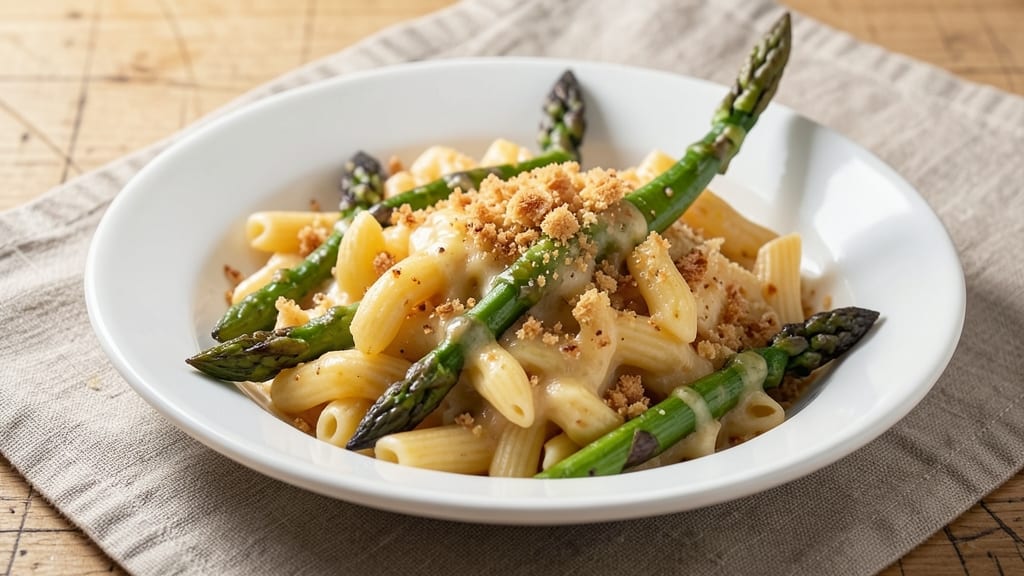
This asparagus mac and cheese recipe transforms a comfort food classic into something unexpectedly elegant—where tender asparagus spears cut through creamy cheese sauce, and a golden, crispy breadcrumb topping adds the perfect textural contrast. The secret lies in balancing rich, cheesy indulgence with bright, fresh asparagus, creating a dish that feels both hearty and refined. I developed this after realizing how often asparagus gets overlooked in mac and cheese, and the result is a flavor profile that’s far more complex than traditional versions.
The technique is straightforward but precise: roast the asparagus until tender-crisp to maintain its vibrant color and snap, then fold it into a velvety cheese sauce made with sharp cheddar, Gruyère, and a touch of mustard for depth.
The pasta water gets worked into the sauce for extra silkiness, while a buttery breadcrumb topping—baked until deep golden—ensures every bite delivers that satisfying crunch. What sets this apart is how the asparagus’s natural sweetness and slight bitterness elevate the dish without overpowering the cheese.
By the time it’s served, you’ll have a dish that’s creamy yet structured, rich yet balanced—each forkful offering a perfect harmony of textures and flavors.
The crispy topping stays crispy even when cutting into the mac, and the asparagus holds its shape, adding a pop of color and freshness to every bite.
This isn’t just mac and cheese; it’s a springtime celebration on a plate, ready to impress at dinner parties or elevate a weeknight meal.
For extra flair, garnish with a sprinkle of smoked paprika or fresh parsley, and serve with a simple arugula salad to cut through the richness. The recipe scales effortlessly, making it ideal for feeding a crowd or prepping ahead for leftovers.
Let’s get cooking—this dish is about to become your new go-to for creamy, crispy, and unexpectedly sophisticated comfort food.
Ingredients for asparagus mac and cheese
Six ingredients transform ordinary mac and cheese into a refined springtime masterpiece.
| Ingredient | Amount | Notes |
|---|---|---|
| Fresh Asparagus Spears 🌱 | 1 ½ lb | Trimmed woody ends, medium thickness |
| Medium Cavatappi Pasta 🍝 | 1 ½ cups | Uncooked, dry pasta |
| Sharp White Cheddar Cheese 🧀 | 3 cups | Shredded, block preferred |
| Gruyère Cheese 🧀 | 1 ½ cups | Shredded, aged variety |
| Unsalted Butter 🧈 | ¾ cup | Cold, cubed for topping |
| Panko Breadcrumbs 🍞 | 1 cup | Japanese-style preferred |
| Freshly Ground Black Pepper 🌶️ | ½ tsp | Freshly cracked preferred |
| Dijon Mustard 🍯 | 1 tbsp | High-quality, smooth variety |
| Heavy Cream 🥛 | ½ cup | Full-fat for richness |
| Extra-Virgin Olive Oil 🫒 | 2 tbsp | For roasting asparagus |
| Smoked Paprika 🌶️ | ½ tsp | For garnish, optional |
| Fresh Parsley 🌿 | ¼ cup | Chopped, for garnish |
| Diamond Crystal Kosher Salt 🧂 | 1 ½ tsp | For pasta water |
The asparagus is non-negotiable—look for vibrant green spears with tight tips, about 10-12 inches long. Whole Foods or local farmers markets carry the freshest varieties, but any grocery store's pre-trimmed asparagus works in a pinch. Thicker spears (½-inch diameter) hold their shape better when roasted, while thinner ones become tender faster. Trim the woody bottoms at an angle—about 1 inch from the base—so they stand upright in your roasting pan. Pro tip: Roast them at 425°F until just tender-crisp (about 12-15 minutes), not mushy, to preserve that satisfying snap.
Gruyère is the secret weapon here—its nutty depth cuts through the sharp cheddar. Pre-shredded cheese loses moisture and melts unevenly, so grate your own from a block. No Gruyère? Parmigiano-Reggiano at half the amount adds umami without overpowering. The breadcrumbs must be Panko-style for that signature crisp—regular breadcrumbs turn soggy. For extra richness, toast the butter and breadcrumb mixture until deep golden brown (375°F for 8-10 minutes). The mustard isn't just for flavor; it emulsifies the sauce for that silky pull-apart texture. Substitute with Dijon-style yellow mustard if you're strict about authenticity.
This dish reheats beautifully—cover with foil and warm at 350°F for 20 minutes to revive the crispy topping. Store leftovers in an airtight container for 4-5 days, but the topping loses crispness after day 2. For make-ahead prep, assemble everything (except baking the topping) up to 24 hours ahead. The asparagus can be roasted and cooled, then folded into the sauce when reheating. Freeze portions without the topping for up to 3 months—just bake the topping fresh after thawing. Garnish with smoked paprika and parsley right before serving, as they wilt when warmed.
Why You'll Love This Recipe
- One-Pan Magic: I swear by this recipe because it’s actually one-pan—no saucepan mess, no straining pasta into a colander. Toss the cavatappi and asparagus right in the baking dish with the cheese sauce, and you’re basically done. (Yes, even on a Tuesday night.)
- Cheese Love: That combo of sharp white cheddar and Gruyère? It’s like a hug for your taste buds—creamy but with a little nutty bite. The asparagus adds this fresh, bright pop that cuts through the richness, so it’s never too heavy.
- Weeknight Hero: Between us, this is my go-to when I need something hearty but doesn’t require a grocery haul. Use up leftover asparagus from dinner or a bag of cavatappi sitting in the pantry—it’s the ultimate “I don’t wanna cook” solution that still feels special.
- Leftovers Win: Honestly, I make this just so I can save leftovers. The cheese sauce gets even better the next day—thicker, richer, and somehow more addictive. Pack it for lunch or freeze portions; it reheats like a dream and still tastes like you slaved over it.
Step-by-step instructions for asparagus mac and cheese
Here's how to achieve that perfect balance of crispy breadcrumb topping and velvety cheese sauce.
👨🍳 Step 1: Roast the Asparagus Until Tender-Crisp
Preheat your oven to 425°F and line a baking sheet with parchment paper. Trim the woody ends from the 1.5 lb fresh asparagus spears and toss them with 2 tablespoons extra-virgin olive oil, ½ teaspoon diamond crystal kosher salt, and ½ teaspoon freshly ground black pepper. Spread them in a single layer on the prepared sheet.
Roast for 12-15 minutes until the asparagus is tender when pierced with a fork but still holds its shape. The edges should be slightly charred—that's your signal they're ready. Remove from the oven and set aside, allowing them to cool slightly before chopping into ½-inch pieces for later incorporation into the cheese sauce.
🍳 Step 2: Cook the Cavatappi to Al Dente Perfection
Bring a large pot of water to a rolling boil and add 1.5 teaspoons diamond crystal kosher salt. Add the 1.5 cups medium cavatappi pasta and cook until 1 minute before the package instructions indicate al dente. This slight undercooking ensures the pasta remains tender when combined with the warm cheese sauce.
Reserve ½ cup pasta water before draining, then drain the pasta completely. The starchy water is essential for creating a silky sauce. Transfer the drained pasta to a large mixing bowl and set aside while you prepare the cheese base.
🥘 Step 3: Create the Rich Cheese Sauce
In the same pot you used for the pasta, melt ½ cup heavy cream over medium heat until steaming. Reduce heat to low and gradually whisk in 3 cups sharp white cheddar cheese and 1.5 cups gruyère cheese until fully melted and smooth. The sauce should be thick but pourable—if it's too stiff, whisk in 2-3 tablespoons reserved pasta water to loosen it.
Remove the pot from heat and stir in 1 tablespoon Dijon mustard and the chopped roasted asparagus. This step infuses the sauce with subtle earthy flavor and adds a pleasant texture contrast. Keep the sauce warm while you prepare the topping.
🔥 Step 4: Assemble and Bake for Crispy Topping
Preheat your oven's broiler to high. Spread the cheese sauce evenly over the cooked cavatappi in the mixing bowl. In a small bowl, combine 1 cup panko breadcrumbs, ½ cup unsalted butter (cold and cubed), and ½ teaspoon smoked paprika. Sprinkle this mixture evenly over the macaroni.
Transfer the bowl to a baking sheet and broil for 3-5 minutes until the topping is deep golden brown and bubbling. Watch closely—the topping burns quickly but should remain crispy, not burnt. Remove from the oven and let rest for 2 minutes before serving.
🍽️ Step 5: Garnish and Serve Immediately
Transfer the mac and cheese to a serving dish and garnish with ¼ cup chopped fresh parsley. The parsley adds a fresh contrast to the rich cheese and crispy topping. Serve immediately while the topping is still crispy and the cheese is warm and gooey.
Each bite should deliver that perfect combination of creamy cheese, tender pasta, and crispy breadcrumb topping. The roasted asparagus adds a subtle earthiness that complements the sharp cheddar and nutty gruyère beautifully. For best results, serve with a simple arugula salad to balance the richness.
Pro Tips For Making Asparagus Mac And Cheese
- Trim Asparagus Properly: Snap off the tough ends by bending each spear until it breaks—don’t cut. The break point is always where the woody part starts. I learned this the hard way when my first batch had chewy asparagus hiding in the creamy sauce. Also, peel the thicker stalks with a vegetable peeler if they’re over ½ inch wide; no one wants a mouthful of fiber.
- Cook Pasta Al Dente: Cavatappi needs 2 minutes less than the package says—test at 1 minute under. The sauce will finish cooking as it sits, and overcooked pasta turns to mush. I used to rush this and ended up with a gluey mess. Trust the timer, then drain and shock with cold water immediately to stop cooking.
- Melt Cheese Slowly: Heat the cheese sauce over low heat, stirring constantly. If you crank it up, Gruyère seizes and turns grainy—no one wants gritty mac and cheese. Add a splash of pasta water to loosen it, then let it sit off the heat for 2 minutes to thicken. Sounds weird, but it works every time.
- Roast Asparagus First: Toss asparagus in olive oil, salt, and pepper, then roast at 425°F for 10-12 minutes before mixing into the pasta. The caramelized edges add depth without wilting into the sauce. I was skeptical until I tried it—now it’s non-negotiable. Skip this, and you’re just boiling asparagus into oblivion.
Troubleshooting your asparagus mac and cheese
Sauce Too Thick?
If your cheese sauce feels too thick after melting, don’t panic—this is easily fixed. Whisk in 2-3 tablespoons of reserved pasta water (the starchy liquid you saved earlier) until you reach a smooth, pourable consistency.
The starch in the water acts like a natural thickener when heated, so adding it now creates that signature silky texture. I’ve found that 1 tablespoon at a time prevents over-dilution while ensuring the sauce clings perfectly to the pasta. 🥄
Topping Losing Crisp?
The breadcrumb topping is the star of this dish, so if it’s turning soggy, adjust your baking approach. First, pat the butter and breadcrumbs dry before mixing—any moisture will steam instead of crisp.
Second, broil on high heat for just 3-4 minutes (not 5) and watch like a hawk—it burns faster than you think. For extra insurance, I like to bake the topping separately on a parchment-lined tray before sprinkling it on top, then broil the whole dish together.
This two-step method keeps the crunch intact even when cutting into the mac. 🔥
Asparagus Too Mushy?
Over-roasted asparagus ruins the dish’s texture contrast, so timing is everything. Aim for 12-15 minutes at 425°F until the spears are tender but still hold their shape when pierced with a fork. If yours turns mushy, you likely roasted them too long.
Next time, check at 12 minutes—they should yield slightly to pressure but not collapse. For thicker spears (½-inch diameter), reduce time to 10-12 minutes; thinner ones need 14-16 minutes. Always trim the woody ends at an angle to prevent them from sitting flat in the pan. 🌱
Cheese Clumping?
Clumpy cheese is usually a sign of uneven heating or too much moisture. To prevent this, melt the cheeses gradually over low heat, whisking constantly until fully smooth. If clumps persist, strain the sauce through a fine-mesh sieve into a clean pot before adding the asparagus.
For extra insurance, I like to temper the cheese by whisking it into the warm cream first, then adding the remaining cheese in small batches. This method ensures a velvety, lump-free sauce every time. 🧀
Pasta Too Dry?
If your cavatappi ends up dry after mixing with the sauce, you likely undercooked it or didn’t reserve enough pasta water.
For future attempts, cook the pasta 1 minute longer than package instructions (it’ll finish cooking in the sauce) and save ½ cup pasta water—this starchy liquid is the secret to a creamy, cohesive texture.
Pro tip: Toss the cooked pasta with 1 tablespoon olive oil right after draining to prevent sticking, then mix it into the sauce last. This keeps the pasta tender and moist while absorbing the cheese beautifully. 🍝
Nutrition facts
Frequently asked questions
Can I use frozen asparagus instead of fresh?
Fresh asparagus gives the best texture and flavor, but frozen will work in a pinch. Thaw it completely first, then pat dry thoroughly before roasting. Use 1 lb frozen asparagus (about 2 cups) and roast at 400°F for 10-12 minutes, checking frequently to prevent overcooking. The texture will be slightly softer than fresh, but it still adds great flavor to the dish.
What's the best pasta shape for this recipe?
Cavatappi is ideal because its ridges and holes trap the creamy cheese sauce beautifully. If you can't find it, penne, fusilli, or farfalle work well too. Avoid long pasta like spaghetti—it won't hold the sauce as effectively. For a lighter version, try whole wheat cavatappi, but reduce the cooking time by 1 minute to prevent overcooking.
Can I make this dish ahead of time?
Yes! Assemble everything up to the final baking step, then refrigerate for up to 24 hours. When ready to serve, bake uncovered at 350°F for 20-25 minutes to revive the crispy topping. For the best texture, add the topping fresh after reheating—it won't crisp up properly if baked ahead. The asparagus stays tender when reheated this way.
What if I don't have Gruyère?
No problem! Use 1.5 cups extra-sharp cheddar plus ½ cup Parmesan for a similar nutty depth. For a creamier texture, add 1 tablespoon cream cheese to the sauce. If you're avoiding dairy, nutritional yeast can add a cheesy flavor, though the texture will differ. The dish will still be delicious—just slightly less complex in flavor.
How can I make this vegetarian?
This recipe is already vegetarian-friendly, but if you want to boost protein, stir in ½ cup cooked chickpeas or ¼ cup nutritional yeast into the cheese sauce. For a vegan version, use cashew-based cheese sauce and vegan butter in the topping. The asparagus and pasta will still shine, though the texture will be slightly different without dairy.