
Side Dishes
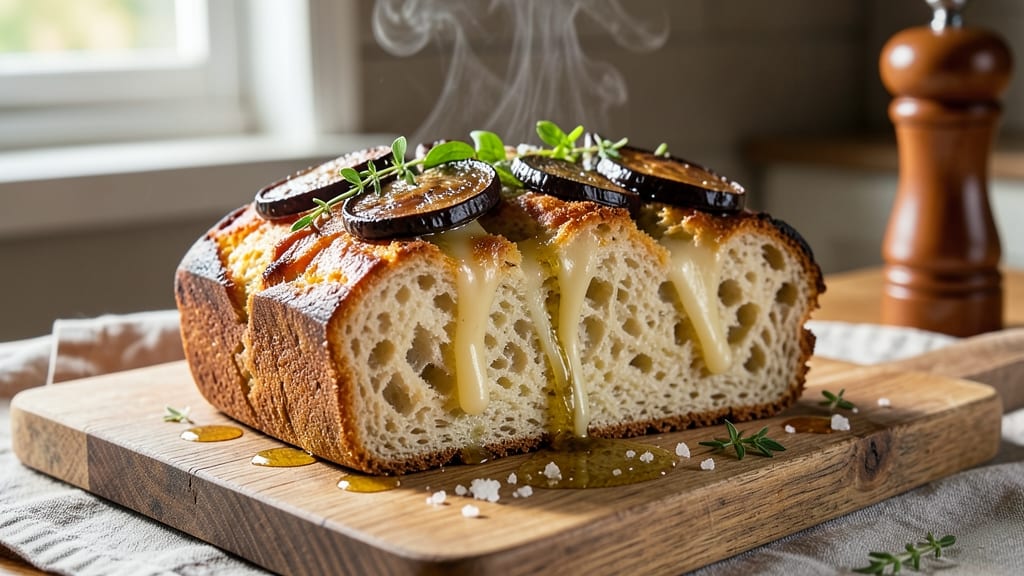
Aubergine, kitchen cheese bread transforms humble ingredients into a savory masterpiece that bridges Mediterranean comfort and bold cheddar richness. 🔥 The secret lies in roasting eggplant until smoky and tender—then folding it into a cheesy dough that bakes into a golden, crisp-edged loaf with pockets of melty cheese and caramelized eggplant throughout. I developed this recipe after realizing how often eggplant gets sidelined in side dishes, and this fusion solves that problem with a textural contrast that’s impossible to resist.
What sets this recipe apart is the balance: the eggplant’s natural sweetness pairs perfectly with sharp cheddar’s tang, while the bread’s crust gives way to a tender, chewy interior. No fancy techniques are needed—just roasting, kneading, and a single baking session.
The result is a dish that works as a standalone side or pairs beautifully with grilled meats or salads, delivering restaurant-quality flavor at home.
The bread’s aroma alone will have everyone asking what’s for dinner. The eggplant softens into a velvety texture, while the cheese pulls and stretches with each bite, creating a satisfying contrast.
The crust stays crisp, and the interior remains moist—no dry, rubbery bread here. This recipe is the ultimate way to elevate eggplant from side note to star of the meal.
Perfect for meal prep or serving fresh, this cheesy eggplant bread is versatile enough for weeknight dinners or holiday gatherings. The dough comes together in under 15 minutes, and the baking time is just 30 minutes, making it ideal for cooks who want flavor without fuss.
Let’s get started!
Ingredients for aubergine kitchen cheese bread
Sixteen ingredients transform smoky roasted eggplant and sharp cheddar into a golden, crisp-edged loaf with velvety interior pockets.
| Ingredient | Amount | Notes |
|---|---|---|
| Eggplant 🍆 | 2 lbs | Medium-sized, organic preferred |
| All-Purpose Flour 🌾 | 4 cups | King Arthur brand recommended |
| Sharp White Cheddar 🧀 | 2 cups | Shredded, aged 6+ months |
| Extra-Virgin Olive Oil 🫒 | ½ cup | For roasting and dough |
| Instant Yeast 🍞 | 2 tsps | Saf-Instant for reliability |
| Granulated Sugar 🍚 | 1 tbsp | For yeast activation |
| Salt 🧂 | 1 ½ tsp | Diamond Crystal kosher |
| Garlic Cloves 🧄 | 4 cloves | Minced, fresh preferred |
| Dried Oregano 🌿 | 1 tsp | Mediterranean blend |
| Black Pepper 🌶️ | ½ tsp | Freshly cracked |
| Milk 🥛 | ½ cup | Warm, for dough activation |
| Eggs 🥚 | 1 whole | Room temperature |
| Sesame Seeds 🌰 | 2 tbsp | For topping |
| Smoked Paprika 🌶️ | ½ tsp | For roasted eggplant |
The eggplant selection is critical—organic varieties like Black Beauty or Italian eggplant have denser flesh that roasts beautifully. I source mine from Whole Foods or local farms during peak season (summer/fall), but any medium-sized eggplant works. Roast until edges are charred and centers collapse—this caramelization is what creates the smoky depth. Smoked paprika enhances this effect; Penzeys brand is my go-to for consistent quality. For the cheddar, aged 6+ months delivers that sharp tang—Cabot or Tillamook are excellent choices. Pre-shredded cheese contains anti-caking agents that prevent proper melting, so always shred your own using a box grater.
No sharp cheddar? Parmigiano-Reggiano or aged Gouda work as substitutes, though the flavor profile shifts slightly. Substituting the eggplant? Zucchini or butternut squash can mimic the texture when roasted, though eggplant's unique sweetness is irreplaceable. The dough relies on King Arthur flour for structure—its high protein content yields a chewy interior. For a gluten-free version, substitute Bob's Red Mill 1:1 gluten-free flour blend, though texture will differ. The sesame seeds add crunch; if unavailable, toasted pine nuts or poppy seeds provide a similar effect. Always use Diamond Crystal kosher salt—it dissolves more easily than table salt, ensuring even seasoning throughout the loaf.
Store-bought dough can wait—this recipe's magic lies in fresh preparation. The roasted eggplant keeps for 3 days refrigerated or 3 months frozen, but the dough must be baked within 2 hours of mixing for optimal texture. For meal prep, bake the loaf, cool completely, then slice and freeze individual portions. Reheat in a 350°F oven for 10-15 minutes until crispy again. The bread's aroma intensifies as it cools, so resist the urge to slice immediately—wait at least 15 minutes before serving to preserve that crisp crust. Portion the cheese generously; it's the star of this dish and won't disappoint.
Why You'll Love This Recipe
- No Chopping Needed: I swear by this trick—just slice the eggplant thin, brush it with olive oil, and let the oven do the work. No spiralizer, no mandoline, no fuss.
- Sharp Cheese Magic: That sharp white cheddar melts into a gooey, stretchy blanket while the eggplant soaks up its tang. Honestly, the first bite makes me forget it’s “healthy” (whatever that means).
- Lunchbox Hero: Between us, this bread holds up better than store-bought in packed lunches. The eggplant stays tender, the cheese doesn’t ooze out, and it’s the only thing my kids will eat cold.
- Budget Stretch: A single eggplant and a block of cheddar feed four for dinner and breakfast. I’ve made it three times this month—proof it’s my wallet’s new best friend.
Step-by-step instructions for smoky roasted eggplant and sharp cheddar bread
This fusion bread delivers rich, smoky eggplant flavor and sharp cheddar depth—here's how to perfect it.
🔥 Step 1: Roast the Eggplant for Deep Smoky Flavor
Preheat your oven to 425°F and line a baking sheet with parchment paper. Cut the 2 lbs eggplant into ½-inch thick slices (about 12-15 slices total). Brush both sides generously with 0.5 cup extra-virgin olive oil, then sprinkle evenly with 0.5 tsp smoked paprika and 0.5 tsp salt.
Arrange the slices in a single layer on the prepared baking sheet, leaving ½-inch space between each. Roast for 25-30 minutes until the edges are deep golden brown and the flesh is tender when pierced with a fork. The eggplant should be caramelized with a smoky aroma—this is your flavor foundation. Let the roasted slices cool slightly before handling.
👨🍳 Step 2: Prepare the Yeast Activation and Dough Mix
In a small bowl, whisk together the 0.5 cup warm milk (about 110°F—test by touching your wrist), 1 tbsp granulated sugar, and 2 tsps instant yeast. Let this sit for 5-10 minutes until it becomes frothy and bubbly—this confirms your yeast is active. If it doesn't bubble, your bread won't rise properly.
In a large bowl, combine the 4 cups all-purpose flour with 1.5 tsp salt, 1 tsp dried oregano, and 0.5 tsp black pepper. Make a well in the center and pour in the yeast mixture along with the 1 whole egg. Using a wooden spoon, gently mix until a shaggy dough forms—don't overwork it at this stage. The dough should be sticky but manageable.
🥘 Step 3: Knead and Incorporate Roasted Eggplant
Turn the dough onto a lightly floured surface and knead for 5-7 minutes until smooth and elastic. You'll notice it's softer than traditional bread dough due to the eggplant's moisture content. Shape the dough into a rectangle about 12x8 inches and gently press down to create a ½-inch thick base.
Lay the cooled roasted eggplant slices evenly over the dough, slightly overlapping them. Sprinkle the 2 cups sharp white cheddar evenly over the eggplant, pressing down gently to adhere. Roll the dough tightly into a log, sealing the seam well. This creates layers of eggplant and cheese throughout each slice.
⏰ Step 4: First Rise and Shaping
Place the sealed dough log seam-side down in a lightly greased 9x5-inch loaf pan. Cover with a clean kitchen towel and let rise at room temperature for 1-1.5 hours until it has nearly doubled in size. You'll see the dough puff up and the eggplant layers become visible through the thin dough—this indicates proper fermentation.
Once risen, preheat your oven to 375°F. Brush the top of the dough with a little extra-virgin olive oil and sprinkle evenly with 2 tbsp sesame seeds. Bake for 35-40 minutes until the bread is deep golden brown and sounds hollow when tapped on the bottom. The internal temperature should reach 190°F.
🔥 Step 5: Cool and Slice for Maximum Flavor
Remove the bread from the pan and transfer to a wire rack to cool for at least 15 minutes—this prevents soggy slices. The bread will be extremely tender due to the eggplant's moisture, so slice carefully with a serrated knife. Each slice should reveal layers of smoky roasted eggplant and sharp cheddar.
Serve warm for the best texture—this bread is ideal with soups or as a cheesy appetizer. The eggplant adds natural moisture while the cheddar creates rich, melty pockets. Store any leftovers wrapped in foil at room temperature for up to 2 days, or freeze for longer storage.
Pro Tips For Making Aubergine Kitchen Cheese Bread
- Salting Eggplant Twice: I learned this the hard way—skip the first salt bath, and your bread turns soggy. Cut the eggplant, sprinkle with 1% salt, let it sit 20 minutes, then rinse and pat dry. Repeat after 30 minutes. The extra step removes enough moisture to keep the texture light, not gummy.
- Use Warm Olive Oil: Cold oil won’t melt the cheddar properly, and you’ll end up with clumpy dough. Heat the olive oil to just above room temp (about 80°F/27°C)—enough to make it liquid but not hot. This ensures the cheese blends smoothly and activates the yeast faster.
- Don’t Overmix the Dough: I used to punch and fold like I was kneading bread dough, and the eggplant texture turned mushy. Mix just until the flour comes together—about 2 minutes by hand. Overworking breaks down the eggplant’s structure, and you’ll end up with a dense, chewy loaf instead of a tender crumb.
- Let the Dough Rise Fully: Sounds obvious, but I’ve pulled loaves too soon because I was hungry. Give it the full 1.5–2 hours until it’s almost doubled—poke it, and if the dimple springs back slowly, it’s ready. Rushing it leads to a dense, flat loaf that tastes more like a brick than bread. (Yes, even if you’re impatient like me.)
Pro cooking tips for this recipe
Roast Eggplant Perfectly
Eggplant needs high heat and even spacing to develop that smoky flavor. I roast mine at 425°F for 25-30 minutes until edges are deep golden brown—this caramelization is non-negotiable. Use a baking sheet with parchment paper for easy cleanup, and ½-inch spacing between slices ensures even browning. 🔥
For extra smokiness, brush slices with extra-virgin olive oil and sprinkle with ½ tsp smoked paprika before roasting. The paprika enhances the natural sweetness while adding a subtle smoky depth that pairs beautifully with the sharp cheddar. Let slices cool 5 minutes before handling—they’ll be fragile when hot.
Dough Texture Secrets
The dough will be stickier than usual thanks to the eggplant’s moisture. I recommend using King Arthur flour—its higher protein content helps bind the extra liquid. Knead for 5-7 minutes until smooth but avoid overworking, or the gluten will toughen the bread.
Shape the dough into a rectangle before adding eggplant for even distribution.
For a lighter texture, let the dough rise at room temperature (around 75°F) for 1-1.5 hours. A proofing box or even a turned-off oven with a bowl of boiling water works if your kitchen is cool. The dough should nearly double—this ensures a tender crumb.
Cheese Layering Tricks
Sprinkle the sharp white cheddar evenly over the roasted eggplant and press gently to adhere. This creates melty pockets in every slice. For extra richness, I sometimes add ¼ cup grated Parmesan to the cheese mixture—it adds a nutty contrast to the sharp cheddar. 🧀
When rolling the dough into a log, seal the seam tightly to prevent cheese from leaking out during baking. If the dough feels too sticky, wet your hands slightly before handling—this keeps the layers intact.
Baking for Crispy Crust
Brush the risen dough with olive oil and sprinkle sesame seeds just before baking—this adds crunch and visual appeal. Bake at 375°F for 35-40 minutes until the crust is deep golden brown and the internal temperature hits 190°F.
A wire rack is key for cooling to avoid a soggy bottom.
For a crispier crust, broil for 1-2 minutes at the end of baking. Watch closely—cheese bread burns quickly! The bread’s aroma will fill your kitchen, signaling it’s ready. Let it cool 15 minutes before slicing to preserve that perfect texture.
Nutrition facts
Frequently asked questions
Can I substitute eggplant with zucchini in this recipe?
You can try, but the flavor and texture will differ significantly. Zucchini has a milder taste and less moisture, so you might need to adjust by adding 1-2 tablespoons extra olive oil to compensate. For best results, stick with eggplant—its natural sweetness and meaty texture are key to this dish's success.
What if my dough doesn't rise properly?
Check your yeast first—it should bubble within 5-10 minutes when mixed with warm milk. If not, your yeast may be expired. Also ensure your kitchen is warm enough (ideally 75°F) and give the dough extra time (up to 2 hours) to rise. A proofing box or turned-off oven with boiling water helps create ideal conditions.
How do I store leftovers to keep them fresh?
Wrap cooled slices tightly in foil or store in an airtight container. This bread stays fresh at room temperature for 2 days or in the fridge for 3 days. For longer storage, freeze slices individually—reheat in a 350°F oven for 10-15 minutes until crispy again. The cheese stays melty when reheated properly!
Can I make this gluten-free?
Yes, but texture will change. Replace all-purpose flour with a 1:1 gluten-free flour blend like Bob's Red Mill. Add ½ tsp xanthan gum to help bind the dough. Expect a denser result—this bread relies on gluten for its signature chewy texture. Test with a small batch first to adjust moisture levels.
Why did my bread turn out too dense?
Over-kneading or under-rising are common culprits. The dough should be soft and slightly sticky—don't overwork it. Also, ensure your yeast is active and the dough rises until nearly doubled. If your kitchen is cold, try a warmer location for rising. For extra lightness, consider adding ½ cup Greek yogurt to the dough mixture.