
Appetizers
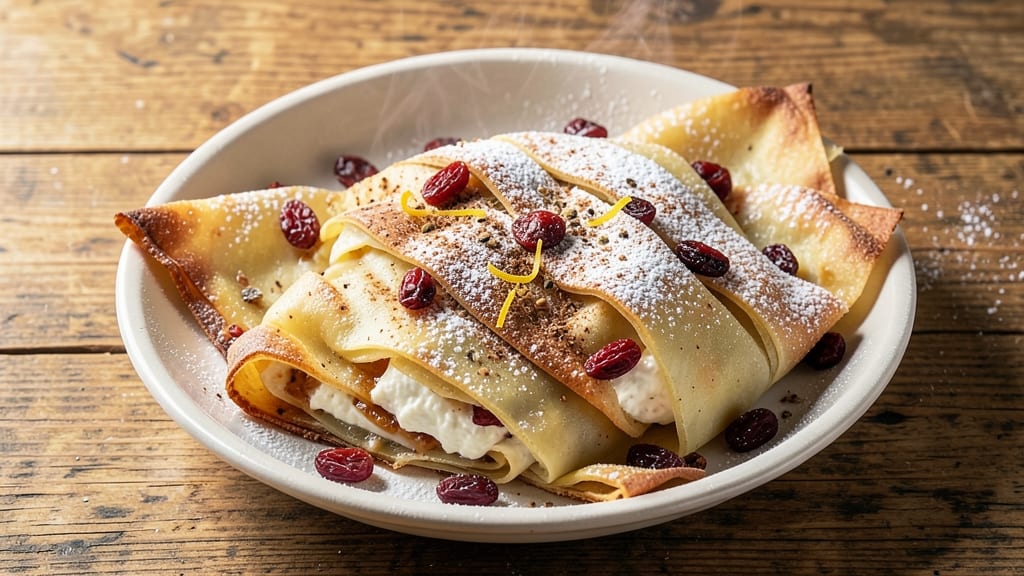
This Austrian cheese strudel recipe delivers the flaky, buttery layers and warm vanilla glaze that make it a showstopper at any gathering. The secret lies in thinly rolled dough—whether homemade or store-bought phyllo—wrapped around a rich filling of sweetened cottage cheese, raisins, and warm spices.
I've perfected the technique over years of baking, ensuring the strudel comes out golden, crisp at the edges, and tender inside.
The filling is where the magic happens—a perfect balance of tangy cheese, sweet raisins, and aromatic spices like cinnamon and cardamom. The dough stretches thinly across a floured cloth, creating those signature delicate layers that become crispy as they bake.
A warm vanilla glaze ties everything together, adding a touch of elegance that makes this strudel feel like a restaurant dessert.
What you'll end up with is a strudel that's crispy, flaky, and bursting with flavor—each bite offering a perfect harmony of textures and tastes.
The vanilla glaze adds a glossy finish that makes it look as good as it tastes, perfect for serving with a dollop of whipped cream or a scoop of vanilla ice cream. This recipe is designed to impress, whether you're baking for a holiday feast or a cozy family dinner.
Ready in about 1 hour from start to finish, this strudel is ideal for special occasions or when you want to treat yourself to something truly indulgent.
The key is patience—letting the dough rest and the filling set properly ensures the best results. Let's get started on creating this classic Austrian dessert!
Ingredients for austrian cheese strudel
Buttery phyllo sheets, tangy cottage cheese, and warm spices create a strudel that's crispy, flaky, and utterly irresistible.
| Ingredient | Amount | Notes |
|---|---|---|
| Phyllo Dough Sheets 🍞 | 12 sheets | Store-bought or homemade, thawed |
| Large Eggs 🥚 | 4 whole | For egg wash |
| Unsalted Butter 🧈 | ¾ cup | Melted, for brushing |
| Large Cottage Cheese 🧀 | 2 cups | Full-fat, drained overnight |
| Granulated Sugar 🍚 | ¾ cup | For sweetening filling |
| Raisins 🍇 | 1 ½ cups | Plump, soaked in warm water |
| Ground Cinnamon 🌿 | 1 ½ tsp | Warm, aromatic |
| Ground Cardamom 🌿 | ½ tsp | Freshly ground for depth |
| All-Purpose Flour 🌾 | ¼ cup | For dusting cloth |
| Vanilla Extract 🍯 | 1 tbsp | Pure, high-quality |
| Powdered Sugar 🍚 | 1 cup | For glaze |
| Heavy Cream 🥛 | ¼ cup | For glaze |
| Salt 🧂 | ½ tsp | Fine sea salt |
The phyllo sheets are non-negotiable for that signature crispy texture. Filippos or Fillo Factory are my go-tos—they're widely available at most grocery stores, especially in the international aisle. If you're feeling ambitious, homemade phyllo is a game-changer, but store-bought works beautifully too. The key is to keep them covered with a damp towel while you work—they dry out fast. For the cottage cheese, grab the full-fat kind (Kroger or Trader Joe's have great options) and drain it overnight in a colander lined with paper towels. This removes excess moisture, which is critical for that tender filling. The raisins should be plump—soak them in warm water for 10 minutes before using.
No vanilla extract? Vanilla bean paste works too, or even a pinch of vanilla sugar if you're in a pinch. The spices are where the magic happens—cardamom is essential for that authentic Austrian flavor, but if you can't find it, a pinch of nutmeg adds a similar warmth. For the glaze, powdered sugar is a must, but if you're out, granulated sugar whipped with a bit of cornstarch works in a bind. The butter matters here too—use unsalted so you can control the saltiness. If you're making this ahead, the filling can be prepped 2 days in advance and stored in the fridge, saving you time on baking day.
Phyllo sheets keep best in the freezer, sealed in a plastic bag for up to 6 months. Once you've rolled your strudel, it can be refrigerated for 24 hours before baking—this actually helps the layers set properly. The baked strudel stores beautifully at room temperature for 3 days or in the fridge for 5 days. To reheat, wrap it in foil and warm at 350°F for 10 minutes. The glaze sets quickly, so assemble it right before serving. Trust me, the first slice is always the best—save a small piece for later!
Why You'll Love This Recipe
- No-Fuss Layers: I swear by the phyllo dough—just brush each sheet with butter, and it practically assembles itself. The cottage cheese filling? Three ingredients max, and no one will guess it’s this simple.
- Sweet-Savory Magic: That crispy, buttery phyllo meets the creamy, lightly sweetened cottage cheese—it’s like dessert and a hearty bite all at once. Honestly, I’ve never met a strudel that hits this balance better.
- Crowd-Pleaser Every Time: Bring it to brunch, potlucks, or even as a midnight snack—no one turns it down. Between us, it’s the one dessert I make when I have a house full of people and zero time to impress.
- Leftovers? Best Ever: This strudel actually tastes better the next day—warm it up, and the phyllo gets even crispier. I keep a piece in the fridge for lazy mornings, and it’s gone before breakfast even starts.
Step-by-step instructions for Austrian cheese strudel
Here's how to roll out those delicate phyllo layers and create a strudel so light it practically melts in your mouth.
Prepare the Cottage Cheese Filling
Start by draining the 2 cups Large Cottage Cheese overnight in a fine-mesh strainer lined with cheesecloth. This removes excess moisture that would make your strudel soggy. In a large bowl, combine the drained cottage cheese with 0.75 cup Granulated Sugar, 1.5 tsp Ground Cinnamon, and 0.5 tsp Ground Cardamom. Mix until smooth and well combined.
Next, fold in the 1.5 cups Raisins (first drained and soaked in warm water for 10 minutes to plump them up) and 1 tbsp Vanilla Extract. The mixture should be thick but spreadable—if it's too dry, add 1-2 teaspoons of water. This filling is the heart of your strudel, so take your time getting it just right.
Assemble the Strudel Layers
Lay a clean kitchen towel on your work surface and dust it generously with 0.25 cup All-Purpose Flour. Place 6 sheets of Phyllo Dough Sheets on top, overlapping each sheet by about 1 inch. Keep the remaining 6 sheets covered with a damp towel to prevent drying.
Spread ⅓ of the cottage cheese filling evenly over the stacked phyllo, leaving a 1-inch border around the edges. Roll the strudel tightly from one end, tucking in the sides as you go—this creates those beautiful, even layers. Place the rolled strudel seam-side down on a parchment-lined baking sheet.
Brush and Bake to Golden Perfection
Preheat your oven to 350°F. In a small bowl, whisk together 2 of the whole Large Eggs with 0.25 cup Heavy Cream for the egg wash. Brush this mixture generously over the strudel, letting it soak in for 1-2 minutes. Then, melt 0.75 cup Unsalted Butter and brush it over the strudel in a thin, even layer—this creates that signature crispy, flaky exterior.
Bake for 40-45 minutes until the strudel is deep golden brown and puffed slightly at the edges. The filling should be set but still soft when pierced with a knife. If the top browns too quickly, tent it loosely with foil to prevent over-browning.
Prepare the Vanilla Glaze
While the strudel bakes, whisk together 1 cup Powdered Sugar, the remaining 2 whole Large Eggs, and 0.5 tsp Salt in a bowl until smooth. Gradually add 0.25 cup Heavy Cream while whisking continuously to create a glossy glaze. This glaze is what makes your strudel look (and taste) like it came straight from an Austrian café.
Once the strudel is out of the oven, let it cool for 10 minutes before carefully pouring the glaze over the top. Use a spoon to spread it evenly, letting it drip down the sides for that classic presentation. Serve warm, sliced into 6 generous portions—each bite should be flaky, creamy, and perfectly sweet.
Pro Tips For Making Austrian Cheese Strudel
- Brush Butter Generously: Don’t be shy with the melted butter between phyllo layers—about 1 tablespoon per sheet. I used to skimp, and the strudel ended up dry and crispy instead of flaky and tender. Trust me, the extra 2 minutes melting butter pays off.
- Drain Cottage Cheese: Spread the cottage cheese on a wire rack lined with paper towels for 10–15 minutes before mixing. The excess moisture makes the filling soggy, and no one wants a wet strudel. (Yes, even if you’re impatient like me.)
- Preheat Pan Properly: Heat your baking sheet or pan over medium heat for 3–5 minutes before adding the strudel. This ensures even browning and prevents the bottom from sticking—no need to wrestle with a flopping strudel later.
- Roll Tight, Not Thin: Aim for a 1-inch-thick roll when wrapping the phyllo around the filling. Too thin, and it burns; too thick, and the center stays undercooked. A firm but not crushed roll is the sweet spot. (Your future self will thank you.)
Pro cooking tips for austrian cheese strudel
Dough Stretching Secrets
Stretching phyllo dough thinly is the key to that signature crispy texture. I use a floured kitchen towel (about ¼ cup flour) to create a smooth surface—never stretch the dough directly on your counter.
Start by placing 6 sheets on the towel, overlapping them by 1 inch, then gently press and stretch with your fingers, rotating the towel as you go. The goal is to create a 12x18-inch rectangle that's paper-thin—if it tears, patch it with a small scrap of dough. 🌟
Pro tip: Work quickly but carefully—phyllo dries out fast. Keep the remaining sheets covered with a damp towel while you assemble. If the dough resists stretching, let it rest for 5 minutes before trying again. The thinner you stretch it, the crispier your strudel will be!
Filling Consistency Matters
The filling needs to be thick but spreadable—like a thick pudding. I always drain the cottage cheese overnight in a colander lined with paper towels to remove excess moisture. If your filling is too wet, add 1-2 teaspoons of flour to thicken it.
For extra richness, I fold in 2 tablespoons of melted butter into the filling before rolling. This ensures every bite is creamy and flavorful. 🧈
Don’t overmix the filling—just combine the ingredients until the raisins are evenly distributed. Overworking it can make the strudel dense. If you’re short on time, you can prep the filling 2 days ahead and store it in the fridge, covered tightly.
Rolling Like a Pro
Rolling the strudel tightly and evenly is what separates a good one from a great one. Start at the long end of the towel and roll firmly but gently, tucking in the sides as you go.
Use a parchment-lined baking sheet to prevent sticking—no need for extra grease. Once rolled, place the strudel seam-side down on the sheet. This ensures even baking and a neat presentation. 💫
If your strudel feels uneven, gently press it down with your hands before brushing with the egg wash. The goal is a smooth, cylindrical shape—this makes slicing easier and looks more impressive when served.
Egg Wash & Butter Brush
The egg wash (2 eggs + ¼ cup heavy cream) is what creates that golden, glossy finish. Brush it on generously and let it soak in for 1-2 minutes before adding the butter.
Melt the ¾ cup butter and brush it on in a thin, even layer—this is what makes the strudel crispy and flaky. Don’t skip this step; it’s the secret to that restaurant-quality texture. 🔥
For extra shine, I sometimes add 1 teaspoon of vanilla extract to the egg wash. This infuses the strudel with subtle vanilla notes that pair perfectly with the filling. Brush it on right before baking for the best results.
Baking Time & Temperature
Bake at 350°F for 40-45 minutes until the strudel is deep golden brown and puffed at the edges. The internal temperature should reach 190°F—this ensures the filling is set but still creamy. If the top browns too quickly, tent it loosely with foil to prevent burning. 🌡️
Let the strudel rest for 10 minutes after baking—this allows the layers to set and makes slicing easier. If you cut into it too soon, the filling might ooze out. Patience here is key!
Nutrition facts
Frequently asked questions
Can I make this strudel without phyllo dough?
Yes! You can substitute with homemade strudel dough made from flour, eggs, and butter. The dough should be rolled extremely thin (about 1/16-inch thick) and brushed with melted butter between layers. However, phyllo gives that signature crispy texture, so if you're going homemade, expect a slightly softer result.
Why is my strudel filling too wet?
Excess moisture usually comes from not draining the cottage cheese long enough. Always drain it overnight in a colander lined with paper towels. If your filling is still too wet, add 1-2 teaspoons of flour to thicken it. For extra insurance, fold in 2 tablespoons of melted butter to help bind the mixture.
Can I use ricotta instead of cottage cheese?
Ricotta works in a pinch, but cottage cheese gives a slightly tangier, creamier texture that's traditional for this recipe. If using ricotta, drain it for 4-6 hours (instead of overnight) since it's less watery. For best results, mix 1 cup ricotta with 1 cup drained cottage cheese to balance the flavors.
How do I store leftovers?
Store your strudel at room temperature for up to 3 days in an airtight container, or refrigerate for 5 days. To reheat, wrap a slice in foil and warm at 350°F for 10 minutes. The glaze may become sticky after refrigeration, so you might need to warm it slightly to restore shine.
What's the best way to slice strudel?
Use a serrated knife and cut into 6-8 even slices while the strudel is still slightly warm. Angle the knife slightly to avoid squishing the layers. For presentation, dust with extra powdered sugar or serve with a dollop of whipped cream.