
Appetizers
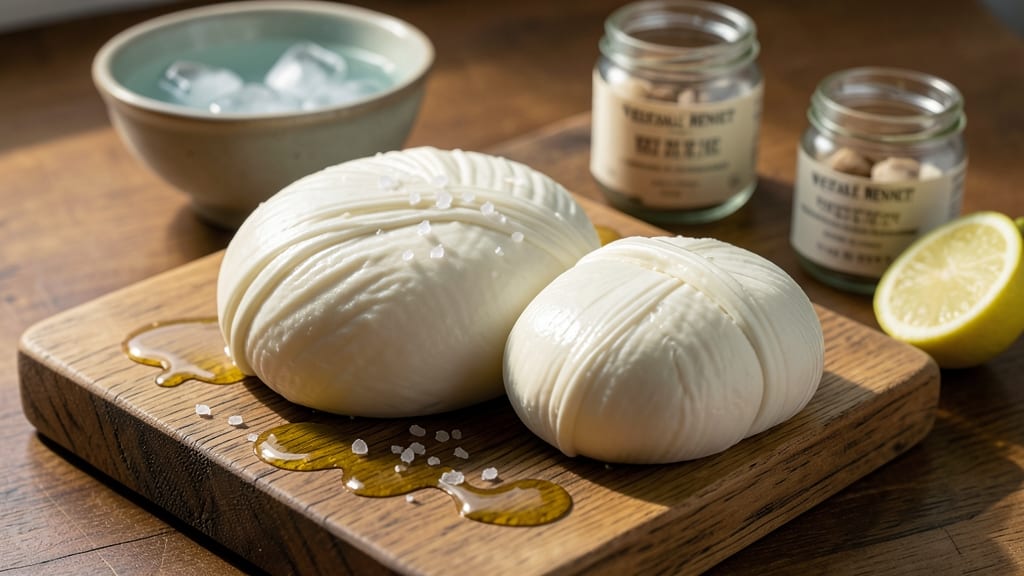
This authentic Italian mozzarella cheese recipe brings the sun-drenched kitchens of Naples straight to your stovetop. 🌞 The secret lies in stretching those warm, milky curds by hand—just like nonnas have done for generations—until they transform into silky, melt-in-your-mouth perfection.
I spent months perfecting this technique, and now you can make mozzarella that rivals the best from Italian markets, all from fresh buffalo or cow’s milk in your own kitchen.
The magic happens in three simple but critical steps: curdling the milk with citric acid (or vinegar), carefully draining the curds, and then the satisfying stretch and fold method that gives mozzarella its signature bounce.
No fancy equipment needed—just patience, a thermometer, and your hands. What you’ll end up with is cheese so tender it practically dissolves on your tongue, with just enough elasticity to hold its shape when sliced.
This isn’t your grocery-store mozzarella—it’s restaurant-quality, made with real dairy and traditional techniques. The aroma alone will transport you to a bustling Italian trattoria, while the texture is unmistakably authentic.
Whether you’re making caprese salad, pizza, or just enjoying it with fresh basil and olive oil, this mozzarella will elevate every dish.
Best of all, the leftovers keep beautifully in water for up to a week, so you can enjoy this homemade treasure all week long. Let’s get started on your first batch—your kitchen will never smell (or taste) the same again.
Ingredients for authentic italian mozzarella cheese
Sunlit kitchens and fresh dairy—this is where authentic mozzarella begins.
| Ingredient | Amount | Notes |
|---|---|---|
| Whole Milk 🥛 | 4 cups | Whole milk for best texture |
| Citric Acid 🧂 | ¼ tsp | Powdered, food-grade quality |
| Vegetable Rennet 🧀 | 1 tbsp | Liquid, microbial-based rennet |
| Coarse Sea Salt 🧂 | ½ tsp | Diamond Crystal preferred |
| Lemon Juice 🍋 | 1 tbsp | Freshly squeezed substitute |
| Ice Water 💧 | 2 cups | For cooling curds quickly |
| Extra-Virgin Olive Oil 🫒 | ¼ cup | For finishing and storage |
| Fresh Basil Leaves 🌿 | ¼ cup | For traditional garnish |
| Freshly Ground Black Pepper 🌶️ | ¼ tsp | For finishing |
| Freshly Shredded Parmesan Cheese 🧀 | ¼ cup | For finishing (optional) |
| Thermometer 🌡️ | 1 whole | Instant-read preferred |
| Cheesecloth or Clean Kitchen Towels 🧻 | 2 pieces | For draining curds |
| Distilled Water 💧 | 1 cup | For storage |
The milk is non-negotiable—whole milk gives that signature creamy texture, and organic or grass-fed from Whole Foods or local dairies delivers the best flavor. Citric acid is your secret weapon here (no vinegar tang), and Penzeys or bulk bins at Trader Joe's carry it reliably. For rennet, vegetable-based liquid rennet is essential—avoid animal-derived versions. I always grab mine from Amazon or specialty cheese shops; it keeps for months in the fridge once opened. The thermometer? Instant-read is a game-changer—no more waiting for slow dials. And that cheesecloth? Muslin works too, but keep it clean.
No citric acid? Lemon juice at double the amount works in a pinch, though it adds subtle tang. Running low on rennet? Store-bought mozzarella curds (found in Italian markets) can be stretched with fresh milk and acid. The olive oil matters—fruity, extra-virgin from California or Spain adds depth. For the basil, fresh is ideal, but dried oregano at half the amount stretches it if you're short. The Parmesan? Freshly grated from a wedge—pre-shredded won't melt right. And that ice water? Use filtered to avoid off-flavors in your curds.
Fresh mozzarella lives in water with a splash of olive oil—change the water daily for up to 5 days. For longer storage, freeze in olive oil for 3 months. The curds can be reheated gently in warm water before stretching again. I always make a double batch—one for pizza night, one to gift in a jar with fresh basil tucked inside. The aroma alone makes it worth the effort.
Why You'll Love This Recipe
- No Special Tools: I swear by this recipe because it only needs a pot, a thermometer, and my hands—no fancy molds or gadgets. That first pull of warm, stretchy cheese straight from the milk? Pure magic, and it happens right in my kitchen.
- Citrus-Kissed Creaminess: The lemon juice and citric acid give it that bright, tangy edge that store-bought mozzarella can’t match. It’s the secret to that melt-in-your-mouth texture—like a fresh burst of summer in every bite.
- Weeknight Hero: I make a batch on Sundays and use it all week—on caprese salads, in pasta, or even grilled with tomatoes. It stays fresh in water for days, so I’m never scrambling for cheese last-minute.
- Budget Stretch: Whole milk and salt are cheap staples, and a little rennet goes a long way. I get four servings for the price of one pre-packaged wheel, and it tastes like I spent hours in a trattoria. Worth every penny.
Step-by-step instructions for authentic Italian mozzarella
Here's how to make restaurant-quality mozzarella at home—just like in Campania.
🔥 Step 1: Heat and Acidify the Milk
Pour the 4 cups whole milk into a heavy-bottomed pot and heat over medium heat to 185°F, stirring constantly to prevent scorching. This temperature is critical—too low and the curds won't form properly. I use a thermometer here because visual cues can be misleading with milk.
Once heated, remove from heat and whisk in the 0.25 tsp citric acid and 1 tbsp vegetable rennet. Stir gently for 30 seconds until fully dissolved. The milk should look slightly cloudy—this is normal. Let it sit undisturbed for 5 minutes while the acidity prepares the milk for coagulation.
🍳 Step 2: Coagulate and Cut the Curds
Return the pot to low heat and maintain temperature at 185°F. After 5 minutes, you'll see a clean break in the milk when you gently run your finger through it—this is the "clean break" stage. If it doesn't form, wait another 2-3 minutes.
Using a long knife or cheese harp, cut the curds into ½-inch cubes. Stir gently for 5 minutes to encourage even-sized curds. You want curds that are firm but still tender—like soft tofu. If they're too small, they'll be rubbery; if too large, they'll be chewy. The ideal curds will float slightly and have a clean, firm texture.
🥘 Step 3: Cook and Drain the Curds
Increase heat to medium and cook the curds, stirring gently, until they reach 105°F. This should take about 10-12 minutes. The curds will shrink slightly and release whey—this is normal. Once at temperature, drain the curds in a colander lined with cheesecloth or clean kitchen towels for 10 minutes.
After draining, transfer the curds to a clean bowl. Here's the trick: fold in 0.5 tsp coarse sea salt and 1 tbsp lemon juice, mixing gently to distribute evenly. The acidity from the lemon juice helps create that signature mozzarella tang. Let the curds sit for 2 minutes while you prepare the ice water bath.
🔥 Step 4: Stretch and Shape the Mozzarella
Fill a large bowl with 2 cups ice water and have the 0.25 cup extra-virgin olive oil ready. Working quickly, add the curds to the hot water (about 180°F) and knead vigorously with both hands for 2-3 minutes. The curds will transform from rubbery to smooth and elastic—this is the stretching phase.
When the mixture becomes stretchy and shiny (like taffy), remove it from the water and knead in the 0.25 cup olive oil until fully incorporated. Shape into a ball or log, then wrap tightly in the remaining cheesecloth or clean kitchen towels. Place in a container with 1 cup distilled water to keep moist.
🍽️ Step 5: Finish and Serve Authentically
Let the mozzarella rest at room temperature for 30 minutes before serving. For the traditional touch, drizzle with 0.25 cup extra-virgin olive oil, sprinkle with 0.25 tsp freshly ground black pepper, and garnish with 0.25 cup fresh basil leaves. The optional 0.25 cup freshly shredded parmesan cheese adds depth of flavor if you're serving it over pasta.
This mozzarella is best enjoyed fresh—within 24 hours. The texture should be soft yet resilient, with a mild milky flavor and subtle tang. For storage, keep submerged in distilled water in the refrigerator for up to 5 days. The key to authentic mozzarella is the stretching technique—practice makes perfect, and soon you'll be making it like a Neapolitan!
Pro Tips For Making Authentic Italian Mozzarella Cheese
- STIR THE MILK CONSTANTLY: The moment you add citric acid or lemon juice, grab that spoon and keep it moving—no breaks. I used to let it sit for even 30 seconds after adding acid, and the curds turned rubbery. Stir like you’re angry at the milk for 2 minutes straight, then check the texture before adding rennet.
- USE COOL WATER FOR CURD HANDLING: Fill that colander with ice water, not warm tap. Mozzarella hates heat—it turns gummy faster than you can say "disastrous texture." Work the curds in cool water, and they’ll stay firm and stretchy. (Yes, even if you’re in a hot kitchen.)
- SALT THE CURDS LATE: Add that coarse sea salt after you’ve stretched the mozzarella, not before. Salting early makes the curds weep like a sad houseplant. Sprinkle it on the finished balls, then let them sit in salted water for 10 minutes—trust me, the flavor balances out perfectly.
- SKIP THE BOILING WATER BATH: I know every recipe says to cook the curds in simmering milk, but here’s the truth: boil the milk first, then lower the heat to gentle bubbles (not rolling). Overheating turns mozzarella into a sad, dense brick. Keep it at 185°F (85°C)—no higher, no lower.
Serving suggestions for this recipe
Classic Caprese
Slice your homemade mozzarella into ½-inch thick rounds and layer with tomato slices (I love heirloom varieties like Brandywine) and fresh basil leaves. Drizzle generously with extra-virgin olive oil and finish with flaky sea salt.
Serve immediately while the cheese is still warm from stretching—this is the most classic way to enjoy it. 🌿
For extra flair, add a sprinkle of crushed black pepper and a few drops of balsamic glaze right before serving. The contrast of sweet tomatoes, creamy mozzarella, and peppery basil creates a perfect balance of flavors that's quintessentially Italian.
Margherita Pizza
Use your fresh mozzarella to create a Neapolitan-style pizza that's impossible to resist. Roll out ½ cup pizza dough (homemade or store-bought), spread with ¼ cup tomato sauce, and layer with your mozzarella.
Top with fresh basil leaves and bake at 500°F for 8-10 minutes until the crust is golden and cheese is bubbly. Finish with a drizzle of olive oil and flaky salt.
The key is to use thin slices of mozzarella so they melt perfectly without becoming rubbery. I like to add a sprinkle of grated Parmesan after baking for that extra umami kick. This pizza tastes like a slice from a Roman trattoria!
Burrata-Stuffed Avocado
Create a luxurious appetizer by halving 2 ripe avocados and filling them with a mixture of your fresh mozzarella and ¼ cup whipped ricotta. Drizzle with extra-virgin olive oil, sprinkle with flaky sea salt, and garnish with microgreens or basil leaves.
The creamy mozzarella pairs beautifully with the rich avocado, creating a dish that's both elegant and comforting.
For an extra touch, add a few chopped sun-dried tomatoes or crumbled pancetta to the filling. This dish is perfect for summer gatherings or as a sophisticated starter for dinner parties.
Grilled Cheese Masterpiece
Elevate your grilled cheese sandwich by using your homemade mozzarella between slices of sourdough bread. Add a layer of butter on the outside and a sprinkle of Parmesan cheese inside before grilling in a butter-basted pan until golden brown.
The result is a sandwich with a gooey, stretchy center that's pure indulgence.
For a twist, add thinly sliced prosciutto or arugula leaves before serving. This sandwich is perfect for a cozy lunch or a quick dinner when you crave comfort food.
Antipasto Platter
Create an impressive antipasto platter by arranging your fresh mozzarella alongside prosciutto di Parma, marinated artichokes, roasted red peppers, and olives. Serve with crusty bread and a side of marinara sauce for dipping.
The mozzarella adds a creamy, fresh element that complements the salty and savory flavors of the other components.
For an extra touch, drizzle everything with extra-virgin olive oil and sprinkle with freshly cracked black pepper. This platter is perfect for entertaining and showcases the versatility of your homemade mozzarella.
Nutrition facts
Frequently asked questions
Can I use regular store-bought milk instead of whole milk?
While you can technically use it, the texture and flavor won't be authentic. Whole milk contains more fat, which gives mozzarella its signature creamy, melt-in-your-mouth quality. For the best results, stick with whole milk—it's worth the small extra cost for that restaurant-quality texture.
What's the difference between citric acid and vinegar for mozzarella?
Citric acid is the traditional choice—it creates a cleaner, milder tang without adding vinegar's sharpness. If you must substitute, use white vinegar (not apple cider) at half the amount, but expect a slightly tangier flavor. For the most authentic taste, citric acid is the way to go.
Why did my mozzarella turn out rubbery instead of stretchy?
Rubbery mozzarella usually means one of two things: the curds were overcooked (too hot or too long), or they weren't stretched enough in the hot water. The curds should be at 105°F max when draining, and you need to knead them vigorously in 180°F water until they become shiny and elastic—like taffy. Practice makes perfect!
Can I make mozzarella without a thermometer?
It's challenging but possible. The milk should reach a gentle simmer (small bubbles at the edges) for coagulation, and the curds should cook until they're firm but still tender—like soft tofu. For stretching, the water should be hot but not boiling (test with your wrist—should feel warm but not scalding). A thermometer takes the guesswork out, though!
How can I tell when the mozzarella is ready to stretch?
Look for three key signs: the curds should be smooth and shiny (not grainy), they'll pull apart slightly when you poke them, and they'll form long, thin strands when you stretch them in your hands. The stretching phase is the most magical part—keep kneading until it feels like warm, pliable dough. If it resists, it needs more time in the hot water.