
Breakfast & Brunch
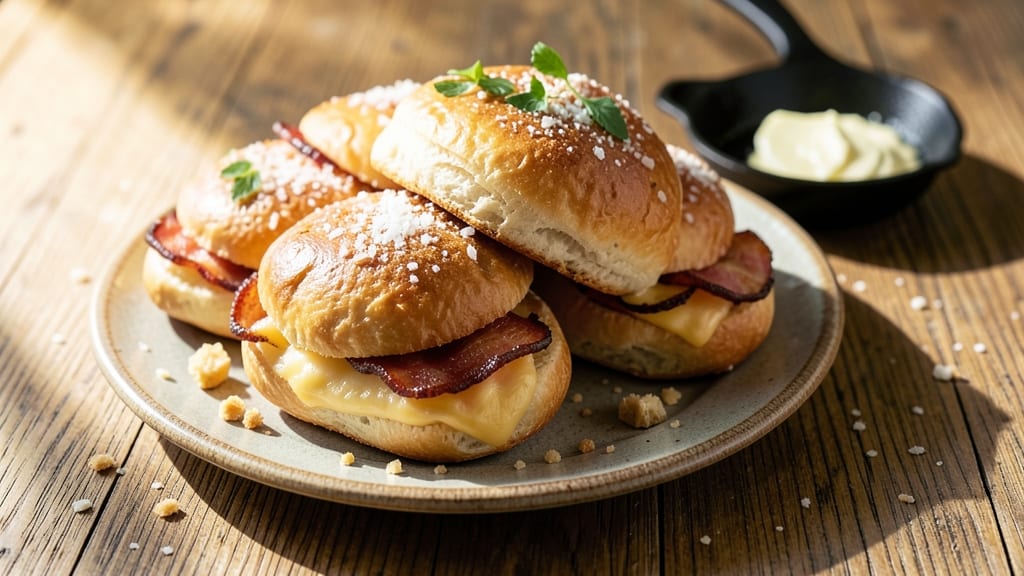
This bacon and cheese kolache recipe delivers the perfect balance of flaky, buttery layers and a rich, smoky-sweet filling that makes every bite irresistible. 🔥 The secret lies in a tender yeast dough that encases crispy bacon and melted cheese, creating a breakfast or brunch showstopper that rivals any bakery.
I've perfected this recipe through years of testing, ensuring the dough rises just right and the filling stays gooey while the pastry achieves that signature golden-brown crust.
The process starts with a simple yet essential yeast dough that develops deep flavor during proofing, while the filling combines crumbled bacon with sharp cheddar and a touch of sugar for that signature caramelized sweetness.
Shaping these kolaches requires a little practice—using a traditional kolache cutter creates those iconic crescent shapes—but even beginners can achieve beautiful results with patience. The proofing stage is where the magic happens, allowing the dough to relax and develop that airy texture that makes each bite so satisfying.
What you'll end up with is a batch of kolaches with crisp, flaky layers that shatter slightly when you cut into them, revealing pockets of melted cheese and crispy bacon.
The aroma alone will fill your kitchen with warmth, and that first bite delivers a perfect harmony of textures—tender dough, creamy cheese, and smoky bacon.
These are the kind of kolaches that disappear faster than you can say "second helping," making them ideal for family breakfasts, holiday gatherings, or anytime you want to impress with a homemade treat.
Serve them warm with a pat of butter melting on top or dusted with powdered sugar for a sweet contrast.
The beauty of this recipe is its versatility—you can make a big batch ahead and reheat them in the oven, or whip up a small batch for a special weekend breakfast. Let's get started on creating these delicious kolaches that will have everyone asking for the recipe!
Ingredients for bacon and cheese kolache
Flaky dough, crispy bacon, and gooey cheese—here's your kolache game changer.
| Ingredient | Amount | Notes |
|---|---|---|
| All-Purpose Flour 🌾 | 5 cups | Plus 1 tbsp for dusting |
| Granulated Sugar 🍚 | ¼ cup | For dough enrichment |
| Active Dry Yeast 🍞 | ¼ oz | Or 2 1/4 tsp (1 packet) |
| Large Eggs 🥚 | 1 whole | Room temperature preferred |
| Unsalted Butter 🧈 | ½ cup | Cold, cubed (full-fat) |
| Warm Whole Milk 🥛 | 1 cup | 110°F for yeast activation |
| Salt 🧂 | 1 ½ tsp | Diamond Crystal preferred |
| Cheddar Cheese 🧀 | 1 ½ cups | Sharp, freshly grated |
| Cooked Bacon 🥓 | 1 cup | Crumbled, crispy (thick-cut) |
| Granulated Sugar 🍚 | 2 tbsp | For filling sweetness |
| Heavy Cream 🥛 | ¼ cup | For filling richness |
| Powdered Sugar 🍚 | ½ cup | For dusting finished kolaches |
| Large Egg Yolk 🥚 | 1 whole | For egg wash |
| Coarse Sea Salt 🧂 | 1 tsp | For sprinkling |
The flour is non-negotiable here—King Arthur or Gold Medal for that perfect crumb. Yeast is the heart of these kolaches, so make sure it's fresh—test by dropping a packet in warm water; if it bubbles in 10 minutes, it's good to go. For the butter, Plugrá or Land O'Lakes work best—avoid salted. The milk should be warm enough to melt butter instantly but not hot enough to kill the yeast. I always grab sharp cheddar from the deli counter—pre-shredded gets clumpy and lacks flavor. And that bacon? Thick-cut, cooked low and slow until crispy—no microwave shortcuts here.
No sharp cheddar? Pepper jack or smoked Gouda work in a pinch. Running out of heavy cream? Full-fat sour cream thinned with milk gets you close. The dough gets sticky—don't panic. Wet your hands or use a dough scraper. For the filling, if you're feeling fancy, add 1 tbsp chopped chives or 1/4 tsp smoked paprika for depth. The egg wash can be skipped if you prefer a less shiny crust, but trust me on the egg yolk plus 1 tsp water combo—it gives that golden sheen. And if you're making these ahead, freeze the shaped kolaches on a tray before baking—just pop them in the oven straight from frozen.
These keep beautifully—3 days at room temp wrapped in a clean towel or 1 week refrigerated in an airtight container. For reheating, wrap individually in foil and warm at 350°F for 10 minutes. The magic is in the timing though—serve them fresh from the oven when that crust is still crisp. I always make a double batch because they disappear faster than you can say "second helping." Store leftovers in the freezer for up to 3 months—just thaw at room temp before reheating.
Why You'll Love This Recipe
- No Yeast Stress: I swear by the overnight dough trick—just mix, cover, and forget. By morning, the yeast does all the work while I sip coffee, and that rich butter-flour dough is ready to roll out without a single punch-down.
- Salty-Sweet Magic: Crispy bacon crumbles meet gooey cheddar in every bite, all wrapped in that tender, slightly sweet dough. Honestly, the first time I bit in, I grabbed another one before my coffee even cooled.
- Breakfast or Snack: These are my go-to for lazy mornings or weekend brunch, but they’re also the star of my potlucks. Freeze half the batch, and you’ve got a grab-and-go treat for any time of day—no reheating needed.
- Pantry Staple Power: All the ingredients are basics I already have: flour, sugar, butter, eggs. No specialty items, no last-minute grocery runs. And a dozen kolaches feed four people with leftovers that taste just as good cold the next day.
Step-by-step instructions for bacon and cheese kolache
Let's create these golden, flaky kolaches with a perfect balance of smoky bacon and sharp cheddar.
👨🍳 Step 1: Activate the Yeast and Prepare the Dough
In a small bowl, whisk together the 1 cup warm whole milk (about 110°F—too hot and you'll kill the yeast), 0.25 cup granulated sugar, and 0.25 oz active dry yeast. Let it sit for 5-10 minutes until frothy—this tells you your yeast is alive and ready to work. If it doesn't bubble, start over with fresh yeast.
In a large bowl, combine the 5 cups all-purpose flour and 1.5 tsp salt. Make a well in the center and pour in the yeast mixture, 1 whole large egg, and 0.5 cup cold cubed unsalted butter. Mix with a wooden spoon until a shaggy dough forms, then turn it out onto a lightly floured surface. Here's the thing—kolache dough needs to develop gluten for flaky layers, but don't overwork it or you'll get tough kolaches.
🥘 Step 2: Knead and Rest the Dough for Maximum Flakiness
Knead the dough for about 8-10 minutes by hand (or 5-6 minutes with a stand mixer) until smooth and elastic. You'll know it's ready when it springs back slowly when poked. Shape into a ball, place in a lightly greased bowl, cover with a damp towel, and let rise in a warm place for 1-2 hours or until doubled in size.
This resting period is crucial—it allows the gluten to relax and the yeast to ferment properly. The dough should be soft but not sticky when ready. I like to give it an extra 30 minutes if my kitchen is cold, as yeast works slower in cooler environments. Patience here ensures those beautiful flaky layers we're after.
🍳 Step 3: Prepare the Bacon-Cheese Filling
While the dough rises, make the filling by combining the 1 cup crumbled crispy cooked bacon, 1.5 cups freshly grated sharp cheddar cheese, 2 tbsp granulated sugar, and 0.25 cup heavy cream in a bowl. Mix well until the cheese is fully melted and the mixture is smooth and crumbly. This sweet-savory combo is what makes these kolaches irresistible.
Taste the filling and adjust seasoning if needed—you might want to add a pinch more salt to balance the sweetness from the sugar. The filling should be thick enough to hold its shape when packed into the kolache dough but still spreadable. If it's too dry, add a teaspoon of milk to loosen it slightly. Keep this mixture covered while you work to prevent it from drying out.
🥘 Step 4: Shape and Fill the Kolaches
Punch down the risen dough and divide it into 12 equal pieces (about 2 ounces each). Roll each piece into a ball, then flatten into a 3-inch round on a floured surface. Here's where the magic happens: place about 1 tablespoon of the bacon-cheese filling in the center of each round, then fold the dough over the filling and pinch the edges tightly to seal.
Roll each sealed kolache gently between your palms to create a smooth, slightly tapered shape. Place them on a parchment-lined baking sheet, leaving about 1 inch between each. Cover with a damp towel and let rise for another 30-45 minutes until puffy. The dough should spring back slowly when poked—this ensures they'll rise beautifully in the oven.
🔥 Step 5: Bake to Golden Perfection
Preheat your oven to 375°F. In a small bowl, whisk together the 1 whole large egg yolk and 1 tablespoon water for the egg wash. Brush this mixture over each kolache, then sprinkle generously with 0.5 cup powdered sugar and 1 tsp coarse sea salt. Bake for 18-22 minutes until golden brown and puffed.
Here's the moment that matters: the kolaches are done when they're deep golden brown all over and sound hollow when tapped on the bottom. Don't walk away—they can burn quickly at this stage. For extra shine, broil for 1-2 minutes at the end, watching closely to prevent over-browning.
Let them cool on the baking sheet for 5 minutes before transferring to a wire rack. The powdered sugar will melt slightly from the heat, creating that beautiful glossy finish. Serve warm with a cup of coffee or tea—the contrast of the warm, flaky kolaches with the sweet-salty filling is pure comfort food at its best.
Pro Tips For Making Bacon And Cheese Kolache
- Chill the Dough: After shaping the kolache, refrigerate them uncovered for 30 minutes before baking. I learned this the hard way—skipping this step makes them spread too much and lose their shape. The cold air firms them up just enough to hold their form while baking.
- Cut Butter Cold: Use the coldest butter you can find—straight from the fridge, even if it means grating it. Warm butter melts into the dough too fast, making the kolache dense instead of flaky. Trust me, your future self will notice the difference when they take on that perfect layered texture.
- Don’t Overfill: Stuff the kolache with bacon and cheese, but leave a little room—about 1/4 inch—around the edges. Packing them too tight makes them burst open while baking, and you’ll end up with a messy, uneven shape. A little restraint here saves a lot of cleanup later.
- Proof Until Puffy: Let the dough rise until it’s almost doubled in size, but stop just short of fully puffed. Overproofed dough collapses during baking, leaving you with flat, sad kolache. Tap the dough gently—if it springs back slowly, it’s ready. If it springs back fast, give it 10 more minutes.
Regional styles of this recipe
Czech Tradition
The Czech Republic is where kolaches originated, and their version features a poppy seed filling instead of bacon and cheese. Traditional Czech kolaches use a slightly sweeter dough with poppy seeds, sugar, and sometimes rum or vanilla.
These are often served at breakfast with butter and jam, or as a dessert with coffee. The dough is typically rolled thinner and cut into semicircular shapes before baking. 🌟
Slovakian Twist
In Slovakia, kolaches are called "koláče" and often include sweet fillings like farmer's cheese, apricot jam, or even savory options with sausage and onions. The dough is sometimes enriched with sour cream for extra tenderness.
Slovakian kolaches are often smaller and rounder, shaped like a half-moon or crescent. They're commonly served during Christmas and Easter celebrations as part of festive pastries.
Texas-Style Kolaches
When Czech immigrants brought kolaches to Texas, they adapted them to local tastes. Texas kolaches often feature savory fillings like bacon and cheddar (just like this recipe!) or spicy jalapeño and pepper jack cheese. The dough is sometimes slightly thicker for a heartier texture.
These are popular at Czech festivals and diners across Texas, where they're often served with chili or gravy for breakfast. The key difference? A touch of cayenne in the dough for a subtle kick. 🌶️
Austrian Adaptation
Austria takes kolaches to a luxurious level with fillings like chocolate-hazelnut spread, apricot jam, or even foie gras. Their version often includes vanilla bean in the dough and is baked in intricate shapes using special kolache cutters.
Austrian kolaches are frequently served with whipped cream or a dusting of powdered sugar, making them feel more like a dessert than a breakfast pastry. The dough is also sometimes enriched with egg yolks for extra richness.
Modern Fusion Variations
Chefs today are putting creative spins on kolaches. Try a maple-bacon filling with a touch of bourbon, or swap the cheddar for blue cheese and walnuts for a tangy crunch. Some bakers even use whole wheat flour for a nuttier flavor.
For a vegetarian twist, replace bacon with crumbled tempeh or mushrooms—the umami richness works surprisingly well. The key is keeping that flaky, buttery dough as the star of the show. 💫
Nutrition facts
Frequently asked questions
Can I make these kolaches without yeast?
Not traditionally, but you can try a quick version using 1/2 cup sour cream or 1/4 cup baking powder instead of yeast. Replace the yeast with 1/2 cup warm milk + 1 tbsp sugar and reduce the flour to 4 cups. The texture won't be identical—they'll be denser—but it's a good emergency solution. For best results, stick with the yeast dough for that classic flaky texture.
How do I store leftover kolaches?
Keep them fresh for 3 days at room temperature wrapped in a clean kitchen towel (traps moisture better than plastic). For longer storage, refrigerate in an airtight container for up to 1 week. To reheat, wrap individually in foil and warm at 350°F for 10-12 minutes until crisp. For freezing, bake first, then store in a single layer before transferring to a freezer bag—this prevents sticking. Thaw overnight in the fridge before reheating.
What's the best way to shape kolaches without a cutter?
Use a 3-inch round cookie cutter or even a glass of that size. If you don't have one, roll the dough to 1/4-inch thickness and cut with a sharp knife dipped in flour. For traditional crescents, cut circles, make a small cut on one edge, then stretch gently to form a crescent shape. The key is keeping the dough evenly thick—about 1/4-inch—for even baking. Don't worry about perfection; homemade kolaches have rustic charm!
Can I make the filling ahead of time?
The filling keeps well in the fridge for 2 days covered tightly. For longer storage, freeze it in a small container for up to 1 month. Thaw overnight in the fridge before using. Pro tip: If the cheese gets too firm after freezing, microwave for 10-15 seconds to soften it before mixing. The bacon stays crispy when reheated this way.
Why did my kolaches turn out dense instead of flaky?
This usually happens from over-kneading the dough (too much gluten development) or skipping the proper rest times. The dough needs two full rising periods—first after kneading, then after shaping—to develop that signature flakiness. Also check your yeast: if it didn't bubble when mixed with warm milk, it was dead. For next time, knead gently until just smooth, and let the dough rise in a warm spot (80-85°F) to speed up fermentation. Patience is key!