Breakfast & Brunch
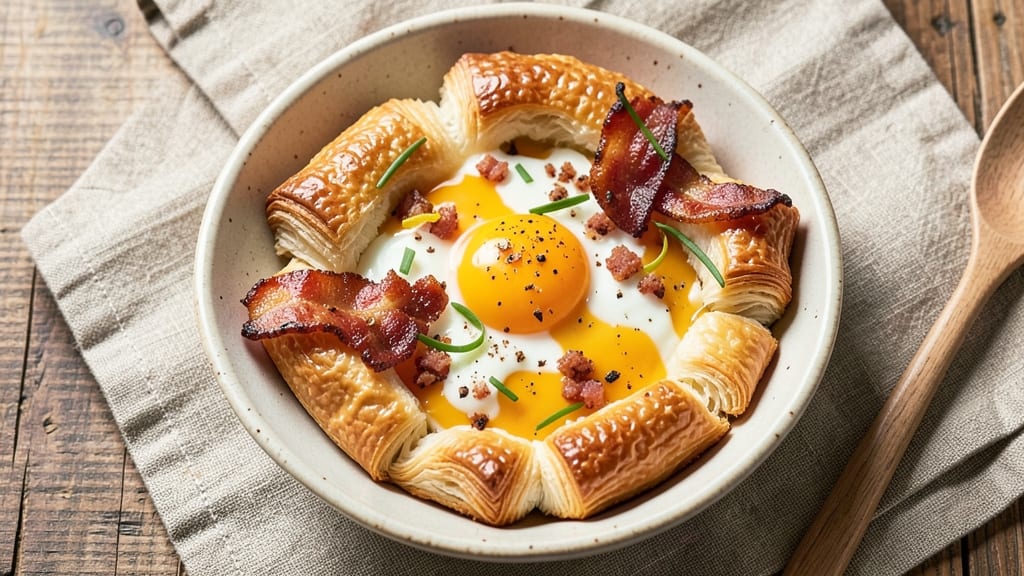
This bacon, egg, and cheese puff pastry recipe delivers the ultimate breakfast in every bite—crispy bacon bites nestled inside golden, flaky layers, topped with a perfectly runny egg.
The secret lies in layering the dough just right: thin, even sheets of puff pastry wrapped around melted cheese and crispy bacon, then folded into a golden, crisp-edged package. One bite, and you’ll understand why this dish feels like a restaurant-quality brunch without the fuss.
The magic happens in the prep: rolling the puff pastry thin enough for flaky perfection while keeping it sturdy enough to hold the filling.
We’ll use a mix of sharp cheddar and cream cheese for that creamy, melty contrast, and cook the bacon until it’s crispy but not burnt—just enough to add salty crunch. The egg on top? That’s the showstopper: a runny yolk that ties everything together with rich, golden goodness.
What you’ll end up with is a dish that looks as impressive as it tastes: crispy golden edges, layers of flaky pastry, and pockets of melted cheese and bacon, all crowned with a perfectly cooked egg.
It’s the kind of breakfast that feels indulgent yet simple to make—ideal for weekend brunch or a special treat any morning. The best part? Every bite is packed with texture and flavor, making it a dish you’ll want to serve (and eat) again and again.
Ready to master this technique? We’ll walk you through rolling, folding, and brushing the pastry for maximum crispiness, plus the exact method for cooking the egg so it stays runny and rich right through to the last bite. Let’s get started—your breakfast game is about to level up.
Ingredients for bacon egg cheese puff pastry
Puff pastry, crispy bacon, and melty cheese—this combo makes every bite feel like a restaurant brunch.
| Ingredient | Amount | Notes |
|---|---|---|
| Puff Pastry Sheets 🍞 | 2 sheets | Store-bought, thawed completely |
| Bacon 🥓 | 6 oz | Thick-cut, chopped into small pieces |
| Sharp Cheddar Cheese 🧀 | 1 cup | Shredded, block preferred |
| Cream Cheese 🧀 | 4 oz | Room temperature, softened |
| Large Eggs 🥚 | 4 whole | Fresh for runny yolks |
| Unsalted Butter 🧈 | 2 tbsp | Melted for brushing |
| All-Purpose Flour 🌾 | 2 tbsp | For dusting rolling surface |
| Garlic Powder 🧄 | ½ tsp | For seasoning |
| Ground Black Pepper 🌶️ | ¼ tsp | Freshly cracked |
| Kosher Salt 🧂 | ½ tsp | For seasoning |
| Heavy Cream 🥛 | ¼ cup | For brushing pastry |
The puff pastry is non-negotiable here. Pillsbury or store-brand work fine—just make sure it's fully thawed before using. I always grab the thickest sheets I can find (like Trader Joe's or Costco brands) because they hold up better when wrapped around the filling. The key is rolling it thin but not tearing—dust your surface with flour and keep it cool to prevent sticking. For the bacon, thick-cut is a must. It gives that perfect crunch without turning greasy. Cook it until it's crispy but not burnt—you want those little edges to stay crispy even after baking.
No sharp cheddar? Pepper jack or Monterey Jack work in a pinch, but the sharpness is what cuts through the richness. The cream cheese needs to be room temperature—cold lumps ruin the texture. If you're short on time, microwave it for 15 seconds to soften. For the eggs, freshness matters—older eggs won't give you that perfect runny yolk. If you're worried about overcooking, crack them into a separate bowl first, then gently place them on top of the pastries right before baking. The butter and heavy cream are for brushing—this is what gives those pastries that golden, crispy finish. Don't skip it!
Store the puff pastry sheets in the fridge until ready to use—they keep for up to 3 days that way. Pre-chopped bacon freezes beautifully, so buy extra and stash it for next time. The assembled pastries can be refrigerated for up to 24 hours before baking, but bake them as soon as possible for the crispiest edges. If you're making these ahead, assemble them, then freeze on a baking sheet before transferring to a bag. Bake straight from frozen, adding 2-3 extra minutes to the cook time. Leftovers? They reheat best in the oven at 350°F for 5-10 minutes—just until the cheese is melted and the edges are crispy again.
Why You'll Love This Recipe
- I swear by this combo: crispy bacon crumbles + sharp cheddar ooze. The cream cheese ties it all together like a gourmet hug—no fancy technique, just layer and bake.
- Two-Ingredient Filling: I swear by this combo: crispy bacon crumbles + sharp cheddar ooze. The cream cheese ties it all together like a gourmet hug—no fancy technique, just layer and bake.
- Breakfast or Brunch Hero: Serve it warm for breakfast or let it cool for a picnic—same recipe, two vibes. My college roommate still texts me photos of her "fancy" brunch plates, but really? It’s just this.
- Oven Magic: One sheet pan, 20 minutes, zero cleanup. The puff pastry puffs up while you crack eggs—no flipping, no stress. Honestly, I’ve burned toast more times than I’ve messed this up.
Step-by-step instructions for bacon, egg, and cheese puff pastry
Here's how to build layers of flaky pastry, crispy bacon, and rich egg filling for breakfast perfection.
Prep and Cook the Bacon
Line a baking sheet with parchment paper and arrange the 6 oz chopped thick-cut bacon in an even layer. Cook in a 400°F oven for 12-15 minutes until edges are deep golden brown and crispy. Drain on paper towels, reserving 1 tablespoon of bacon fat in the pan.
Real talk: Don't skip the crisping step—this is what gives your dish that irresistible crunch. If your oven runs hot, check at the 10-minute mark. The bacon should be fully cooked through with no pink remaining, and the fat should be golden and fragrant.
Make the Egg and Cheese Filling
In a medium bowl, whisk together the 4 whole large eggs, 4 oz softened cream cheese, 1 cup shredded sharp cheddar, 0.25 cup heavy cream, 0.5 tsp garlic powder, 0.25 tsp black pepper, and 0.5 tsp kosher salt until completely smooth. The mixture should be thick but pourable—like a rich custard.
This is where the magic happens. I like to whisk for about 1 minute to ensure the cream cheese melts completely into the eggs. If you see any lumps, strain the mixture through a fine-mesh sieve for an ultra-smooth texture. The filling should coat the back of a spoon and hold its shape when dropped from a spoon.
Assemble and Layer the Puff Pastry
Preheat your oven to 375°F. On a lightly floured surface, lay out one of the 2 thawed puff pastry sheets. Brush the entire surface with 1 tablespoon melted unsalted butter, leaving a ½-inch border uncovered. Sprinkle ⅓ of the bacon evenly over the pastry, then pour ⅓ of the egg mixture over the bacon.
Repeat with the second pastry sheet, then top with remaining bacon and egg mixture. Fold the uncovered pastry borders inward to seal, pressing gently along the edges. This prevents the filling from leaking out during baking and creates that beautiful golden crust we're after.
Bake to Golden Perfection
Transfer the assembled pastry to a parchment-lined baking sheet and bake for 25-30 minutes until the top is deep golden brown and the edges are crispy. The center should still be slightly jiggly when you shake the pan gently—this indicates the filling is still warm and runny inside.
I know it's tempting to open the oven early, but resist! The residual heat will finish cooking the filling perfectly. If the top browns too quickly, tent loosely with foil after 20 minutes to prevent over-browning while the center finishes. When done, the pastry should be light and airy with crispy bacon bits peeking through.
Pro Tips For Making Bacon Egg Cheese Puff Pastry
- CUT BACON CRISP THEN CHILL: I used to cook the bacon straight from the fridge and wondered why it got soggy when wrapped in the pastry. Cook it until fully crisp, drain on paper towels, then spread it out on a plate in the fridge for 10 minutes—this stops the fat from making your puff pastry greasy later.
- LAYER CHEESE LOW AND SLOW: After burning three batches, I learned to handle the cheeses carefully: mix the sharp cheddar and cream cheese together cold, spread it thinly (about ¼-inch thick) on the pastry, then fold it up gently. No thick globs—this keeps the filling from oozing out when baking, and the layers stay crispy.
- BRUSH PASTRY WITH EGG WASH: Skip the water or milk for brushing the top of your pastry—use a beaten egg mixed with 1 tablespoon water. It browns faster and gives that golden, flaky crust everyone wants. Brush it on after you’ve shaped the rolls but before baking, and don’t overdo it—just enough to coat.
- BAKE IN STAGES: Don’t blast these on high heat right away. Start at 375°F (190°C) for 10 minutes to let the pastry set, then crank it to 400°F (200°C) for the last 8–10 minutes. This two-step method guarantees the bottom stays crisp while the top gets that perfect golden puff—no more undercooked centers or burnt tops.
Pro cooking tips for great bacon egg cheese puff pastry
Puff Pastry Rolling
Use a rolling pin to gently roll the puff pastry sheets to ¼-inch thickness—this ensures even cooking and maximum flakiness. Dust your work surface with all-purpose flour and keep the pastry chilled in the fridge for 5 minutes between rolls to prevent sticking.
I find using a plastic wrap around the rolling pin helps maintain even pressure without tearing the dough. 🌟
Bacon Crispiness
For the best texture, cook your bacon in a 400°F oven until it reaches 200°F internal temperature—this guarantees crispy edges without burning. Reserve 1 tablespoon of bacon fat in the pan to brush onto the pastry later for extra richness.
If you prefer stovetop bacon, cook it in a cold skillet over medium-low heat for even crispiness.
Egg Temperature
Use room-temperature eggs for consistent results—they’re less likely to curdle when mixed with cheese. For a runny yolk, bake the pastries until the center is 155°F internal temperature, then finish under the broiler for 1-2 minutes to set the top while keeping the yolk liquid.
I crack the eggs into a bowl first to avoid shell fragments in the filling.
Sealing the Edges
Press the pastry borders inward firmly to create a tight seal—this prevents filling leaks and gives a professional finish. For extra security, use a fork to crimp the edges by pressing down along the border.
If the filling bubbles over during baking, it’s a sign the pastry wasn’t sealed tightly enough.
Butter Brushing
Brush the pastry with melted unsalted butter (not oil) for a golden, crispy finish. For extra shine, mix 1 tablespoon butter with 1 tablespoon heavy cream before brushing.
Apply the mixture evenly but leave a ½-inch border uncovered to prevent sogginess. This step is non-negotiable for that restaurant-quality crust! 🔥
Baking Time
Bake at 375°F for 25-30 minutes until the edges are deep golden brown—the center should jiggle slightly when shaken. If the top browns too quickly, tent with foil after 20 minutes to prevent over-browning.
Remove from the oven 2 minutes early if you’re adding eggs on top to avoid overcooking them.
Nutrition facts
Frequently asked questions
Can I make this ahead of time?
Assemble the pastries up to 24 hours ahead and refrigerate them in an airtight container. For best results, bake them straight from the fridge—just add 2-3 extra minutes to the baking time. If freezing, assemble and bake on a parchment-lined sheet, then freeze for up to 1 month. Thaw overnight before reheating at 350°F for 10 minutes to restore crispiness.
How do I keep the egg runny?
Bake the pastries until the center reaches 155°F (they should jiggle slightly when shaken). For the egg on top, crack it into a bowl first, then place it on the pastry just before the final 1-2 minutes of baking under the broiler. This keeps the yolk rich and liquid while setting the whites.
What if my puff pastry tears?
Keep your work surface well-floured and chill the pastry for 5 minutes between rolls to prevent sticking. If it tears, patch it with small pieces of dough or use a pastry brush to seal edges with water or egg wash. Don't overwork the dough—gentle pressure is key! For extra strength, brush any exposed areas with melted butter before baking.
Can I use frozen puff pastry?
Yes, but thaw it completely in the fridge for 24-48 hours before using. Never microwave—this makes the dough soggy. For frozen sheets, place them between paper towels on a plate and let them sit at room temperature for 30-60 minutes while you prep the filling. The dough should be pliable but not sticky.
What's the best cheese substitute?
For sharpness, try pepper jack or Monterey Jack. If you prefer creaminess, swap the cheddar for gruyère or fontina. For a vegetarian option, use vegan cream cheese and nutritional yeast to mimic the savory depth. Always shred the cheese yourself—pre-shredded varieties contain anti-caking agents that prevent proper melting.