
Appetizers
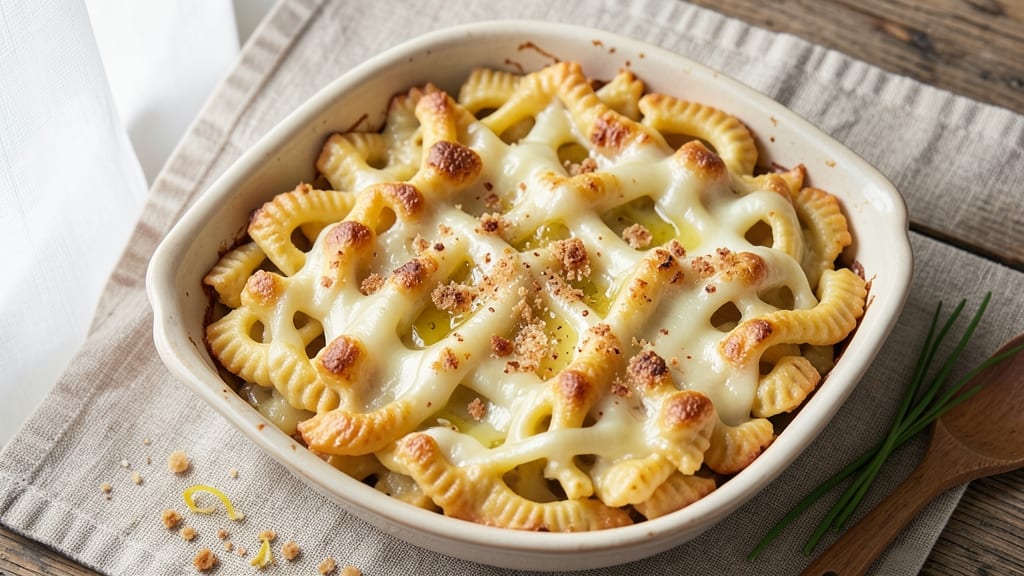
This baked cheese spaetzle recipe delivers the perfect balance of crispy-golden crust and stretchy, melty cheese pulls—a German classic that’s surprisingly simple to make at home.
The secret lies in the dough, which transforms from a shaggy egg mixture into delicate strands when scraped through a spaetzle maker or colander, then baked until bubbly and golden.
I’ve perfected this vegetarian-friendly version with a blend of Gruyère and Emmental for that signature stretchy texture, while a crispy breadcrumb topping adds an irresistible crunch.
What makes this recipe stand out is the combination of traditional techniques—like the spaetzle maker method—and modern twists, such as adding caramelized onions or fresh herbs for depth.
The dish is foolproof, requiring just a few pantry staples and about 30 minutes of active prep, followed by 20 minutes in the oven. Whether served as an appetizer, a hearty side, or even a light main with a fresh salad, it’s a crowd-pleaser that feels both comforting and impressive.
The aroma alone will have everyone gathering around the table.
The result is a dish with crispy edges that give way to tender, cheesy strands—each bite pulling apart with that satisfying resistance before melting in your mouth. The cheese pulls are rich and savory, while the crust adds a delightful contrast.
This recipe is perfect for special occasions or a cozy weeknight dinner, especially when paired with a crisp white wine or a tangy mustard dip. It’s the kind of dish that makes you feel like you’ve stepped into a German alpine restaurant, right in your own kitchen.
For extra flavor, consider adding a sprinkle of smoked paprika or fresh thyme before baking, or top with a drizzle of caramelized onions for sweetness. The possibilities are endless, but the base recipe is already a winner—simple, satisfying, and impossible to resist. Let’s get started on creating this German-inspired masterpiece.
Ingredients for baked cheese spaetzle
German alpine flavors meet crispy perfection with these 14 vegetarian-friendly ingredients.
| Ingredient | Amount | Notes |
|---|---|---|
| All-Purpose Flour 🌾 | 1 ½ cups | Sifted for light texture |
| Large Eggs 🥚 | 6 whole | Room temperature preferred |
| Gruyère Cheese 🧀 | 1 ½ cups | Finely grated, vegetarian rennet |
| Emmental Cheese 🧀 | 1 cup | Finely grated, shredded fresh |
| Parmesan Cheese 🧀 | ½ cup | Finely grated, for topping |
| Unsalted Butter 🧈 | ½ cup | Cold, cubed for crispiness |
| Panko Breadcrumbs 🍞 | ½ cup | For crispy topping layer |
| Yellow Onion 🧅 | 1 whole | Finely diced for caramelized topping |
| Fresh Thyme Leaves 🌿 | 1 tbsp | Chopped, for aromatic depth |
| Smoked Paprika 🌶️ | 1 tsp | For subtle smoky flavor |
| Salt 🧂 | 1 ½ tsp | Diamond Crystal preferred |
| Black Pepper 🌶️ | ½ tsp | Freshly ground for brightness |
| Nutritional Yeast 🍄 | 2 tbsp | For umami depth, optional |
| Vegetable Oil 🫒 | 2 tbsp | For spaetzle maker coating |
The cheese blend is non-negotiable for authentic texture. Gruyère provides the signature stretch, while Emmental adds subtle sweetness—both must be freshly grated from blocks (pre-shredded contains anti-caking agents). Whole Foods or specialty cheese shops carry the best quality, but any well-stocked grocery store has them. For the dough, King Arthur flour yields the best results, though any all-purpose will work. The Parmesan topping should be reserved for finishing—it adds that final nutty crunch that elevates the dish from good to restaurant-quality.
No spaetzle maker? A colander with large holes or even a potato ricer works in a pinch. Substitute the Gruyère with Comté if unavailable, though the texture will be slightly firmer. Fresh thyme can be swapped for 1 tsp dried thyme, but fresh is worth hunting down at farmers markets. The smoked paprika adds depth without overpowering—Penzeys carries excellent varieties. For extra richness, fold in 1 tbsp sour cream with the eggs, though it's optional. The breadcrumbs should be toasted lightly before adding to ensure maximum crispiness.
Pre-grate all cheeses and store in airtight containers with parchment between layers to prevent clumping. The dough mixture keeps for 24 hours in the fridge, making it perfect for meal prep. Once baked, spaetzle reheats beautifully—cover with foil and warm in a 350°F oven for 10 minutes. For a restaurant-style presentation, serve immediately with a drizzle of caramelized onion jam and extra fresh thyme. Leftovers freeze well for up to 3 months, though the texture becomes slightly softer upon thawing.
Why You'll Love This Recipe
- No-Fuss Dough: I swear by this recipe—just flour, eggs, and a handful of shredded cheese. No rolling, no fussing, no spaetzle board required. You’ll have that tender, cheesy texture without the stress of hand-pulling noodles.
- Melty Magic: That combo of Gruyère, Emmental, and Parmesan? It’s a flavor explosion. Gruyère’s nutty depth, Emmental’s gentle melt, and Parmesan’s sharp finish—every bite is pure cheesy satisfaction. (Yes, even on a Tuesday night.)
- Leftovers That Please: This bakes up perfectly, so you can prep ahead for lunches or a quick dinner. Reheat in the oven until bubbly, and it’s like it came straight out of the oven. My kids fight over the leftovers—no joke.
- Budget-Friendly Luxury: You’re using pantry staples here, but it tastes like a fancy restaurant dish. Gruyère and Emmental stretch far, and the Parmesan adds that restaurant-quality finish without breaking the bank. Cheap, cheesy, and always a hit.
Step-by-step instructions for baked cheese spaetzle
Master the art of spaetzle with this method—crispy edges, stretchy cheese, and perfect texture every time.
Prepare the Cheese Dough
In a large mixing bowl, combine the 1.5 cups all-purpose flour and 1.5 tsp salt. Whisk to remove any lumps, then create a well in the center. Add the 6 whole large eggs and whisk vigorously until the mixture forms a thick batter with no dry flour remaining.
Gradually fold in the 1.5 cups Gruyère cheese and 1 cup Emmental cheese, using a rubber spatula to ensure even distribution. The dough should be smooth and slightly sticky but not wet. If it feels too dry, add 1 tablespoon water at a time until it reaches a pliable consistency. Cover the bowl with plastic wrap and let it rest for 15 minutes at room temperature—this allows the gluten to relax and prevents tearing when pressing.
Press and Cook the Spaetzle
Heat a large pot of water to a rolling boil and add 1.5 tsp salt. If you have a spaetzle maker, coat it with 2 tablespoons vegetable oil and press the dough through the holes directly into the boiling water. If using a colander or grater, work in small batches to avoid overcrowding the pot.
Cook the spaetzle for 2-3 minutes until they float to the surface and are no longer translucent. Use a slotted spoon to transfer them to a colander lined with a kitchen towel to drain. Repeat with the remaining dough, keeping the cooked spaetzle warm in the colander. The spaetzle should be tender but still slightly firm to the touch—overcooking leads to a mushy texture.
Assemble the Baked Spaetzle
Preheat your oven to 375°F. In a large oven-safe skillet or baking dish, melt the 0.5 cup unsalted butter over medium heat. Add the 1 whole yellow onion, 1 tbsp chopped fresh thyme leaves, and 1 tsp smoked paprika, cooking for 5-6 minutes until the onions soften and turn golden. Remove from heat and stir in the 2 tbsp nutritional yeast for added umami depth.
Spread half of the cooked spaetzle evenly into the skillet, creating a single layer. Sprinkle 0.25 cup of the Parmesan cheese over the top, then repeat with the remaining spaetzle and cheese. The layers should be compact but not packed down—this ensures even browning and crispiness.
Create the Crispy Topping
In a small bowl, mix the 0.5 cup panko breadcrumbs with the remaining 0.25 cup Parmesan cheese and 0.5 tsp black pepper. Evenly sprinkle this mixture over the top of the spaetzle, pressing down gently to adhere. The breadcrumbs will create a golden, crispy crust while the cheese melts into stretchy strands.
Transfer the skillet to the preheated oven and bake for 15-20 minutes, until the top is deeply golden brown and the edges are crispy. The cheese should pull slightly when you lift a corner—this is your signal that the spaetzle is perfectly baked. If the top browns too quickly, tent loosely with foil to prevent burning while the center finishes.
Rest and Serve
Remove the spaetzle from the oven and let it rest for 5-10 minutes before serving. This resting period allows the cheese to set slightly, making it easier to slice and preventing a runny texture. For the crispiest experience, serve immediately with a side of caramelized onions or a simple arugula salad.
The finished spaetzle should have a crispy, golden-brown crust on top and stretchy, melted cheese throughout. Each bite should deliver a contrast of textures—crunchy, chewy, and creamy—with a rich, savory flavor from the Gruyère and Emmental. The caramelized onions and thyme add a subtle sweetness that balances the saltiness of the Parmesan.
Pro Tips For Making Baked Cheese Spaetzle
- Grate Cheese Fine: Skip the food processor—your fingers and a box grater do the job better. Gruyère and Emmental melt smoother when shredded by hand, and you’ll catch stray Parmesan bits that would otherwise turn to gritty sand in your finished dish.
- Test Dough Before Baking: Drop a small spoonful of batter into boiling water—if it floats immediately, it’s ready. I learned this the hard way by undercooking mine and ending up with gummy, half-raw spaetzle that tasted like sad pasta.
- Don’t Overmix the Batter: Stir just until the flour disappears—lumpy is fine. Overworking the dough makes spaetzle tough, and you’ll regret it when they turn out chewy instead of light and pillowy. Trust me, it’s easier than you think.
- Bake Until Golden, Not Just Bubbly: The top should crackle and turn golden, not just sit there looking pale. I used to pull mine out too soon, and the cheese stayed undercooked—now I wait until the crust is crisp, even if it means an extra 5 minutes. Worth it.
Creative variations of this recipe
Herb-Infused Twist
Swap the smoked paprika for 1 tbsp fresh rosemary and 1 tbsp fresh sage, finely chopped, mixed into the butter base. The herbs add an earthy depth that pairs beautifully with the Gruyère.
I like to toast the herbs in the butter for 1-2 minutes before adding onions to intensify their aroma. 🌿
Spicy Kick
For a bold flavor punch, stir 1 tsp cayenne pepper or 1 tbsp hot honey into the melted butter before assembling the spaetzle. The cayenne adds a slow-building heat, while the honey balances it with a subtle sweetness. Top with extra Parmesan for contrast. 🌶️
Veggie-Packed Layer
Fold 1 cup roasted mushrooms or sautéed bell peppers into the spaetzle dough for extra texture. Roast the veggies at 400°F for 20 minutes with olive oil, salt, and pepper before mixing them in. This variation works especially well with the caramelized onions on top. 🍄
Crispy Potato Topping
Replace the breadcrumb topping with thinly sliced potato chips (like Kettle Brand or Utz) for an extra-crunchy finish. Arrange them in overlapping layers over the cheese, pressing lightly to adhere. The salty, crispy contrast elevates the dish to new heights. 🥔
Sweet & Savory Fusion
Add a layer of caramelized apples or pears between the spaetzle and cheese for a sweet-savory balance. Cook 1 cup diced apples with 1 tbsp butter and 1 tsp cinnamon until tender, then spread them evenly over the spaetzle before adding the cheese. 🍎
Gluten-Free Adaptation
For a gluten-free version, replace the all-purpose flour with 1.5 cups gluten-free flour blend (like King Arthur Measure for Measure) and add 1 tbsp xanthan gum to improve texture.
The dough will be slightly thicker, so adjust with 1-2 tbsp water as needed. The spaetzle maker still works, but a colander may require more pressing. 🌾
Nutrition facts
Frequently asked questions
Can I make spaetzle without a spaetzle maker?
A colander with large holes or even a potato ricer works perfectly. Press the dough through in small batches to avoid overcrowding the boiling water. The strands will be slightly thicker but still delicious. For extra texture, use a fork to create ridges in the dough before pressing.
Why did my spaetzle turn out mushy instead of crispy?
Mushy spaetzle usually means overcooking or underbaking. Cook the strands in boiling water for only 2-3 minutes until they float, then drain well. When baking, ensure the oven is at 375°F and bake for 15-20 minutes until golden and crispy. A crispy breadcrumb topping also helps lock in moisture.
What’s the best cheese substitute if I don’t have Gruyère or Emmental?
For a similar stretchy texture, use fontina or mozzarella (for creaminess) mixed with Parmesan. Avoid cheddar—it melts too quickly. If you want a sharper flavor, try Pecorino Romano instead of Parmesan. Always grate fresh for the best results.
Can I make this ahead of time for a party?
Yes! Assemble the spaetzle in the baking dish up to 24 hours ahead and refrigerate. Bake straight from the fridge, adding 5-10 extra minutes to ensure even cooking. For a make-ahead appetizer, bake it, cool completely, then slice and reheat in a 350°F oven for 10 minutes before serving.
How do I prevent the breadcrumb topping from burning?
Tent the dish loosely with foil after 10 minutes in the oven to protect the topping while the center finishes baking. Alternatively, broil for just 1-2 minutes at the end for extra crispiness. Keep an eye on it—ovens vary!