
Appetizers
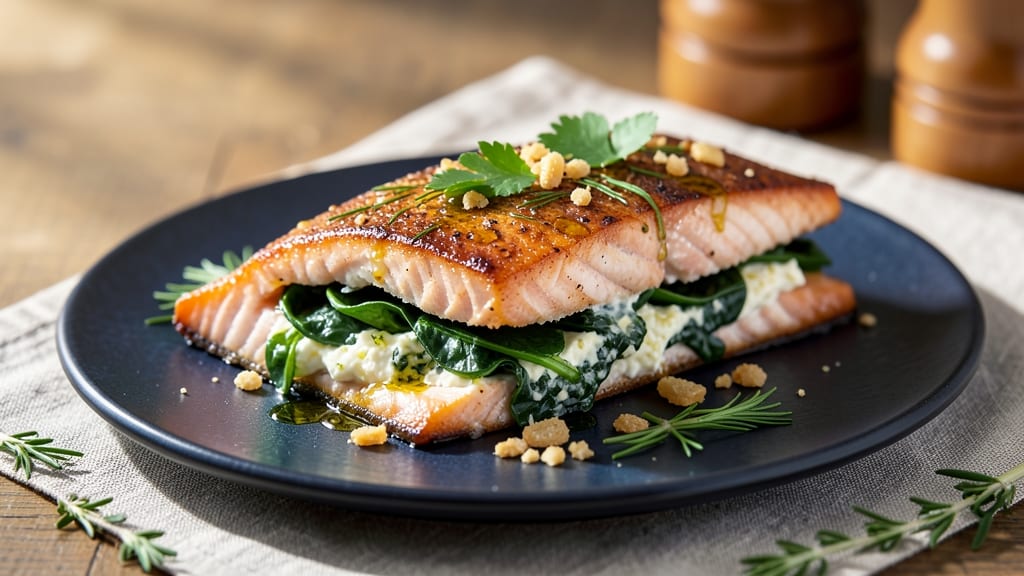
This baked salmon stuffed with spinach and cream cheese delivers the perfect balance of textures—crispy skin meets a silky, herby filling that melts with every bite. 🌟 The secret lies in baking the salmon just until it flakes easily while keeping the center tender, all while the spinach-cream cheese mixture transforms into a rich, velvety center.
I developed this recipe after years of perfecting stuffed fish dishes, and it’s now my go-to for elegant weeknight dinners that impress without the fuss.
The magic happens when you layer finely chopped spinach and cream cheese into the salmon’s center, creating a filling that’s both creamy and packed with nutrients. A light sprinkle of breadcrumbs on top adds a subtle crunch, while lemon zest brightens the dish with a zesty finish.
This recipe is designed to be foolproof—no special techniques required, just precise timing and a few simple ingredients that come together beautifully.
By the time it emerges from the oven, you’ll have golden, crispy salmon with a filling that’s perfectly set—not too runny, not too firm. The aroma of garlic and lemon fills the kitchen, while the contrast of textures makes every bite satisfying.
It’s the kind of dish that feels restaurant-quality but is simple enough for any home cook to master.
Serve with a side of roasted asparagus or a fresh salad to round out the meal. The recipe scales easily for guests, and leftovers reheat beautifully. Here’s how to achieve that perfect balance of crispy and silky in your own kitchen.
Ingredients for baked salmon stuffed with spinach and cream cheese
Crispy salmon with a creamy, herby center—just these 12 ingredients deliver restaurant-quality results.
| Ingredient | Amount | Notes |
|---|---|---|
| Fresh Atlantic Salmon Fillets 🐟 | 4 whole | Skin-on, 6-8 oz each |
| Baby Spinach Leaves 🌿 | 4 cups | Finely chopped, packed |
| Cream Cheese 🧀 | 8 oz | Full-fat, room temperature |
| Garlic Cloves 🧄 | 3 cloves | Minced, fresh preferred |
| Lemon Zest 🍋 | 1 tbsp | From 1 large lemon |
| Fresh Dill 🌿 | ¼ cup | Chopped, stems removed |
| Panko Breadcrumbs 🍞 | ¼ cup | For topping, low-moisture |
| Extra-Virgin Olive Oil 🫒 | 2 tbsp | For brushing salmon |
| Salt 🧂 | 1 tsp | Kosher or sea salt |
| Black Pepper 🌶️ | ½ tsp | Freshly ground preferred |
| Lemon Juice 🍋 | 1 tbsp | Freshly squeezed |
| Unsalted Butter 🧈 | 1 tbsp | Melted, for brushing |
The salmon is the star, so grab the freshest fillets you can find. Whole Foods or your local fishmonger usually have the best quality—look for bright pink flesh and clear eyes. If you're using frozen, thaw it overnight in the fridge. The spinach should be baby spinach (not the pre-washed kind with dirt clumps)—it's more tender and packs better. For the cream cheese, Philadelphia is my go-to, but any full-fat brand works. Room temperature is key—it blends smoother and doesn't make the filling too cold. The garlic? Fresh is non-negotiable here—it makes all the difference in flavor.
No baby spinach? Regular spinach works too, but chop it extra fine. Ran out of fresh dill? Dried dill at one-third the amount gets you close, but fresh has that bright, herby kick. The breadcrumbs can be regular panko or even crushed crackers in a pinch. For a lighter texture, some people skip the breadcrumbs, but I like that little crunch on top. The lemon zest should be from a fresh lemon—bottled zest just doesn't cut it. If you're short on time, pre-chop all your veggies and store them in the fridge until ready to use. The filling keeps for about 2 hours before baking, so don't prep it too early.
This dish reheats beautifully—just warm it in the oven for 5-10 minutes at 350°F. The salmon is best served immediately, but leftovers keep for 2 days in the fridge. For meal prep, I portion the filling into containers and bake the salmon fresh when ready to serve. The butter and olive oil can be stored at room temperature, but keep them sealed tight to prevent rancidity. Fresh herbs like dill and lemon zest should be used within 1 week for best flavor.
Why You'll Love This Recipe
- No Fuss Filling: I just mix the cream cheese, spinach, and minced garlic right in the pan—no blender, no extra bowls. The lemon zest brightens everything up while you’re preheating the oven, and that’s it. Honestly, the hardest part is deciding whether to stuff the salmon or just eat the filling straight from the spoon.
- Creamy-Garlicky Magic: That first bite of crispy salmon giving way to the spinach-cream cheese blend? It’s like a hug for your taste buds. The garlic softens just enough to mellow into the richness of the cream cheese, while the lemon zest keeps it from feeling too heavy. (Yes, even on a Tuesday night.)
- Weeknight or Weekend: This works when I’m rushing to feed the family at 6 PM or when I’m hosting a dinner party at 7. The same filling goes into the salmon, but you could also spread it on toast for breakfast or dollop it on pasta later. Between us, I’ve served it as an appetizer, a main, and even a lazy brunch—no judgment.
- Leftovers That Don’t Suck: Unlike so many baked fish dishes, this actually reheats beautifully. I’ll wrap leftovers in foil and throw them in the oven for 10 minutes, and it’s still juicy and creamy. Plus, the filling keeps well in the fridge, so I can prep it ahead and use it in other recipes—like stuffed mushrooms or a quick frittata. No sad, dry salmon here.
Step-by-step instructions for baked salmon stuffed with spinach and cream cheese
Here's how to create that perfect crispy crust with a luscious, creamy filling inside.
👨🍳 Step 1: Prepare the Spinach and Cream Cheese Filling
In a large skillet over medium heat, add 2 tablespoons extra-virgin olive oil and sauté the 4 cups baby spinach leaves for 2-3 minutes until just wilted. You want the spinach to soften but still retain its vibrant green color—overcooking will make it bitter.
Transfer the wilted spinach to a mixing bowl and let it cool slightly. Add the 8 oz cream cheese, 3 cloves minced garlic, 1 tablespoon lemon zest, 1 tablespoon lemon juice, 1 teaspoon salt, ½ teaspoon black pepper, and ¼ cup chopped fresh dill. Mix everything together with a fork until completely combined and smooth. The filling should be thick but spreadable—if it's too firm, let it sit at room temperature for another 5 minutes.
🔪 Step 2: Create Slits in the Salmon and Stuff Generously
Preheat your oven to 400°F and line a baking sheet with parchment paper. Using a sharp knife, carefully make 4-5 deep slits down the center of each fresh atlantic salmon fillet, being careful not to cut all the way through. These slits will create pockets for the filling while keeping the fillets intact.
Spoon the spinach-cream cheese mixture evenly into each salmon fillet, pressing it down gently to fill the slits completely. You'll see the filling bulge slightly—this is perfect. If any filling spills out, just smooth it over the top of the fillet. This ensures every bite has that creamy goodness without making the salmon fall apart in the oven.
🍳 Step 3: Brush and Crumb the Salmon for Extra Crispiness
In a small bowl, mix the ¼ cup panko breadcrumbs with 1 tablespoon melted unsalted butter until evenly coated. This buttery crumb mixture is what creates that irresistible crispy crust we're after.
Brush each stuffed salmon fillet generously with the remaining 2 tablespoons extra-virgin olive oil, making sure to coat the top completely. Then sprinkle the buttery panko mixture evenly over each fillet, pressing down lightly so the crumbs adhere. The crumbs should look golden and inviting—this is your visual cue that everything's ready for the oven.
🔥 Step 4: Bake Until Golden and Flaky
Place the prepared salmon fillets on the baking sheet, skin-side down if your fillets have skin (this helps crisp the skin beautifully). Bake in the preheated oven for 12-15 minutes until the edges are golden brown and the internal temperature reaches 145°F when measured at the thickest part.
Here's the thing—don't overcook! The salmon will continue cooking slightly after you remove it from the oven. You want it just opaque in the center with a delicate pink hue. When it's done, you'll see the panko crust looking perfectly crispy and the filling peeking out slightly from between the slits.
⏰ Step 5: Rest and Serve Immediately
Transfer the baked salmon to a serving platter and let it rest for 3-5 minutes before serving. This brief resting period allows the juices to redistribute, ensuring each bite is moist and flavorful rather than dry.
Garnish with additional chopped fresh dill if desired, and serve with lemon wedges on the side. The contrast of crispy panko crust with the creamy spinach filling and tender salmon is what makes this dish truly special. Enjoy while warm for the best texture experience!
Pro Tips For Making Baked Salmon Stuffed With Spinach And Cream Cheese
- Dry the Spinach First: I learned this the hard way—wilted spinach in a soggy mess is no one’s idea of a good time. Pat those baby leaves thoroughly with paper towels before mixing with cream cheese; you want them crisp enough to hold shape, not turn into a sad, watery filling.
- Pre-Cook the Garlic: Raw garlic cloves in the center of your salmon? That’s a bitter surprise waiting to happen. Sauté 2-3 minced cloves in olive oil until fragrant and just golden, then mix into the cream cheese-spinach filling. The aroma infuses better, and you avoid that harsh, undercooked bite.
- Don’t Overstuff the Salmon: I’ve seen fillets split right down the middle because someone packed them like a Thanksgiving turkey. Keep the spinach-cream cheese mix loose—about ¼-inch thick—so it bakes evenly and the salmon stays intact. Press it in gently, then let it spread naturally.
- Bake at 375°F, Not 400°F: After burning three batches at high heat, I finally figured out: salmon stuffed with dairy needs patience. 375°F guarantees the cream cheese melts smoothly while the salmon stays juicy. If you’re impatient, tent it with foil halfway—but don’t skip the lower temp entirely.
Serving suggestions for this dish
Elegant Plating Ideas
Serve your stuffed salmon on a bed of buttery mashed potatoes or wild rice pilaf to soak up any creamy filling drips. I like arranging the salmon slightly off-center on the plate to create visual interest—just a few fresh lemon wedges and chopped parsley add a pop of color.
For a restaurant-worthy touch, drizzle a light lemon-beurre blanc sauce around the plate. 🍽️
Perfect Side Dishes
Roasted asparagus with a sprinkle of lemon zest and crushed red pepper balances the richness beautifully. For a lighter option, try a mixed greens salad with avocado slices, cherry tomatoes, and a balsamic vinaigrette. I also love pairing this dish with crusty sourdough bread—perfect for mopping up any extra sauce.
Wine Pairings
A crisp Sauvignon Blanc from New Zealand or a Pinot Grigio from Italy complements the lemon and dill flavors perfectly. For red wine lovers, a light Pinot Noir works surprisingly well—its subtle earthiness doesn’t overpower the dish.
I always keep a bottle of La Crema Sauvignon Blanc on hand for occasions like this. 🍷
Garnish Like a Pro
Before serving, add a final touch of toasted sesame seeds or crushed almonds for texture contrast. A sprinkle of fresh dill fronds or microgreens elevates the presentation instantly. For a smoky twist, finish with a pinch of smoked paprika—it adds depth without overpowering the delicate flavors. 🌟
Meal Prep Friendly
Prep the filling ahead of time and store it in an airtight container in the fridge for up to 2 days. When ready to serve, stuff and bake the salmon fresh for the best texture.
For a quick lunch, assemble the dish in individual ramekins—just add the filling, top with salmon, and bake until golden. Leftovers reheat beautifully in the oven at 350°F for 5-10 minutes. ⏰
Kid-Friendly Twist
For picky eaters, serve the stuffed salmon with buttered noodles or steamed broccoli. The familiar textures make it more approachable, while the creamy filling often wins them over. I’ve even seen kids request seconds after their first bite—proof that even the simplest presentation can make a dish irresistible. 👶
Nutrition facts
Frequently asked questions
Can I use frozen salmon for this recipe?
Yes, but thaw it properly first! Place frozen salmon in the fridge overnight or use the cold water thaw method (sealed in a bag, submerged for 30 minutes per pound). Never thaw at room temperature—it can make the fish dry and unsafe. Pat it completely dry before stuffing to help the crust crisp up nicely.
What if my filling leaks out while baking?
This happens when the slits are too deep or the filling is too loose. For best results, make slits just deep enough to hold the filling without cutting through. If filling leaks, press any excess gently back inside or smooth it over the top before baking. The panko topping will help contain everything.
Can I make this recipe ahead of time?
You can prep the filling up to 2 days ahead and store it in an airtight container. Stuff the salmon just before baking for the best texture—this ensures the filling stays creamy rather than watery. For a quick assembly, keep the filling refrigerated and bake immediately after stuffing.
How do I know when the salmon is fully cooked?
Use a meat thermometer to check the thickest part—it should reach 145°F. The salmon will look opaque and flake easily with a fork. If it's still translucent in the center, return it to the oven for 2-3 more minutes. Overcooking makes it dry, so don't let it exceed 150°F.
What can I substitute for cream cheese?
For a lighter option, use Greek yogurt (full-fat) or ricotta cheese—both add creaminess with less fat. If you prefer a tangier flavor, try mascarpone. Just reduce any added liquid (like lemon juice) slightly since these alternatives are less dense than cream cheese.