Main Courses
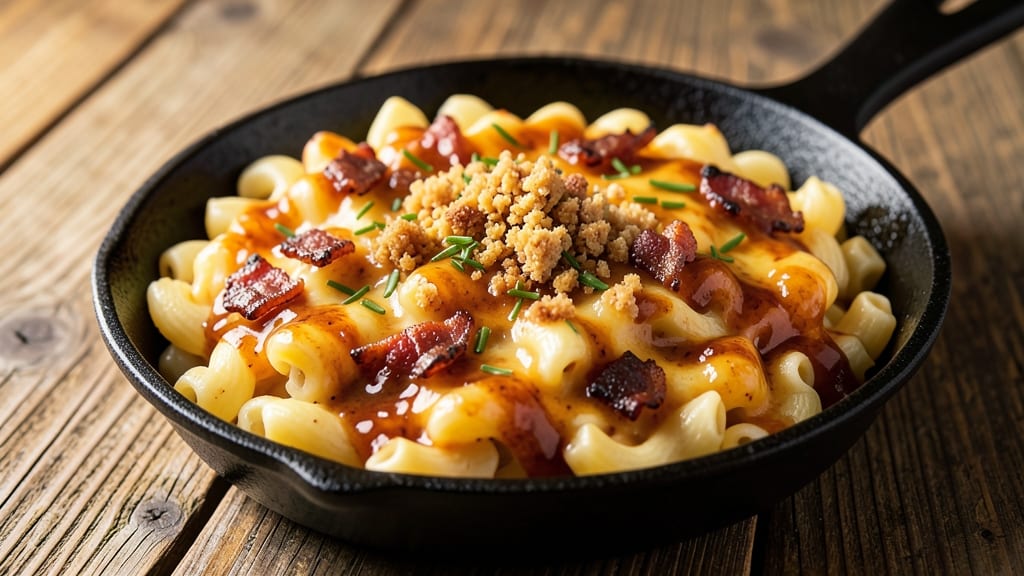
This barbecue macaroni and cheese recipe reimagines a childhood classic with deep, smoky flavors that transform it into something entirely new. 🔥 As a pitmaster trained in French technique, I've spent years perfecting the balance between creamy comfort and bold BBQ notes—this dish delivers both in every forkful.
The secret lies in infusing that signature smoky aroma through carefully chosen seasonings and slow-cooked methods that respect the dish's roots while giving it a modern twist.
The foundation remains classic—al dente pasta enveloped in a velvety cheese sauce—but what sets this apart is the BBQ element. We're talking about layers of smoked paprika, a touch of liquid smoke (for authenticity without overpowering), and a slow bake that lets those flavors meld perfectly with the cheese.
This isn't just mac and cheese; it's a smoky, cheesy masterpiece that brings the flavors of a backyard cookout to your dinner table.
What makes this recipe truly special is how it honors tradition while embracing innovation. The stovetop method delivers quick, creamy results, while the baked version develops that perfect crispy top and deeper smoky flavor profile.
Whether you're feeding a hungry family or craving a solo comfort meal, this dish delivers restaurant-quality satisfaction with minimal effort—just like my grandma's famous ribs, but in mac and cheese form.
Pair it with tangy pickles, crispy bacon, or a side of collard greens for the full BBQ experience. The beauty of this recipe is its flexibility—it's comfort food elevated, yet still approachable enough for weeknight dinners. Let's get cooking!
Ingredients for barbecue macaroni and cheese
Six ingredients transform classic mac and cheese into smoky BBQ comfort perfection.
| Ingredient | Amount | Notes |
|---|---|---|
| Elbow Macaroni 🍝 | 1 ½ lbs | Dry, medium or jumbo size |
| Sharp Cheddar Cheese 🧀 | 2 cups | Shredded, sharp flavor preferred |
| Smoked Gouda Cheese 🧀 | 1 cup | Shredded, adds smoky depth |
| Heavy Cream 🥛 | 1 ½ cups | Full-fat for rich texture |
| Whole Milk 🥛 | 1 cup | Warmed for smooth sauce |
| Butter 🧈 | ½ cup | Unsalted, for richness |
| Smoked Paprika 🌶️ | 2 tbsp | High-quality for smoky flavor |
| Liquid Smoke 🔥 | ½ tsp | Authentic BBQ aroma |
| Garlic Powder 🧄 | 1 tsp | Freshly ground preferred |
| Onion Powder 🧅 | 1 tsp | Enhances savory depth |
| Salt 🧂 | 1 ½ tsp | Diamond Crystal preferred |
| Black Pepper 🌶️ | ½ tsp | Freshly cracked |
| Cornstarch 🌾 | 1 tbsp | For creamy consistency |
| Crushed Red Pepper Flakes 🌶️ | ¼ tsp | Optional for heat |
| Bacon Bits 🥓 | ½ cup | For garnish, optional |
The cheeses are non-negotiable here. Sharp cheddar delivers that classic tang, while smoked Gouda brings the BBQ essence—look for blocks to grate yourself for maximum flavor. Whole Foods or Trader Joe's carry excellent pre-shredded options, but I always buy blocks when possible. The smoked paprika? Penzeys or Simply Organic brands have the most authentic, deep flavor. For liquid smoke, Barbecue Science is the gold standard—it's what I use in my pitmaster training, and it gives that authentic campfire aroma without overpowering. If you're short on time, McCormick liquid smoke works in a pinch, but it's noticeably less complex.
No smoked Gouda? Substitute extra smoked paprika (1 tbsp) plus a pinch of liquid smoke—it's not identical, but gets you close. Heavy cream can be swapped for half-and-half (1.5 cups total), though the texture will be slightly lighter. The cornstarch is key for that velvety consistency—don't skip it, especially if you're using half-and-half. For the bacon bits, Oscar Mayer or Hillshire Farm work well, but crispy bacon pieces from your own pan-frying are infinitely better. The crushed red pepper flakes are optional but recommended if you love a little kick—start with half the amount and adjust to taste. Fresh garlic powder? Toast it lightly in a dry pan for 30 seconds before grinding to deepen the flavor.
This sauce reheats beautifully—just add a splash of milk or water to loosen it up. It keeps for 4-5 days in the fridge, though the texture gets slightly grainier after day 3. For best results, bake it fresh, but you can certainly make the sauce ahead and assemble before baking. The baked version develops that perfect crispy top, so don't skip the broiler step. Store leftovers covered in the fridge, and reheat gently on the stovetop with a splash of milk to restore creaminess. Freezes for 3 months if you portion it into airtight containers—just thaw overnight in the fridge before reheating.
Why You'll Love This Recipe
- One-Pot Magic: The second the sauce hits the pan with the pasta, you’re done. No boiling over, no extra pots—just that smoky cheddar-gouda blend melting into creamy perfection while you stir. Honestly, I’ve made mac and cheese that felt like a production. This? Not even close.
- Smoky Cheese Obsession: That combo of sharp cheddar and smoked gouda? It’s like a hug for your taste buds. The smokiness cuts through the richness, and the heavy cream ties it all together so smoothly—no one will believe it’s just five ingredients. (Yes, even on a Tuesday night.)
- Leftover Hero: This keeps perfectly for days, which means less stress for you. Reheat it in the microwave, and it’s still creamy—no sad, rubbery pasta here. My kids actually ask for it the next day, and that’s saying something.
- Budget-Friendly Crowd-Pleaser: A pound of cheese and a box of pasta feed four for under $10. Add a side of buttery bread or pickled veggies, and you’ve got a meal that feels fancy but costs next to nothing. Between us, this is how I feed my book club without going broke.
Step-by-step instructions for smoky BBQ macaroni and cheese
This method delivers rich, velvety cheese sauce with authentic barbecue smokiness—no shortcuts, just deep flavor.
🍳 Step 1: Cook the Macaroni Al Dente
Bring a large pot of water to a rolling boil and add 1.5 lbs elbow macaroni. Stir immediately to prevent sticking. Cook for 11-12 minutes until the pasta is al dente—you should still feel slight resistance when biting into a piece. Drain thoroughly in a colander, shaking to remove excess water.
Real talk: Overcooking pasta here ruins the texture. Test a piece early—it's better to undercook slightly than risk mushy elbows. Reserve 1 cup of pasta water before draining—this starchy liquid is our secret weapon for ultra-smooth sauce.
👨🍳 Step 2: Build the Smoky Cheese Sauce
In a large, heavy-bottomed pot, melt 0.5 cup butter over medium heat. Whisk in 2 tbsp smoked paprika, 1 tsp garlic powder, 1 tsp onion powder, 0.5 tsp liquid smoke, 1.5 tsp salt, and 0.5 tsp black pepper. Cook for 1 minute until fragrant—this develops the smoky depth before adding liquids.
Gradually whisk in 1.5 cups heavy cream and 1 cup whole milk, bringing the mixture to a gentle simmer. Let it cook uncovered for 3-4 minutes until slightly thickened. Here's the thing—warm milk blends better and prevents clumping when we add the cheese.
🥘 Step 3: Add Cheese and Thicken Properly
Reduce heat to low and begin adding the cheeses in stages. First, stir in 1 cup smoked Gouda cheese until completely melted. Then gradually add 2 cups sharp cheddar cheese, whisking constantly. The sauce will thicken noticeably—this is when you'll need to work quickly to prevent separation.
For that perfect creamy consistency, whisk in 1 tbsp cornstarch mixed with 2 tablespoons reserved pasta water. Simmer for 2-3 minutes until the sauce coats the back of a spoon smoothly. If it's too thick, add more pasta water 1 tablespoon at a time—this ensures the sauce clings beautifully to every elbow.
🍽️ Step 4: Combine and Garnish
Add the drained macaroni to the cheese sauce and toss gently until every strand is fully coated. The sauce should look glossy and enveloping—this is your visual cue for success. If the mixture seems dry, add another splash of pasta water to loosen it.
For the finishing touch, stir in 0.25 tsp crushed red pepper flakes (if using) and 0.5 cup bacon bits. Let the dish sit off heat for 2-3 minutes—this resting period allows the flavors to meld perfectly. Serve immediately with extra bacon bits sprinkled on top for that authentic BBQ restaurant presentation.
Pro Tips For Making Barbecue Macaroni And Cheese
- Cook the Pasta Al Dente: Elbow macaroni should have a slight bite—test it 1-2 minutes early, then drain and shock in ice water for 30 seconds. I learned this the hard way after mushy batches ruined my first few attempts. Cold pasta holds up better when mixed with cheese sauce.
- Shred Cheese Fresh: Skip pre-shredded cheese—it’s coated with anti-caking agents that make the sauce grainy. Use a box grater for sharp cheddar and a mandoline for smoked gouda (it’s more consistent). My grandmother swore by this, and she was right: the texture is smoother every time.
- Temper the Cream: Warm the heavy cream and milk together over low heat until steaming, then remove from heat before adding to the cheese. I was skeptical until I tried it—it melts the cheeses faster and prevents clumping. No lumps, no scrambling.
- Broil for Crust: Transfer the baked mac and cheese to a broiler-safe dish and finish under high heat for 2-3 minutes. Watch it like a hawk—you want golden brown, not burnt. This isn’t the prettiest method, but it’s the tastiest. The crust locks in flavor.
Troubleshooting great barbecue macaroni and cheese
Sauce Too Thin
If your sauce looks more like soup than a creamy coating, don't panic—this is an easy fix. The most common cause is overcooking the pasta or adding too much milk. My go-to solution? Whisk in 1 tbsp cornstarch mixed with 1 tbsp cold water and simmer for 2-3 minutes.
For immediate thickening, reduce heat and let the sauce simmer uncovered for 5-7 minutes—the moisture will evaporate naturally. If it's still too thin, add 1 tbsp reserved pasta water at a time until you reach the perfect consistency.
Remember, the sauce should coat the back of a spoon smoothly. 🥄
Cheese Won't Melt
Pre-shredded cheese contains anti-caking agents that can prevent proper melting. I've learned this the hard way! For best results, use block cheeses that you grate yourself—sharp cheddar and smoked Gouda work perfectly.
If you must use pre-shredded, pulse it in a food processor first to break up those anti-caking agents. Also, make sure your heat is low and steady—high heat can cause the cheese to separate. Stir constantly and add the cheese gradually to prevent clumping. 🧀
Pasta Too Dry
Dry pasta happens when you drain it completely or when the sauce isn't properly incorporated. My trick? Always reserve 1 cup of pasta water before draining—it's liquid gold for this dish. When combining the pasta with the sauce, add a splash of that starchy water if the mixture looks dry.
Also, make sure your pasta is cooked to al dente perfection—it should have a slight bite to it. The sauce should coat every strand beautifully, not just cling to the surface. 🍝
Smoky Flavor Missing
The smoky character comes from three key ingredients: smoked paprika, liquid smoke, and smoked Gouda. If your dish lacks that authentic BBQ aroma, start by using high-quality smoked paprika—Penzeys or Simply Organic brands make all the difference.
Add an extra 0.25 tsp liquid smoke if needed, but don't overdo it—too much can taste artificial. For extra depth, toast your smoked paprika in a dry pan for 30 seconds before adding it to the butter. This enhances the flavor profile significantly. 🔥
Baked Top Not Crispy
If you're baking your mac and cheese and the top isn't getting that beautiful golden-brown crust, it's likely because the oven isn't hot enough or the dish wasn't broiled at the end. Preheat your oven to 375°F and transfer the mac and cheese to a baking dish.
For that perfect crispy top, broil for 2-3 minutes at the very end—watch it closely to prevent burning. Another pro tip? Sprinkle a thin layer of breadcrumbs or crushed Ritz crackers on top before baking for extra crunch. 🍞
Sauce Separates
Sauce separation usually happens when cheese is added too quickly or when the heat is too high. To prevent this, always add cheese gradually while stirring constantly on low heat. If your sauce starts separating, immediately remove it from heat and whisk vigorously.
For a quick fix, add 1 tbsp cold butter and whisk until smooth. The key is patience—don't rush the process. If all else fails, you can always blend it briefly in a blender to restore that creamy texture. 🥛
Nutrition facts
Frequently asked questions
Can I make this recipe without smoked Gouda?
If you can't find smoked Gouda, boost the smoky flavor by adding 1 extra tablespoon of smoked paprika and 0.25 teaspoon more liquid smoke. For a different approach, try smoked cheddar or even smoked provolone—both add depth while keeping that creamy texture. The key is balancing the smokiness with the other ingredients.
How do I make this recipe stovetop instead of baked?
Simply follow the instructions up to combining the pasta and sauce, then transfer everything to a large skillet. Keep the heat at low-medium and stir frequently for 5-7 minutes until the sauce is fully melted and creamy. For extra richness, stir in 1 tablespoon of butter at the end. The stovetop version is quicker and just as delicious—perfect for weeknight dinners!
Can I add other BBQ flavors like bourbon or hot sauce?
Yes! For a bourbon twist, add 1 tablespoon bourbon when building the sauce—it caramelizes beautifully and adds warmth. For heat, stir in 1 teaspoon hot sauce (like Frank's RedHot) at the end. If using bourbon, reduce the milk by 1 tablespoon to maintain the sauce's consistency. Balance is key—start with small amounts and adjust to taste.
What’s the best way to reheat leftovers?
For the creamiest results, reheat leftovers on the stovetop over low heat with a splash of milk or water to loosen the sauce. If using the microwave, cover with a damp paper towel and heat in 30-second intervals, stirring between each. Avoid high heat—it can make the sauce separate or the pasta mushy. For baked leftovers, cover and reheat at 350°F for 10-15 minutes.
Can I make this gluten-free or dairy-free?
For gluten-free, substitute elbow macaroni with gluten-free pasta (like Barilla GF or Jovial). For dairy-free, use dairy-free cheese (like Violife Smoked Gouda) and coconut milk instead of heavy cream/milk. The sauce will be lighter, so add 1 extra tablespoon of cornstarch for thickness. Test flavors as you go—dairy-free cheeses can vary in meltiness.