
Sauces & Condiments
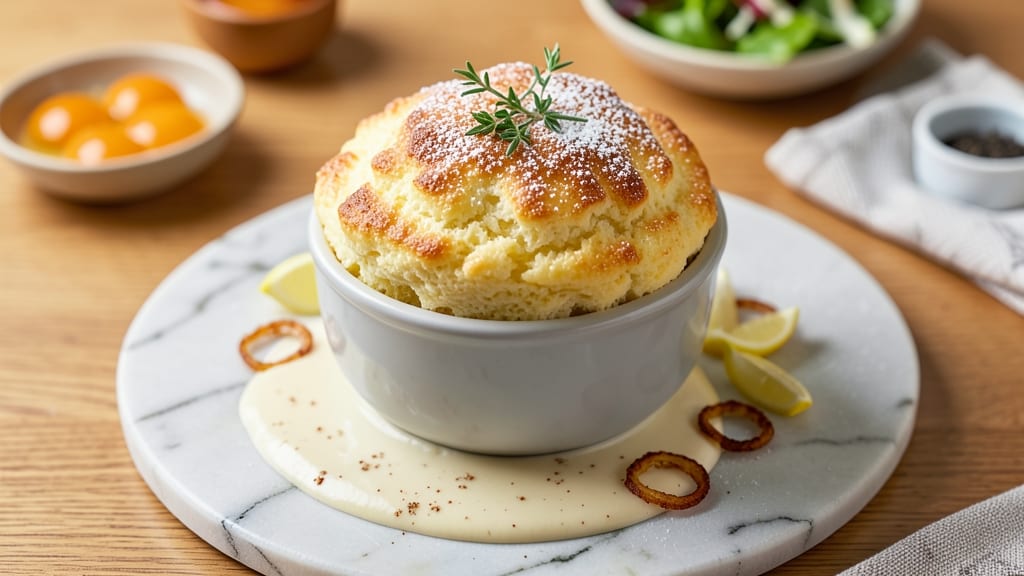
Alton Brown's cheese souffle recipe delivers that perfect crispy crown and silky core every time—no culinary degree required. The secret lies in tempering eggs just right and baking at 350°F for a delicate balance between structure and airiness.
This isn't your average souffle; it's a foolproof method that transforms simple ingredients into a restaurant-worthy dish with minimal effort.
What sets this recipe apart is Alton Brown's signature technique of folding in whipped egg whites gently—overmixing is the enemy of that signature rise. The result? A towering souffle with a golden, crispy exterior that shatters like glass and a custardy interior that melts on your tongue.
We're talking French bistro quality in your own kitchen, complete with optional chive garnishes for that final touch of elegance.
The magic happens in the oven, where precise timing (15–20 minutes) creates that coveted contrast between the crispy top and tender center. This isn't a dish for impatient cooks—patience pays off in every bite—but the payoff is worth it.
Whether you're serving it as a showstopper for dinner guests or treating yourself to a luxurious dessert, this recipe delivers results that'll have everyone asking for seconds.
For those nervous about souffle failures, don't worry—this method includes troubleshooting tips to ensure success. The key? Proper egg tempering and a well-preheated oven. With these safeguards in place, you'll achieve that crispy perfection every time, proving that even the fanciest French techniques can be mastered at home.
Ingredients for alton brown cheese souffle
Six eggs, one cup of cheese, and Alton Brown's signature technique create restaurant-worthy soufflés at home.
| Ingredient | Amount | Notes |
|---|---|---|
| Large Eggs 🥚 | 6 whole | Room temperature for best results |
| Extra-Virgin Olive Oil 🫒 | ¼ cup | High-quality, fruity variety preferred |
| Unsalted Butter 🧈 | ½ cup | Cold, cubed for even melting |
| All-Purpose Flour 🌾 | ¼ cup | Sifted for smooth batter |
| Granulated Sugar 🍚 | ½ cup | Fine grain preferred |
| Salt 🧂 | ½ tsp | Diamond Crystal preferred |
| Heavy Cream 🥛 | 1 ½ cups | Cold, 35% fat minimum |
| Sharp White Cheddar Cheese 🧀 | 1 ½ cups | Freshly grated, no pre-shredded |
| Fresh Chives 🌿 | ¼ cup | Finely chopped for garnish |
| Ground Black Pepper 🌶️ | ¼ tsp | Freshly ground for best flavor |
| Nutritional Yeast 🍄 | 1 tbsp | For umami depth (optional) |
| Cornstarch 🌾 | 1 tbsp | For crispy crown stabilization |
The eggs are non-negotiable—room temperature is critical for proper emulsification. Kirkland Signature or Vital Farms eggs work best due to their high quality. For the cheese, Cabot Clothbound Cheddar or Mozzarella di Bufala (mixed with cheddar) elevates flavor without overpowering. The heavy cream must be cold—never straight from the fridge, but chilled for at least 30 minutes. Butter should be cold and cubed to prevent premature melting during tempering. All ingredients should be measured precisely—this isn't a dish where approximations work.
No sharp cheddar? Gruyère or Comté work beautifully, though they'll alter the flavor profile slightly. Running short on eggs? Use 5 large eggs plus 1 extra yolk for better structure. The nutritional yeast can be omitted if unavailable, but it adds that signature umami that makes this recipe stand out. For a vegetarian version, ensure all cheeses are dairy-derived (no plant-based substitutes). The cornstarch is optional but highly recommended—it creates that coveted crispy crown. If substituting flour for cornstarch, use half the amount and expect slightly less crispness.
Egg whites should be whipped to stiff peaks—over-whipping leads to deflation. The batter must be folded gently using a spatula in a figure-eight motion. Bake in a preheated 350°F oven for exactly 15–20 minutes—no peeking! The soufflé should spring from the oven immediately. Serve within 5 minutes of baking for optimal texture. Leftover batter can be baked in ramekins as mini soufflés (reducing bake time to 10–12 minutes). Store any leftovers in an airtight container for up to 2 days, though texture will degrade.
Why You'll Love This Recipe
- No Fuss, Big Payoff: I swear by this recipe because it’s the kind of thing you can pull off even when your kitchen looks like a hurricane hit it. Whisk eggs, melt butter, fold in flour—no fancy gadgets, no stress. That golden crust? Pure magic with just a little sugar and a hot oven.
- Creamy Crust Perfection: The moment that crispy top gives way to silky cheese? Chef’s kiss. Alton’s method—using just butter, flour, and a touch of sugar—creates a texture so good you’ll want to eat it with a spoon. (Yes, I’ve been tempted.)
- Weeknight Dinner Hero: Between us, this is my go-to when I’m too tired to cook but still want something impressive. Serve it with a simple salad or roasted veggies—suddenly, you’re hosting a dinner party without the chaos. (My roommates still don’t know it’s my secret.)
- Budget-Friendly Luxury: Eggs, butter, flour—these are pantry staples that won’t break the bank. I make two soufflés for the price of one takeout order, and the leftovers? Reheat them gently and pretend they’re gourmet. (No one will guess.)
Step-by-step instructions for alton brown's cheese soufflé
Mastering the soufflé technique transforms simple ingredients into a restaurant-worthy dessert.
Prepare the Béchamel Base
Melt the 0.5 cup unsalted butter in a saucepan over medium heat until it foams but doesn't brown. Whisk in the 0.25 cup all-purpose flour and cook for 2 minutes until the mixture thickens into a smooth roux. This forms the foundation for your soufflé's structure.
Gradually whisk in 1.5 cups heavy cream and 0.5 cup granulated sugar until fully incorporated. The mixture should coat the back of a spoon and hold its shape when drizzled. Remove from heat and stir in the 1.5 cups sharp white cheddar cheese and 1 tbsp nutritional yeast until completely melted and smooth. Here's where the magic begins—this rich base will give your soufflé its signature silky texture.
Separate Eggs and Temper the Yolks
Separate the 6 whole large eggs, placing whites in one bowl and yolks in another. Beat the yolks lightly with a whisk, then gradually temper them by adding the hot béchamel mixture in a thin stream while whisking constantly. This slow incorporation prevents the yolks from scrambling and maintains their binding properties.
Strain the yolk mixture through a fine-mesh sieve to remove any potential lumps. The goal is to create a smooth, velvety custard that will rise perfectly in the oven. The temperature difference between the hot béchamel and room-temperature yolks is critical—this is what creates the soufflé's signature lightness.
Whip Egg Whites to Stiff Peaks
In a separate, immaculately clean bowl, beat the egg whites with a whisk or electric mixer until soft peaks form. Add the 0.5 tsp salt and 0.25 tsp ground black pepper to the whites, then gradually incorporate the 1 tbsp cornstarch while continuing to whip. This step is where you'll achieve the soufflé's signature crispy crown and airy interior.
Continue beating until the whites form stiff, glossy peaks that stand upright when the whisk is lifted. The whites should be thick enough to hold their shape when you turn the bowl upside down. This is your window of opportunity—over-whipped whites will collapse when folded into the base mixture, ruining your soufflé.
Fold Whites into Base Gently
Using a spatula, gently fold one-third of the whipped egg whites into the yolk mixture to lighten it. Then carefully fold in the remaining whites in two additions, being careful not to deflate them. The goal is to maintain as much air as possible while fully incorporating the whites. This delicate folding technique is what creates the soufflé's characteristic rise and fall.
Transfer the batter to a soufflé dish, smoothing the top with a spatula. The batter should just reach the rim of the dish—this ensures maximum rise without overflowing. Place the dish in the refrigerator for 15 minutes to chill slightly before baking. This brief rest period helps stabilize the batter before it enters the oven.
Bake at High Heat for Perfect Rise
Preheat your oven to 375°F and place a baking sheet on the lower rack. Position the soufflé dish on the baking sheet to catch any potential drips. Bake for 15-18 minutes until the soufflé has nearly doubled in size and the top is golden brown with a crispy crown.
Here's the critical moment: remove the soufflé from the oven when it's just slightly underdone in the center. The residual heat will finish cooking it perfectly. Serve immediately, garnished with the 0.25 cup fresh chives, while still hot. The contrast between the crispy exterior and silky interior is what makes this soufflé truly special.
Pro Tips For Making Alton Brown Cheese Souffle
- Whisk Eggs Until Cold: Alton’s recipe calls for cold eggs straight from the fridge—don’t skip this. Room-temperature eggs incorporate air poorly, and your soufflé will rise unevenly or collapse faster than a bad joke at a dinner party. Whisk them vigorously in the bowl they’ll bake in; the cold helps stabilize the structure.
- Butter the Ramekins Aggressively: This isn’t a light coat—pack those ramekins with butter like you’re greasing a cast-iron skillet. Use your fingers to rub the extra-virgin olive oil into every crevice, then dust with flour. I learned this the hard way when my first batch stuck like glue.
- Steam the Soufflés First: Alton’s method starts with a steam bath—don’t rush this. Fill a deep pan with boiling water, place your ramekins in a heatproof tray, and let them sweat for 10 minutes before baking. This gradual heat shock prevents cracking and gives you a smoother rise.
- Bake Until the Oven Says Stop: The recipe’s timing is precise, but don’t eyeball it. A soufflé’s doneness is about internal temp (160°F) and visual cues—golden crust, slightly puffed but not overinflated. Open the oven door early, and you’ll deflate it faster than a sad balloon.
Creative variations of this alton brown cheese souffle
Cheesy Variations
Swap the sharp white cheddar for Gruyère or Comté to add nutty depth, or blend in ½ cup mozzarella for a milder, creamier texture. For a smoky twist, fold in ¼ cup smoked gouda—just be mindful of the stronger flavor profile.
I've found that Parmesan rind-infused cream (simmer cream with a rind for 10 minutes) elevates the umami without overpowering the dish. 🧀
Savory Add-Ins
Brighten the flavor with 1 tsp Dijon mustard or 1 tbsp white wine vinegar>—just a splash makes a difference. For extra richness, stir in 2 oz cream cheese> softened into the béchamel base.
I love adding ½ cup caramelized onions> (sautéed until golden) for a sweet-savory contrast that pairs beautifully with the crispy crown. 🧅
Mini Soufflé Twist
Divide the batter among 6-8 ramekins> (2-3 oz capacity) and bake at 375°F for 10-12 minutes>. These bite-sized versions are perfect for appetizers or dessert bars—guests can enjoy the magic without the commitment of a full soufflé.
I often serve them on a slate board with a side of truffle aioli> for dipping. 🍽️
Sweet Soufflé Fusion
Transform this into a dessert by reducing the cheese to 1 cup> and adding ¼ cup powdered sugar> to the béchamel. Fold in ½ cup lemon curd> for a citrusy twist or ¼ cup mascarpone> for extra creaminess.
Top with a dusting of powdered sugar> and a sprinkle of toasted coconut flakes> for a tropical vibe. 🍋
Gluten-Free Adaptation
Replace the all-purpose flour> with ¼ cup gluten-free flour blend> (like Bob's Red Mill 1:1) and add 1 tbsp cornstarch> to the béchamel for stability.
The texture remains light, though slightly denser than traditional versions. I've tested this with King Arthur gluten-free flour> and found it works beautifully without sacrificing rise. 🌾
Make-Ahead Hack
Prepare the batter up to 24 hours ahead> and refrigerate it in an airtight container>. When ready to bake, let it sit at room temperature for 30 minutes> before proceeding.
For mini soufflés, I often make the batter the night before and bake fresh the next day—it's a game-changer for busy weeknights. ⏰
Nutrition facts
Frequently asked questions
Why does my cheese souffle collapse?
Most collapses happen from one of three issues: overmixing the egg whites (they lose air), opening the oven door too early (cold air disrupts the rise), or underbaking (the center needs to set properly). The key is to fold the whites gently in three additions and bake at 375°F for exactly 15-18 minutes—no peeking!
Can I make this souffle without a soufflé dish?
Use ramekins (2-3 oz size) for mini versions or a small oven-safe bowl for a single large souffle. Just reduce the batter by 25% if using ramekins. For a rustic look, try a cast-iron skillet—it creates a crispy bottom that's delicious with a drizzle of honey.
What's the secret to the crispy crown?
The crispy top comes from two things: cornstarch in the egg whites (creates structure) and baking at 375°F until golden brown. For extra crunch, sprinkle grated Parmesan on top before baking. The high heat caramelizes the sugars in the cheese for that perfect texture.
How do I know when it's fully cooked?
Your souffle is done when it's golden brown on top and has nearly doubled in size. The center should still be slightly jiggly—it will finish cooking from residual heat. If you cut into it and see a slightly underdone center (like custard), it's perfect. Overbaking = dry souffle.
Can I substitute the cheese?
Yes! For a nutty flavor, try Gruyère or Comté. For extra creaminess, blend in ½ cup mozzarella. Avoid pre-shredded cheese (it contains anti-caking agents that make the souffle dense). Always use freshly grated cheese for the best texture.